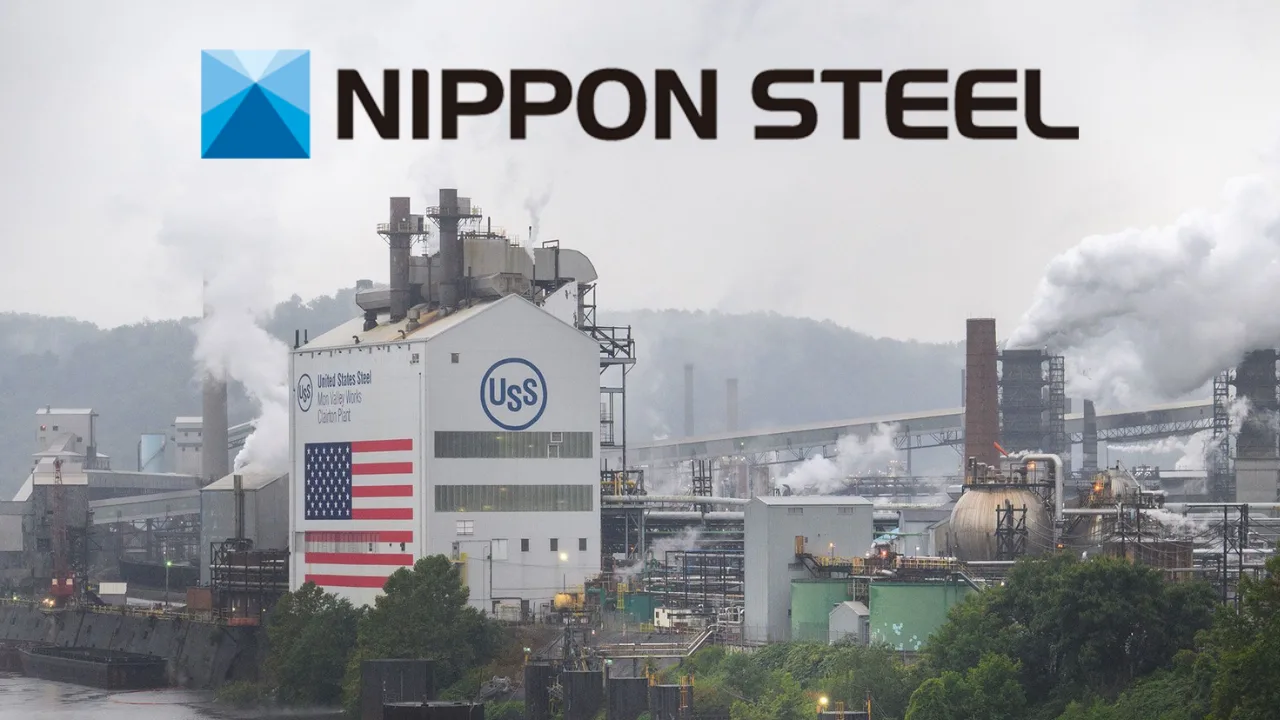
In a move that surprised markets and redefined how foreign takeovers may be handled under nationalist economic policy, President Donald Trump approved Nippon Steel’s $14.9 billion acquisition of U.S. Steel—with a unique twist. The deal includes a so-called “golden share,” giving the U.S. government sweeping veto powers over key decisions for the company going forward. U.S. Steel shares soared over 5% following the announcement, trading close to the $55-per-share offer and hitting their highest level since 2011.
The Deal: Nippon Acquires U.S. Steel for $14.9 Billion
On June 13, 2025, President Trump signed an executive order allowing Japan-based Nippon Steel to acquire U.S. Steel for approximately $14.9 billion in cash. This decision came after months of regulatory delays and intense political scrutiny. The Biden administration had previously blocked the deal on national-security grounds, citing concerns over foreign ownership of a strategic industry.
But Trump’s reversal came with a key condition: the introduction of a “golden share” held by the U.S. government. This special equity instrument provides the government with a permanent veto over certain strategic decisions by the company.
What Is a “Golden Share?”
A golden share is a type of share that grants its holder special voting rights, typically a veto over key decisions. It doesn’t provide control over day-to-day operations, but it ensures that the holder—in this case, the U.S. government—can block moves deemed contrary to national interests.
According to the executive order and related filings, the golden share includes veto rights over:
- Relocation of U.S. Steel’s headquarters (currently in Pittsburgh)
- Changing the name of the company
- Offshoring of U.S. jobs or closure of U.S.-based steel plants
- Material changes to a $14 billion capital investment plan
- Appointment of board members not meeting U.S. citizenship requirements
This kind of provision is rare in U.S. corporate law but not unprecedented globally. The U.K. and some EU nations have used similar instruments to maintain strategic control over key industries.
Market Reaction: Investors Cheer Stability
Shares of U.S. Steel (X) jumped over 5% on the news, climbing to just below the $55 offer price from Nippon. This marked the stock’s highest close in over a decade, as investors interpreted the announcement as a green light for the deal’s completion.
The surge also reflects broader confidence in Trump’s economic strategy, which combines foreign investment incentives with protectionist safeguards. With Trump’s 50% steel tariffs still in place, investors believe the golden share mechanism ensures U.S. Steel’s identity and operations will remain American-centric, even under foreign ownership.
Labor Unions Remain Wary
While Wall Street celebrated, labor leaders voiced caution. The United Steelworkers (USW) union expressed concern that the golden share lacks teeth when it comes to protecting unionized labor agreements and ensuring job security.
USW President David McCall emphasized that the current labor contract remains in place through September 1, 2026, but that future negotiations could be complicated by foreign ownership. The union is also concerned about potential future efforts by Nippon to expand production in non-unionized facilities.
“We appreciate the administration’s attention to national security, but the workers must also be protected,” said McCall.
Trump’s Strategic Shift: Nationalism Meets Global Capital
This move is emblematic of Trump’s evolving approach to the economy. In his earlier term, Trump was known for hardline tariffs, trade wars, and efforts to bring manufacturing jobs back to the U.S. This latest deal adds nuance: welcoming foreign investment so long as it comes with strong national oversight.
By requiring the golden share, Trump threads the needle between globalization and economic nationalism. Nippon gets the asset and its associated profits, while the U.S. retains control over the company’s strategic direction.
It’s also a clear signal to foreign companies: you can invest in the U.S., but only if the terms serve American interests.
What This Means for Investors
For shareholders, this approval removes a cloud of regulatory uncertainty and likely secures the $55-per-share buyout. If you’re holding shares in U.S. Steel, there’s now limited downside risk assuming the deal closes smoothly.
For long-term sector investors, however, the implications go deeper:
- The golden share could become a precedent for future deals in critical industries such as semiconductors, defense, or energy.
- Expect increased government scrutiny and strings attached to cross-border M&A activity.
- Trump’s continuation of steel tariffs creates tailwinds for domestic steel producers like Cleveland-Cliffs and Nucor.
This is a market where government policy is not just a background noise but a central force in shaping corporate value.
The Bigger Picture: Economic Sovereignty in Practice
The Nippon-U.S. Steel deal is not just about steel. It’s about how the U.S. is redefining the rules of engagement for foreign capital in strategic sectors. The golden share essentially turns the government into a shadow board member—always watching, always able to intervene.
This may give the U.S. a blueprint for dealing with similar issues in other sectors:
- Semiconductor fabs with Chinese investors
- Energy infrastructure with Middle Eastern or Russian ties
- AI startups with foreign capital backers
The golden share ensures that these companies can still operate and even accept foreign investment, but within limits defined by national interest.
A New Model for Economic Control
Trump’s approval of Nippon’s takeover of U.S. Steel marks a new phase in U.S. industrial policy—one where foreign investment is welcome, but only under strict conditions. The golden share provision will likely serve as a model for future deals, combining global capital with American oversight.
Investors should watch closely. This is not a return to laissez-faire markets. It’s the rise of economic nationalism with nuance—an approach that could either stabilize or stifle markets depending on how it’s applied.
One thing is clear: American steel may be foreign-owned, but it will now be American-anchored.
About Author