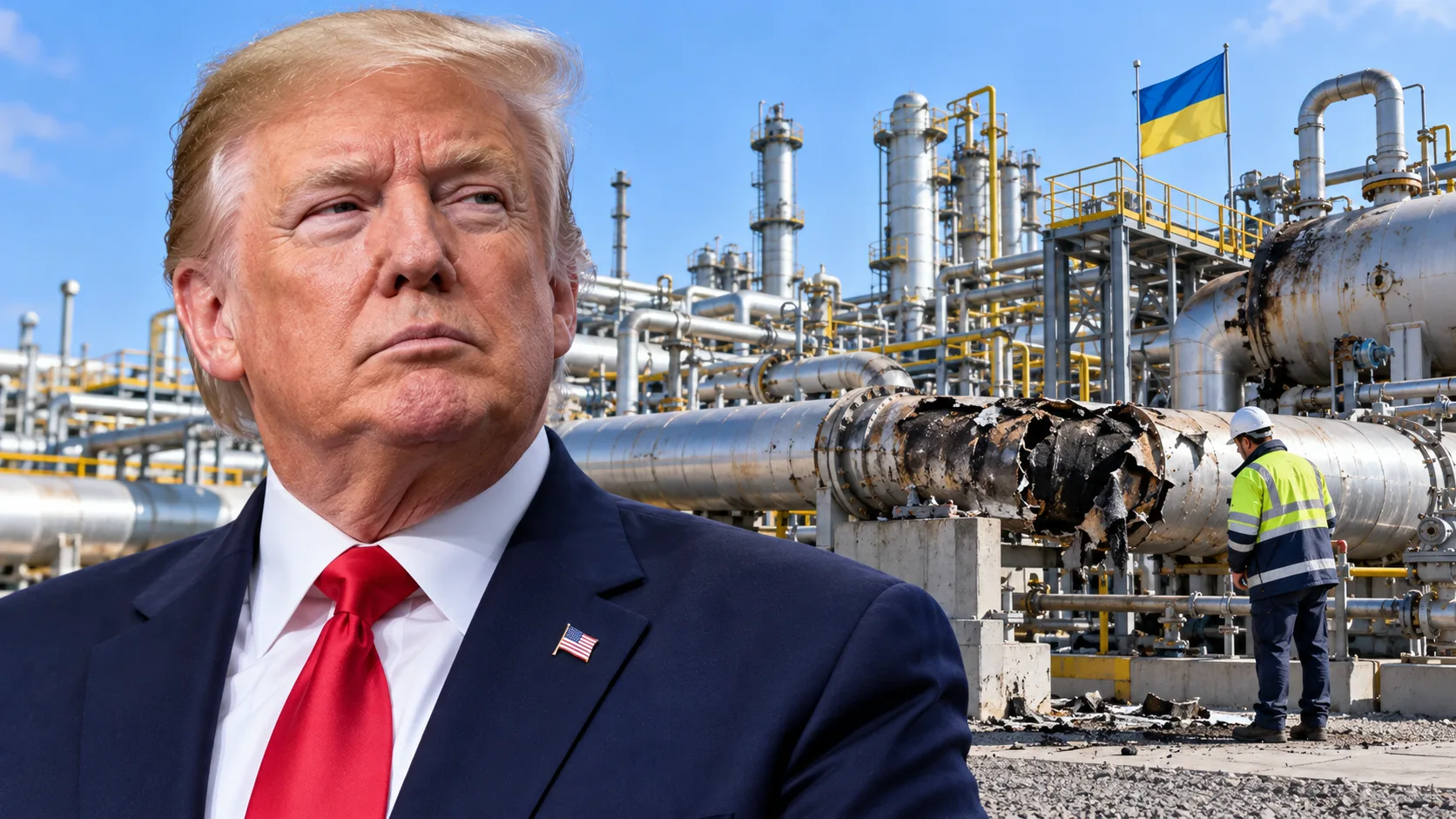
President Donald Trump’s latest move in his second-term trade war playbook is sending fresh shockwaves through the global economy. On August 4, he announced a plan to “substantially raise” tariffs on Indian goods, accusing New Delhi of undermining global efforts to isolate Moscow by profiting from Russian oil—a charge with serious implications for global trade, diplomacy, and investors with cross-border exposure.
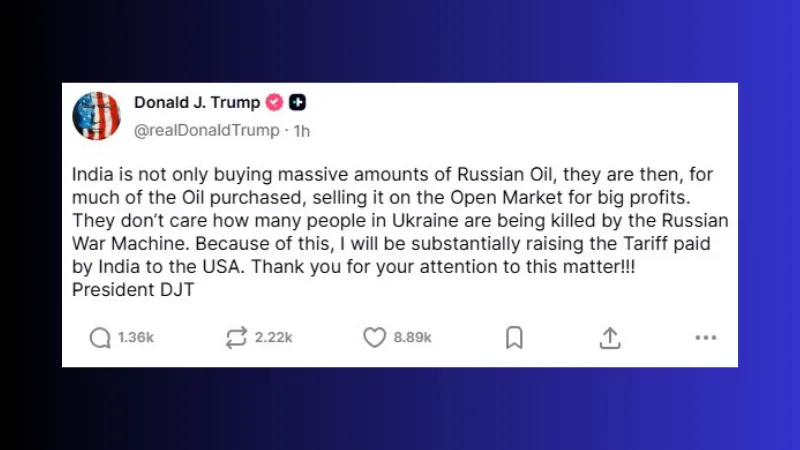
“India is not only buying massive amounts of Russian Oil, they are then, in turn, selling it on the Open Market for big profits,” Trump posted on Truth Social. “They don’t care how many people in Ukraine are being killed by the Russian War Machine. Because of this, I will be substantially raising the Tariff paid by India to the USA.”
— Trump on Truth Social, Aug. 4, 2025
The statement—and pending tariff escalation—marks the most severe diplomatic rupture between the U.S. and India in years. And for global investors, especially those in emerging markets, energy, technology, and defense sectors, the fallout could be significant.
What’s Behind the Tariff Threat?
India has sharply increased purchases of discounted Russian crude oil since the start of the Ukraine war. According to Bloomberg, India now imports over 40% of its oil from Russia, up from just 2% before the conflict began. The strategy allows India to refine the oil and resell it globally, including to Western buyers—a move that has drawn scrutiny from U.S. and EU leaders, who argue it circumvents sanctions and financially props up Russia’s war machine.
While New Delhi insists the purchases are legal and economically necessary, Trump’s administration appears fed up. The White House has already slapped a 25% tariff on Indian exports last week, and Trump now says those rates could climb significantly if India doesn’t reverse course.
Key Timeline:
- July 30, 2025: Trump announces 25% tariffs on Indian goods, citing “disrespectful” trade talks
- August 4, 2025: Trump links India’s Russian oil trade to aiding the Ukraine war
- August 8, 2025: Deadline for Russia to enter peace negotiations or face expanded U.S. sanctions
Why This Matters for Investors
1. Emerging Market Instability
India is a key pillar of the global emerging market economy. The country is projected to grow 6.8% in 2025, driven by manufacturing, IT services, and consumer demand. But new tariffs risk cooling that momentum, particularly in sectors heavily reliant on U.S. exports—pharmaceuticals, electronics, textiles, and auto parts.
Tariffs could reduce India’s trade surplus with the U.S., weaken the rupee, and spark capital outflows, especially from foreign institutional investors who have already shown caution amid U.S. rate volatility and geopolitical risks.
“Trade wars don’t just hurt the target—they unsettle entire supply chains. India’s key sectors could face earnings pressure and currency headwinds,” said Rajiv Biswas, senior economist at S&P Global.
2. iPhone Supply Chain Tensions
India has been rapidly becoming a critical part of Apple’s supply chain, with Foxconn, Pegatron, and Tata Group all expanding manufacturing operations in the country. If tariffs expand to cover electronics or component exports, it could undermine Apple’s “China-plus-one” strategy and raise costs on iPhones, MacBooks, and wearables.
3. Defense and Aerospace Fallout
U.S.–India defense cooperation has expanded dramatically over the past decade, with joint ventures from Lockheed Martin, Boeing, and General Electric. Tariffs and diplomatic tensions could delay new defense contracts, especially as India turns more toward Russian or indigenous suppliers to avoid political strings.
“We risk handing Russia and China long-term influence over India’s defense posture if this spirals,” warned a former Pentagon official familiar with Indo-Pacific planning.
Why Is Trump Taking This Line?
This is not just about trade. It’s about Trump’s use of economic tools to reshape global alliances.
By publicly accusing India of funding the Russian war machine, Trump is reframing what was once a purely transactional trade relationship into a values-driven foreign policy conflict. It’s consistent with his second-term strategy: pressure countries doing business with Russia, even indirectly, and force them to choose between economic access to the U.S. and neutrality on the Ukraine war.
“All things not good,” Trump said last week. “They’ve disrespected us during trade talks. And they’re enabling the killing of innocent people.”
Behind the scenes, U.S. officials have been trying to pressure India to reduce Russian oil purchases or reinvest profits into Ukrainian reconstruction, but talks have stalled. Trump is now using tariffs as a blunt-force instrument to change behavior.
Potential Investor Reactions
| Sector | Risk/Opportunity |
|---|---|
| U.S. Retailers | Higher import costs on Indian textiles/jewelry |
| Tech (Apple, Dell) | Disruption in India-based assembly plants |
| Pharma | Costlier Indian generics, impacting U.S. healthcare costs |
| Defense Contractors | Possible cooling of U.S.–India defense deals |
| Oil Markets | India may reduce Russian crude purchases, affecting flows |
| ETF Holders | EM funds (e.g. EEM, INDA) could see volatility spike |
India’s Dilemma
India is walking a tightrope.
On one hand, it needs affordable energy—Russian crude is reportedly $12–$15 cheaper per barrel than market alternatives. On the other, it cannot afford to alienate the U.S., which is its largest export market and a vital partner for defense, tech, and foreign investment.
Prime Minister Narendra Modi has not responded directly to Trump’s remarks, but his foreign ministry expressed “deep disappointment” with the tariff escalation and accused the U.S. of politicizing energy security.
There’s also fear among Indian policymakers that this could escalate into a broader trade war—with retaliatory tariffs, WTO complaints, and nationalist backlash against U.S. brands.
What Could Happen Next?
Scenario 1: Tariff Escalation
If Trump moves forward with a second tariff hike—possibly to 35% or 50%—it would have an immediate impact on India’s trade-dependent industries. Analysts expect a dip in Indian export earnings and possibly a cut in 2025 GDP forecasts.
Scenario 2: Negotiated Settlement
If backchannel diplomacy (led by U.S. envoy Steve Witkoff, who’s visiting Moscow this week) leads to a breakthrough on Russia–Ukraine talks, India could be spared further action—especially if it agrees to limit its resale of Russian oil.
Scenario 3: Broader Emerging Market Turmoil
If other countries—like Turkey, Brazil, or Vietnam—are pulled into similar tariff conflicts due to ties with Moscow or Beijing, global markets could see renewed volatility. Investors would rotate into safe havens like gold, U.S. Treasuries, and energy stocks.
Final Takeaways for Investors
- Watch India ETFs: INDA, EPI, and other funds tracking India may face outflows if tariffs rise. Monitor performance and net inflows daily.
- Re-evaluate supply chains: Companies depending on Indian manufacturing (apparel, electronics, pharmaceuticals) could be vulnerable. Stay alert to any earning revisions.
- Energy market dynamics: Any disruption to India’s refining and resale of Russian crude could tighten oil markets and raise prices globally. This may benefit U.S. shale producers and integrated oil majors.
- Geopolitical risk is back: After a relatively quiet year, 2025 is shaping up as a turbulent time for global markets. Tariffs are not just about trade anymore—they are being used to enforce foreign policy. Investors must adjust accordingly.
Economic Pressure with Diplomatic Messaging
President Trump’s tariff escalation against India is a bold geopolitical gamble that fuses economic pressure with diplomatic messaging. The stakes go far beyond exports—they affect alliances, supply chains, inflation, and investor sentiment. With the August 8 deadline looming and no sign of compromise, markets should brace for volatility and look closely at how India, Russia, and the U.S. play their next hands.
Sources:
About Author