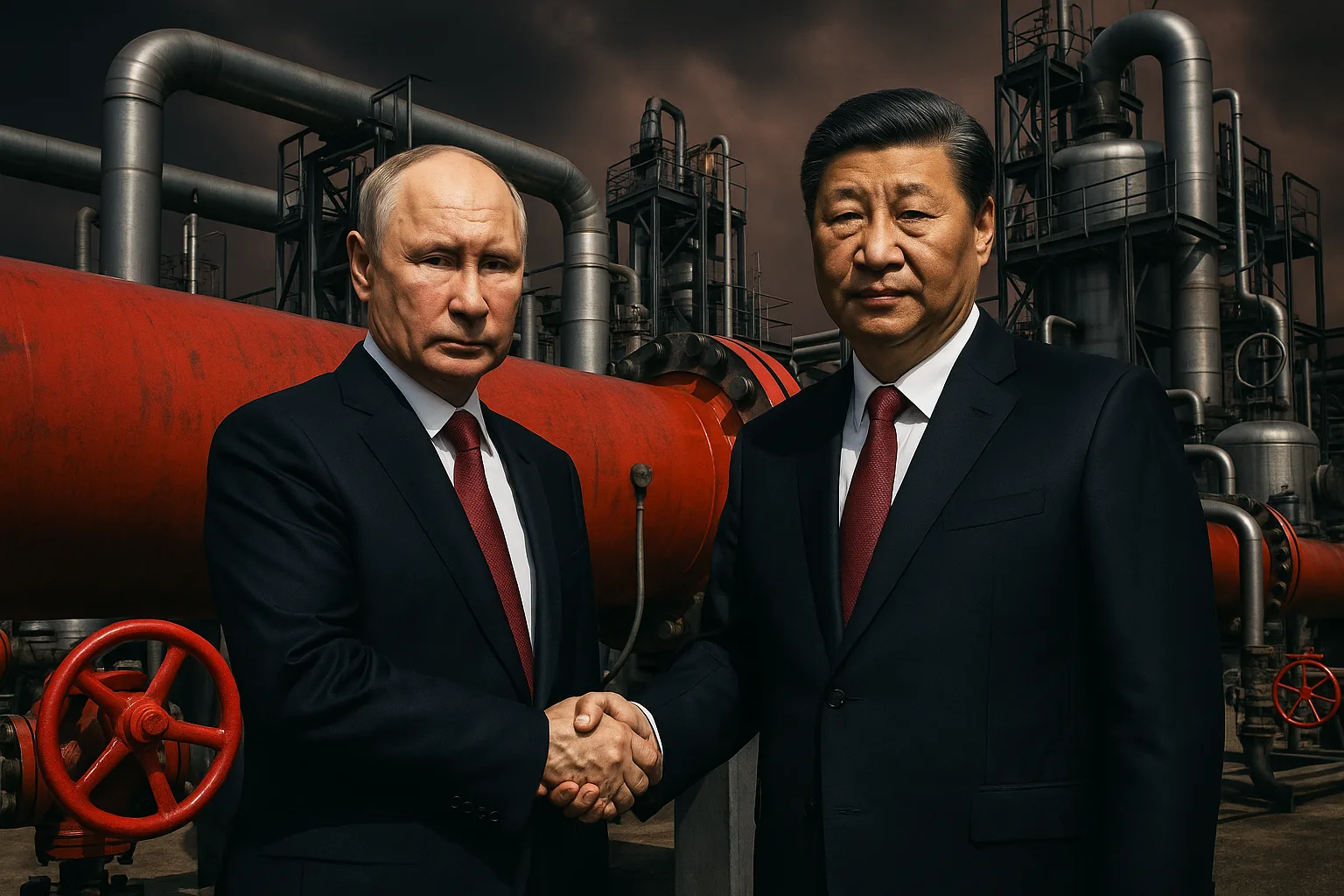
Russia has officially signed a deal with China to build the long-delayed Power of Siberia 2 gas pipeline, locking in its largest alternative market after losing Europe. The pipeline will move 50 billion cubic meters of gas annually from West Siberia to northern China through Mongolia, with supplies set for the next 30 years.
For investors, this isn’t just another energy deal. It’s a signal of how global energy markets are shifting—and which companies and regions stand to gain or lose.
Europe’s Loss Becomes China’s Bargain
Before Russia invaded Ukraine, Europe imported more than 120 bcm of Russian gas annually. Sanctions and EU energy bans cut those flows to near zero. That left Russia desperate for a buyer—and China played hardball.
Analyst Timothy Ash said Beijing “got a better deal” on price and financing by dragging out negotiations. With Moscow under pressure, China secured reliable gas on favorable terms, strengthening its long-term energy security.
For Beijing, this means cheaper, steady supplies of gas to fuel industry and reduce reliance on volatile LNG imports. For Europe, it means permanently higher energy costs and weaker industrial competitiveness.
The Numbers Behind the Pipeline Shift
| Pipeline | Capacity (bcm/year) | Route | Status |
|---|---|---|---|
| Power of Siberia 1 | 38 | East Siberia → China | Operating since 2019 |
| Power of Siberia 2 | 50 | West Siberia → Mongolia → China | Deal signed 2025 |
| Nord Stream (before shutdown) | 55 | Russia → Germany | Halted 2022 |
Source: Gazprom, IEA
At full capacity, Power of Siberia 2 would deliver more gas to China than Nord Stream supplied to Germany before sanctions. That’s a fundamental redrawing of energy trade routes.
China and Russia Send a Message to Washington
The timing of the deal was deliberate. It was signed during the Shanghai Cooperation Organization (SCO) summit, where Xi Jinping said global governance is at a “new crossroads”.
This pipeline isn’t just about gas. It’s about Russia and China presenting a united front against U.S. and European pressure. Christopher Granville of TS Lombard said the agreement shows “China’s steady strategic backing for Russia as the lynchpin of the new multipolar order”.
In plain terms: Russia gets a buyer, China gets cheap gas, and together they send a signal that they’re building an economic bloc capable of resisting Western sanctions.
Who Wins and Who Loses in the Market
Winners: Gazprom and Russian Energy
Russia’s Gazprom (MCX: GAZP) has been bleeding revenue since Europe cut ties. This deal locks in a lifeline of demand for decades. Sanctions still cloud the stock, but it cements Gazprom’s role as China’s energy partner.
Winners: Chinese Importers and Industry
Chinese state-owned firms like CNPC and Sinopec now get long-term discounted gas. That means lower costs for China’s manufacturing base, making its exports even more competitive globally.
Winners: U.S. LNG Exporters
Europe still needs gas, but its replacement comes from the U.S. and Qatar. LNG giants like Cheniere Energy (NYSE: LNG) and ExxonMobil (NYSE: XOM) are the biggest beneficiaries. They’ve already hit record exports to Europe, and demand isn’t slowing.
Losers: European Industry
High energy costs aren’t going away. Europe’s heavy industries—chemicals, steel, and autos—face structural disadvantages versus the U.S. and Asia. That makes these sectors risky for investors.
Currencies and Commodities
- Gas traded in rubles and yuan chips away at dollar dominance.
- More pipeline gas to China could steady global natural gas prices, but LNG volatility will remain because of Europe’s dependence.
Don’t Ignore the Risks: This Isn’t a Done Deal Yet
While the headlines make it sound like a done deal, investors should stay cautious. What was signed is essentially a memorandum of understanding (MOU)—not a final investment decision.
The first Power of Siberia pipeline took nearly a decade to move from MOU to actual flows. Pricing details for this new project remain undisclosed, and building through Mongolia will add engineering and financing challenges.
Watch for three things before calling this project a lock:
- Pricing agreements—the exact terms China secured.
- Financing details—whether China bankrolls it or Russia shoulders the debt.
- Sanctions risk—Washington may target Chinese involvement, adding new complications.
Bottom Line for Investors
The Power of Siberia 2 pipeline marks a permanent realignment of energy flows.
- Commodity investors should watch for sustained divergence between Asian and European gas markets.
- Equity investors can find opportunity in U.S. LNG exporters while staying cautious on European industry.
- Macro investors should note the acceleration of a multipolar world order that chips away at the dollar’s dominance.
Russia’s desperation turned into China’s bargain. And while Europe pays higher bills, U.S. LNG is the surprise winner of the energy reshuffle.
Sources:
- CNBC: “Russia clinches major new gas pipeline deal with China as West shuns supplies”
- International Energy Agency (IEA): Gas Market Reports
- European Union: REPowerEU Plan
About Author