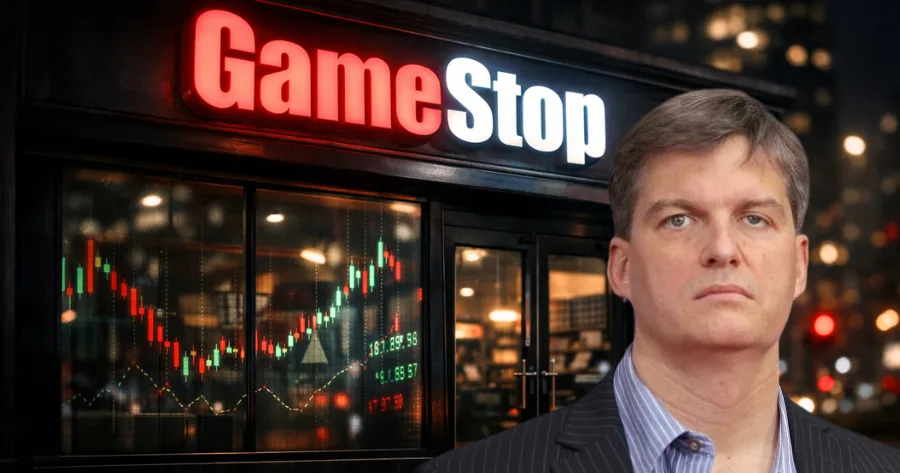
Michael Burry, the legendary investor best known for predicting the 2008 housing collapse, is once again buying shares of GameStop. The disclosure immediately sent GameStop stock higher and reignited investor debate about whether the company is finally transitioning from meme stock volatility into a legitimate value-driven investment opportunity.
This is not a replay of the Reddit-fueled trading frenzy that dominated headlines in 2021. Burry has made it clear that his interest in GameStop today is rooted in fundamentals, balance sheet strength, and long-term optionality rather than speculative momentum.
For investors, the key question is simple. Is Burry spotting real value that the broader market is still overlooking, or is this another contrarian wager with elevated execution risk?
Understanding why Burry is buying again requires examining his stated reasoning, GameStop’s evolving financial profile, Ryan Cohen’s strategy, and how professional investors may interpret this signal.
Michael Burry’s New GameStop Position Explained
Burry disclosed that he has been accumulating shares of GameStop in recent weeks, describing the investment as a long-term position rather than a short-term trading opportunity. According to Business Insider, Burry emphasized that the investment is not a bet on renewed meme stock mania or another short squeeze cycle. Instead, he views the stock as attractively valued relative to its tangible assets and balance sheet strength.
Following the disclosure, GameStop shares rallied sharply as traders reacted to the involvement of one of Wall Street’s most recognizable contrarian investors. Market data outlets reported intraday gains in the mid single digits as volume surged.
Burry has a history with GameStop that predates the meme stock era. He was an early investor in the company in 2019 when the stock was deeply undervalued and largely ignored by mainstream investors. His activism at the time pushed for capital discipline and share buybacks. That early involvement helped establish the conditions that later amplified the 2021 short squeeze.
This time, however, the setup looks very different.
Why This Is Not a Meme Trade
Burry explicitly stated that his GameStop investment is not predicated on retail-driven speculation or short interest dynamics. Instead, he highlighted valuation metrics tied to tangible book value and asset backing.
Several market commentators noted that Burry believes GameStop is trading close to one times tangible book value, meaning the stock price roughly reflects the company’s net assets after liabilities. That creates a margin of safety profile that appeals to deep value investors rather than momentum traders.
This distinction matters. The 2021 rally was driven by technical positioning, short covering, options activity, and social media coordination. That environment created extreme volatility but very little fundamental anchoring.
Burry’s current thesis aligns more closely with traditional value investing principles.
Key differences from the meme era include:
- A significantly stronger cash position on GameStop’s balance sheet
- Improved operational discipline and cost controls
- A leadership team focused on capital allocation rather than retail expansion
- Reduced reliance on speculative investor flows
While the stock can still experience volatility due to its history and retail following, the core investment thesis today is anchored in financial structure rather than sentiment cycles.
GameStop’s Balance Sheet Has Quietly Improved
One of the most underappreciated aspects of GameStop’s transformation is the strength of its balance sheet.
Over the past several years, the company raised substantial capital during periods of elevated share prices. That allowed GameStop to eliminate debt, accumulate cash reserves, and significantly improve liquidity. Several market reports indicate that GameStop now maintains a sizable net cash position, giving the company flexibility that most specialty retailers lack.
The company has also demonstrated improved operating discipline, reducing expenses and stabilizing profitability in recent quarters. While revenue growth remains challenged by shifts toward digital gaming and direct distribution models, the company is no longer operating under financial distress.
This balance sheet optionality is critical to Burry’s thesis. Companies trading near asset value with excess cash offer downside protection while preserving upside potential if management executes effectively.
From an investor standpoint, this creates a hybrid profile that resembles a holding company more than a traditional retailer.
The Ryan Cohen Strategy and Why It Matters
Another central pillar of Burry’s confidence appears to be GameStop CEO Ryan Cohen.
Cohen, the co-founder of Chewy, has taken a highly disciplined approach to restructuring GameStop. Rather than aggressively expanding physical retail operations, Cohen has focused on operational efficiency, capital preservation, and selective strategic opportunities.
Market coverage has noted that Cohen has personally increased his ownership stake in GameStop, reinforcing alignment with shareholders and signaling confidence in long-term strategy.
Barron’s has described Cohen’s approach as resembling a Berkshire-style capital allocator model, where the focus shifts from running a single business line to deploying capital opportunistically when high-return opportunities arise.
For investors, this framing matters because valuation models shift dramatically when a company transitions from a declining retail operator into a capital allocation platform with cash optionality.
If GameStop successfully deploys capital into accretive acquisitions, partnerships, or new growth platforms, intrinsic value could rise materially even without strong retail revenue growth.
Why Burry’s Involvement Moves Markets
Michael Burry’s reputation carries unique weight in financial markets.
He famously profited from shorting subprime mortgage securities before the 2008 financial crisis, a story chronicled in The Big Short. His firm, Scion Asset Management, has historically taken concentrated, contrarian positions based on deep fundamental analysis.
Even after winding down active fund management, Burry’s public commentary and disclosed positions continue to influence institutional and retail investor behavior.
When an investor with that track record identifies perceived undervaluation in a controversial stock, it forces analysts and portfolio managers to reassess assumptions.
Burry’s presence alone does not guarantee success, but it increases the probability that deeper fundamental scrutiny will follow.
What Could Unlock Value Going Forward
For GameStop to justify a sustained re-rating rather than a short-term trading pop, several catalysts would need to materialize.
Capital Deployment
The company’s cash position creates optionality, but capital must be deployed intelligently. Potential avenues include:
- Strategic acquisitions in adjacent technology or gaming infrastructure
- Share repurchases if valuation remains depressed
- Selective investments in digital commerce or distribution platforms
Effective deployment could materially improve return on equity.
Operating Stability
Sustained profitability or improving margins would validate the company’s operational restructuring and strengthen downside protection.
Governance and Transparency
Clear communication regarding strategic objectives and capital allocation priorities would help institutional investors model long-term value.
Broader Market Repositioning
If GameStop successfully transitions from a meme stock identity into a disciplined capital allocator, valuation multiples could normalize over time.
Risks Investors Should Not Ignore
Despite Burry’s bullish stance, meaningful risks remain.
GameStop still operates in a structurally challenged retail category facing digital disruption. Competitive pressure from platform-based distribution models remains intense.
Revenue growth remains uncertain, and execution missteps could erode cash reserves.
Additionally, the stock’s legacy volatility profile may continue to attract speculative trading behavior, creating price swings unrelated to fundamentals.
Investors should also recognize that tangible book value can shift rapidly if capital deployment decisions underperform or macro conditions deteriorate.
Burry’s involvement does not eliminate risk. It simply reframes the opportunity set.
What This Signals for Investors
From an investor perspective, several important signals emerge.
First, sophisticated value investors are once again viewing GameStop as a legitimate asset-based opportunity rather than a pure speculation vehicle.
Second, balance sheet strength is becoming a primary driver of valuation rather than revenue growth alone.
Third, alignment between management and long-term capital allocators increases the probability of disciplined strategic execution.
Fourth, institutional interest may gradually return if valuation metrics remain compelling and governance clarity improves.
For conservative investors, this remains a higher volatility equity with execution risk. For opportunistic investors, it represents a potential asymmetric value setup with defined downside anchored by assets.
About Author