The United States is dramatically increasing its military presence in the Middle East by sending its most powerful and technologically advanced aircraft carrier into the region. The move signals rising geopolitical pressure on Iran and underscores the growing risk of conflict that could have major implications for global markets, energy prices, and investor sentiment.
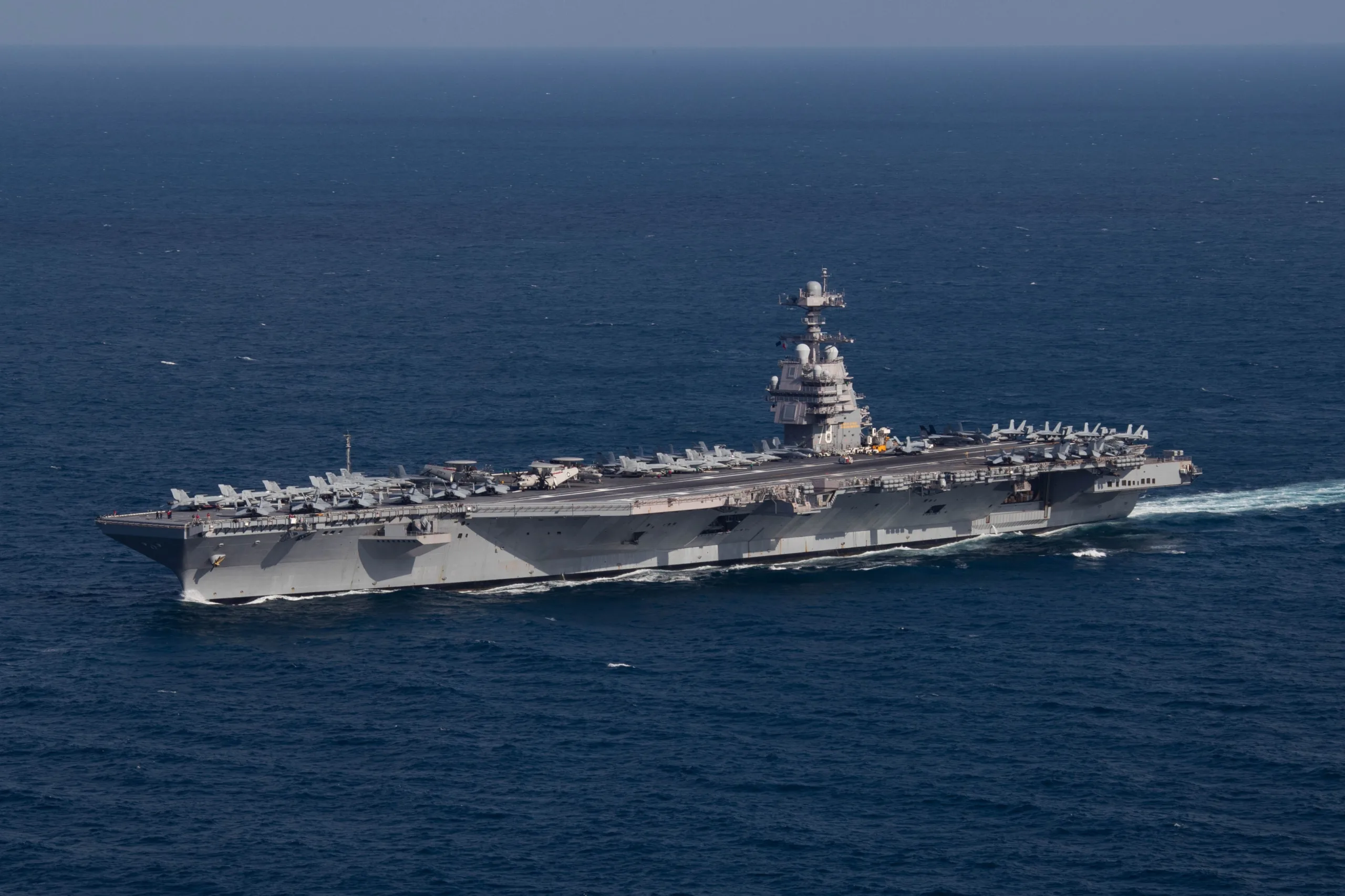
Multiple U.S. officials confirmed that the Navy’s newest and largest carrier, the USS Gerald R. Ford, is being redeployed toward the Middle East. The carrier strike group will join the USS Abraham Lincoln and a growing fleet of American warships already operating in the region, significantly boosting U.S. military capabilities.
The deployment comes at a critical moment as Washington intensifies pressure on Tehran over its nuclear program while simultaneously leaving the door open for diplomatic negotiations.
A Massive Military Signal to Iran
The USS Gerald R. Ford is not just another warship. It is the most advanced aircraft carrier ever built and represents the backbone of U.S. naval power. Its arrival will bring dozens of additional fighter jets, surveillance aircraft, and strike capabilities to a region already on edge.
According to U.S. officials, the decision reflects increasing military readiness as tensions with Iran rise and negotiations show signs of strain.
With the Ford joining the USS Abraham Lincoln and multiple escort vessels, the United States will now maintain two carrier strike groups in the Middle East. This level of force projection is historically associated with major deterrence efforts or preparation for possible military action.
The carrier had been operating in the Caribbean following earlier missions tied to U.S. operations in Venezuela before being redirected to the Middle East.
Trump Signals Pressure and Diplomacy
President Donald Trump has made clear that the U.S. wants Iran to make concessions regarding its nuclear program, but he has also indicated he is open to reaching a deal.
“They want to make a deal, as they should want to make a deal,” Trump said. “They know the consequences if they don’t. If they don’t make a deal, the consequences are very steep.”
This dual-track approach combining diplomacy with military pressure has been a defining feature of U.S. policy toward Iran. The deployment of additional naval power increases leverage in negotiations while signaling that military options remain on the table.
Recent reports suggest negotiations have been fragile, and the U.S. buildup reflects concerns that diplomacy alone may not produce results.
Why This Deployment Matters
Aircraft carriers are among the most powerful symbols of American military strength. They are floating airbases capable of launching sustained combat operations without relying on foreign soil. The Ford alone carries more than 75 aircraft and is supported by heavily armed escort ships.
The presence of two carrier strike groups dramatically expands the U.S. ability to:
- Launch sustained airstrikes
- Conduct surveillance and intelligence operations
- Enforce maritime security
- Deter Iranian military action
- Protect global shipping lanes
The move also signals to allies and adversaries alike that the United States is prepared to escalate if necessary.
A Long and Demanding Deployment
The Ford’s crew has already spent months at sea, and the redeployment will likely extend an already lengthy mission. Some Navy officials have raised concerns about the strain prolonged deployments place on sailors and equipment.
Still, the Ford was chosen because it was immediately available and fully operational, highlighting both its importance and the limited number of deployable U.S. carriers at any given time.
A Shift Back Toward the Middle East
The deployment also reflects a broader shift in U.S. strategic focus. In recent months, American military resources had been increasingly directed toward the Western Hemisphere and operations tied to Venezuela and regional security.
Sending the Ford back to the Middle East marks a renewed emphasis on the region as tensions with Iran rise and geopolitical risks intensify.
With two carriers now positioned near the Persian Gulf, the United States is signaling that deterrence against Iran is once again a top priority.
The Broader Geopolitical Context
The Middle East remains one of the most volatile regions in the world. Iran’s nuclear program, regional proxy conflicts, and tensions with Israel continue to drive instability.
Recent developments include:
- Fragile nuclear negotiations between the U.S. and Iran
- Regional security concerns following ongoing conflicts
- Growing fears of escalation across Gulf nations
- Strategic coordination between the U.S. and key allies
This buildup increases the risk of confrontation but is also designed to prevent one by reinforcing deterrence.
Market and Investor Implications
While military deployments may seem distant from financial markets, history shows that geopolitical tension in the Middle East often triggers major economic consequences.
1. Oil Prices Could Surge
The Middle East controls a significant share of global oil supply. Any disruption, even the perception of conflict, can push crude prices higher. Rising oil prices tend to:
- Increase inflation pressure
- Raise transportation and energy costs
- Influence Federal Reserve policy
- Affect consumer spending
Energy stocks often rally during geopolitical crises tied to oil supply risk.
2. Defense Stocks Typically Benefit
Periods of rising geopolitical tension often lead to increased military spending and defense contract growth. Historically, defense companies tend to outperform during times of military buildup or conflict.
Investors often watch:
- Military contractors
- Aerospace companies
- Defense technology firms
These sectors frequently benefit from prolonged geopolitical uncertainty.
3. Safe Haven Assets Could Rise
Gold and other safe-haven assets tend to gain during global uncertainty. Investors often shift toward:
- Gold and precious metals
- U.S. Treasury bonds
- Defensive equities
Market volatility often increases when geopolitical tensions escalate.
4. Risk of Market Volatility
Major military developments can trigger short-term market swings, particularly in global equities and emerging markets. Investor sentiment can shift quickly based on headlines related to diplomacy, conflict, or military escalation.
What Happens Next
The key question is whether this military buildup leads to diplomacy or confrontation.
Possible scenarios include:
- A negotiated agreement between the U.S. and Iran
- Continued military deterrence without conflict
- Limited strikes or escalation
- Prolonged geopolitical standoff
For now, the deployment appears designed to strengthen negotiating leverage while preventing Iran from advancing its nuclear ambitions unchecked.
About Author