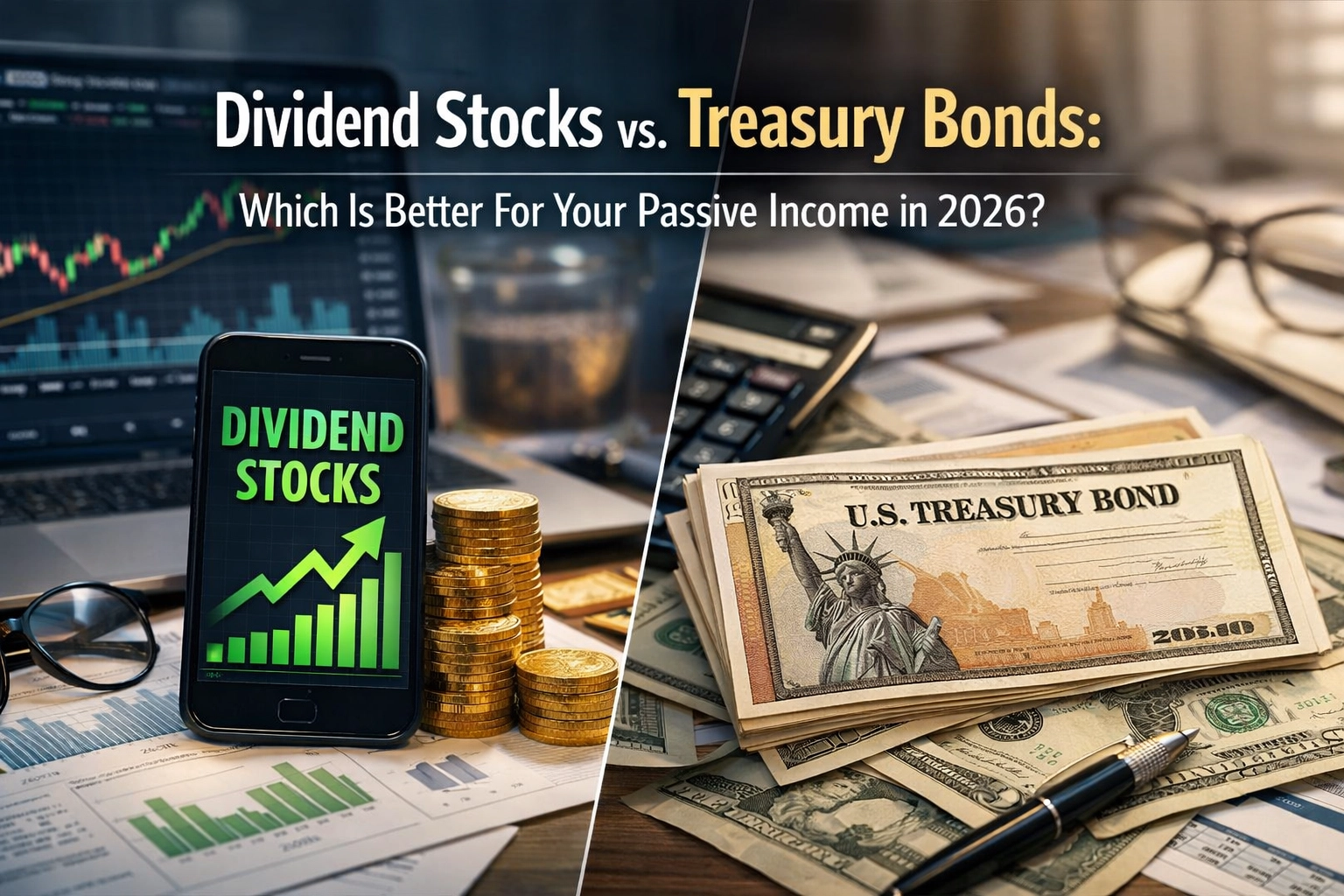
As we move through the first quarter of 2026, the financial landscape looks quite different than it did just a few years ago. For retail investors focusing on passive income for retirement, the age-old debate between dividend stocks and Treasury bonds has taken on a new urgency. We are no longer in the era of "free money" and near-zero interest rates, but we also aren't seeing the frantic volatility that defined the mid-2020s. Instead, we have settled into a period where yield is once again a primary driver of portfolio construction.
If you are looking to secure a steady stream of cash to fund your post-work years, the decision of where to put your capital isn't a matter of which asset is "better" in a vacuum. It is about which tool fits the specific job you need it to do. Treasury bonds are currently providing a level of predictability that was missing for over a decade, while dividend stocks for retirement remain the most effective way to ensure your income keeps pace with the rising costs of living.
The Return of the "Risk-Free" Rate
Treasury bonds have reclaimed their spot as a cornerstone of the retirement portfolio. In March 2026, the yield on the 10-year Treasury note is hovering around 4%. According to data from analysts at Charles Schwab, we are likely to see these yields fluctuate between 3.75% and 4.5% for the remainder of the year. This is a significant development for anyone building passive income for retirement.
For a long time, bonds were the "boring" part of a portfolio that investors held out of obligation rather than excitement. Today, the yield-to-worst on the Bloomberg U.S. Aggregate Bond Index is sitting at approximately 4.3%. This means that an investor can lock in a return that significantly outpaces the low-yield environment of the early 2020s without taking on any corporate or equity risk.
The primary draw of Treasuries in 2026 is the certainty of the coupon payment. When you buy a bond, you know exactly how much you will receive and when you will receive it. This predictability is the holy grail for a retiree who needs to pay monthly bills. Unlike stock dividends, which a company’s board can cut or suspend during a lean quarter, the U.S. government has a long-standing history of meeting its obligations.
The Growing Appeal of Dividend Stocks for Retirement
While 4% from a Treasury bond is a respectable and safe return, it is often not enough to satisfy the long-term needs of a multi-decade retirement. This is where dividend stocks for retirement come into play. Equity income offers something that a fixed-income bond simply cannot: the potential for growth.
As of early 2026, the average yield for U.S. dividend stocks is relatively modest, sitting at about 1.1%. However, looking at the averages can be misleading for the passive income investor. High-yield dividend ETFs have become a popular alternative for those willing to accept more price movement in exchange for higher cash flow. For instance, specialized ETFs like JEPQ are yielding upwards of 11.42%, while international dividend-focused funds are regularly seeing yields above 3%.
The real magic of dividend stocks, however, lies in the "yield on cost." When a company like a major utility or a consumer staples giant increases its dividend by 5% or 7% annually, the actual return on your original investment grows over time. A bond’s coupon is fixed; it will pay the same amount in 2036 as it does in 2026, regardless of how much the price of milk or healthcare has risen. Dividend-growing stocks act as a natural hedge against inflation, making them an essential component of any strategy for passive income for retirement.

Assessing the Stability vs. Growth Tradeoff
Choosing between these two assets requires a clear-eyed assessment of your own risk tolerance. In the current 2026 market, the stability of Treasury bonds serves as a psychological buffer. When the stock market experiences its inevitable corrections, the bond portion of your portfolio tends to remain stable, preventing the "panic sell" that can ruin a retirement plan.
On the other side of the coin, dividend stocks offer the total return potential that bonds lack. While most of the returns from bonds in 2026 are expected to come from coupon income rather than price appreciation, stocks can provide both dividends and capital gains. According to market analysts, dividend stocks have lagged slightly in the previous year, but conditions are improving as we move through 2026. This suggests that current entries into high-quality dividend payers might benefit from both a steady check and an increasing share price as the market recalibrates.
For a retail investor, the "yield" you see on a screen doesn't tell the whole story. You have to consider the "real" yield: the return after inflation. If inflation holds steady at 2.5% or 3%, a 4% Treasury bond is only giving you a 1% real gain in purchasing power. A dividend stock that yields 3% but grows that dividend by 6% a year is much more likely to keep you ahead of the cost-of-living curve over a twenty-year retirement.
The 2026 Economic Backdrop
The reason we are seeing these specific yields in 2026 is tied to the central bank's response to the labor market. We have seen a cooling of the frantic hiring of previous years, leading to a series of rate adjustments intended to find a "neutral" level that neither triggers inflation nor causes a recession.
The increased supply of government bonds has kept Treasury yields elevated, which is a boon for savers but a point of caution for the broader economy. At the same time, many companies have cleaned up their balance sheets, allowing them to maintain or even increase their payouts to shareholders. At Global Market News, we have observed that "quality" has become the buzzword for 2026. Investors aren't just looking for the highest yield; they are looking for the most sustainable one.
This environment favors the retail investor who is willing to do a little homework. Chasing a 12% yield in a struggling company is a recipe for disaster, just as hiding entirely in cash or short-term Treasuries might leave you short of your financial goals in a decade.

Building the Hybrid Passive Income Portfolio
The most successful retail investors in 2026 aren't choosing one over the other; they are building a hybrid model. The consensus among financial planners is that a balanced portfolio typically includes both to combine the dependability of bonds with the long-term income growth of dividend stocks for retirement.
Consider a "bucket" strategy:
- The Immediate Bucket: 1–3 years of living expenses held in Treasury bonds or high-yield savings. This ensures that no matter what the stock market does, your bills are paid.
- The Growth Bucket: A diversified selection of dividend stocks for retirement. These provide the raises you will need in five, ten, or fifteen years.
- The Diversified Bucket: International dividend stocks and high-yield ETFs to capture different market cycles and higher immediate cash flow.
By using Treasury bonds as a buffer, you avoid the devastating necessity of selling your stocks during a market downturn to fund your lifestyle. This "forced selling" is one of the biggest threats to a retirement portfolio. When you have the 4% yield from your bonds coming in, you can afford to wait for your dividend stocks to recover their price value while still collecting their quarterly payouts.
What to Look for Right Now
For those looking to adjust their portfolios this month, keep an eye on the 10-year Treasury auction results. If yields push toward the 4.5% mark, it represents a historically strong entry point for long-term fixed income. For those looking at dividend stocks for retirement, focus on sectors that historically handle higher interest rate environments well, such as energy, healthcare, and certain segments of the technology sector that have transitioned into "cash cow" status.
The 2026 landscape is one of opportunity for the patient investor. The "TINA" (There Is No Alternative) era of stocks is over. Now, there are plenty of alternatives. Whether you lean more toward the safety of Uncle Sam or the growth of Corporate America, the key is consistency.
Passive income for retirement is not a "set it and forget it" endeavor, but with the current yields available in both Treasury bonds and dividend-paying equities, the path to a self-sustaining retirement hasn't looked this clear in years. Stay informed, stay diversified, and remember that the best investment is the one that lets you sleep at night while the checks keep arriving in the mail.
For more updates on market shifts and retirement strategies, keep following the latest reports here at Global Market News. We will continue to monitor the 2026 yield curve to help you make the best decisions for your financial future.
About Author