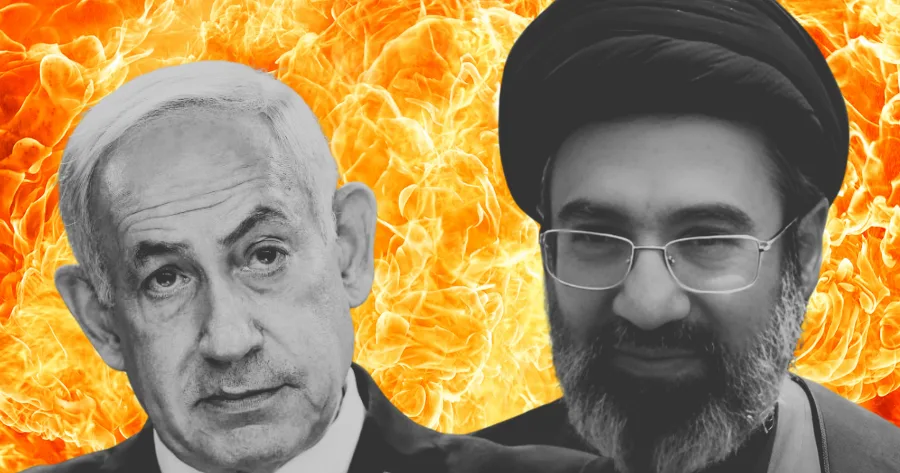
On Sunday, Iranian state media reported that the country’s Islamic Revolutionary Guard Corps had vowed to pursue Israeli Prime Minister Benjamin Netanyahu personally as the conflict deepened and military strikes continued across the region.
“IRGC vows to pursue and kill ‘child-killer’ Netanyahu if he is still alive,” Iran’s IRNA news agency wrote in a post on X.
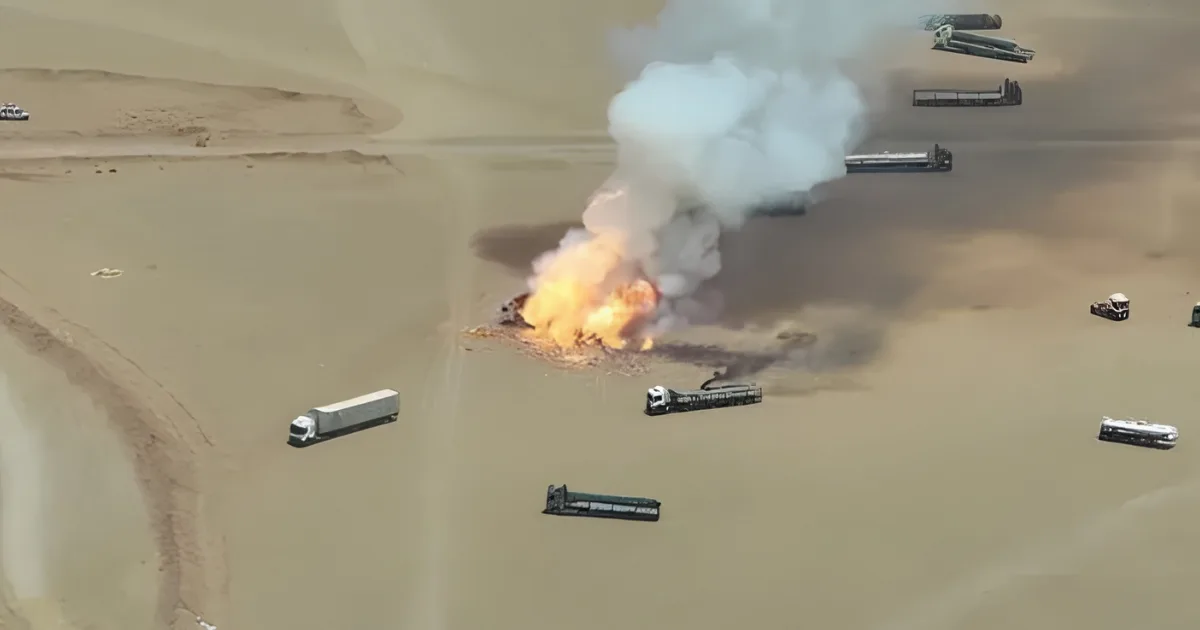
The statement came as Israeli forces targeted key Iranian leadership figures and strategic facilities over the weekend. At the same time, oil prices surged, shipping disruptions increased across the Persian Gulf, and global investors began reassessing geopolitical risk tied to one of the world’s most critical energy corridors.
For investors and policymakers alike, the conflict is no longer just a regional military confrontation. It is now a potential catalyst for a global energy shock.
Israeli Strikes Target Iranian Command Structure
Israel has continued a campaign aimed at weakening Iran’s military leadership and strategic infrastructure.
The Israel Defense Forces announced that it had eliminated two senior Iranian intelligence officials connected to the Khatam al Anbiya Emergency Command. The command is widely viewed as one of Iran’s key military coordination centers responsible for wartime operations.
In addition to those leadership strikes, Israel also targeted strategic research and production facilities connected to Iran’s defense and aerospace capabilities.
The IDF said it struck the primary research center of the Iranian Space Agency as well as a factory producing aerial defense systems.
These strikes represent a significant expansion of Israel’s target list beyond nuclear infrastructure and into broader military capabilities that could threaten Israeli airspace or allied assets in the region.
Israel’s strategy appears designed to degrade Iran’s command networks while simultaneously limiting the country’s ability to produce defensive systems.
Iran has responded with missile attacks aimed at Israeli territory.
Israeli emergency services reported a recent missile barrage directed at central Israel. Authorities said there were no immediate reports of casualties.
However, several rocket impacts caused property damage in the Tel Aviv district and surrounding areas.
The continued exchange of strikes suggests the conflict is entering a prolonged phase rather than a short series of retaliatory attacks.
Strait of Hormuz Disruption Raises Global Energy Fears
Perhaps the most immediate economic consequence of the conflict is the growing threat to energy supplies moving through the Strait of Hormuz.
The narrow maritime passage separating Iran from the United Arab Emirates and Oman is one of the most important energy chokepoints in the world.
Roughly one fifth of global oil consumption passes through the strait each day.
Any disruption to that shipping lane immediately impacts energy markets.
The ongoing war has already begun to slow energy shipments through the region as security threats increase and shipping insurers raise premiums for vessels operating in the area.
The tension intensified after debris from an intercepted drone sparked a fire at the UAE’s oil loading hub in Fujairah, temporarily interrupting operations at the port.
Media reports indicated that oil loading activities resumed Sunday after emergency crews contained the blaze.
Fujairah is a critical logistics hub because it allows Gulf producers to ship oil outside the Strait of Hormuz. The port is one of the few regional export terminals located on the Gulf of Oman rather than inside the strait itself.
A spokesperson for Abu Dhabi’s state energy company ADNOC referred media inquiries to the Fujairah Media Office. Officials there did not immediately comment on the situation.
Despite the quick restoration of operations, the incident highlights how easily regional infrastructure could be affected as the war expands.
Oil Prices Spike as Supply Risks Mount
Energy markets have responded quickly to the growing uncertainty.
Brent crude oil futures closed above $100 per barrel for the second consecutive trading day. Since the conflict escalated, global benchmark oil prices have surged more than 40 percent.
Oil traders are increasingly pricing in the possibility of major disruptions to supply flows from the Persian Gulf.
Iran itself exports roughly 1.5 million barrels of crude per day under normal conditions. But the broader risk lies in the vulnerability of other producers such as Saudi Arabia, Kuwait, Iraq, and the United Arab Emirates.
Combined, these countries export more than 17 million barrels per day.
If shipping lanes become unsafe or if attacks begin targeting production infrastructure, the impact could trigger a significant supply shock.
Some analysts warn oil could spike well above $120 per barrel if shipping traffic through the Strait of Hormuz is halted even temporarily.
Trump Orders Strike on Iran’s Key Oil Export Hub
The United States has now become more directly involved in the conflict.
President Donald Trump confirmed Friday that he authorized U.S. Central Command to carry out a bombing raid against Iranian military targets on Kharg Island.
The strike marks the first time American forces have targeted the island during the current conflict.
Kharg Island is one of Iran’s most strategically important energy facilities.
The terminal handles approximately 90 percent of Iran’s crude oil exports and has the capacity to load roughly 7 million barrels per day.
Because of its central role in Iran’s oil trade, Kharg Island is widely viewed by military analysts as one of the country’s most sensitive economic vulnerabilities.
Trump warned that additional strikes could follow if Iran continues attacking U.S. assets or allies in the region.
At the same time, the administration has urged allied nations to deploy naval forces to help protect commercial shipping in the Strait of Hormuz.
Securing that shipping lane has become a top priority for global energy markets.
Iran Responds With Regional Threats
Iranian officials insist their military actions are focused on American military installations rather than civilian targets.
Iran’s Foreign Minister Abbas Araghchi wrote on social media that Tehran is open to forming a regional investigative committee to examine military strikes.
“Our attacks only target American bases and interests in the region,” Araghchi wrote.
He added that Iran has so far avoided targeting residential areas in neighboring countries.
“We have not targeted any civilian or residential areas in the countries of the region so far.”
Araghchi also issued a warning regarding Kharg Island.
“Occupying Kharg Island would be a bigger mistake than attacking it.”
His comments suggest Iran could escalate its response if U.S. or Israeli forces attempt to seize control of the island.
Major Global Events Begin to Feel the Impact
The conflict is now beginning to affect major international events and industries.
Formula 1 announced it has canceled upcoming Grand Prix races scheduled in Bahrain and Saudi Arabia for April.
The organization said security concerns made it impossible to safely stage the races.
“While alternatives were considered, no substitutions will be made in April,” Formula 1 wrote in a post on X.
The cancellation highlights the broader economic impact of the war.
The Gulf region hosts a growing number of international sporting events, financial conferences, and tourism investments. Escalating military tensions could disrupt those activities if security risks continue rising.
Why Investors Should Pay Close Attention
For investors, the Israel Iran conflict has implications that extend far beyond geopolitics.
Energy markets are the most immediate concern.
Higher oil prices tend to ripple across the global economy by increasing transportation costs, raising inflation pressures, and slowing economic growth.
If crude prices remain above $100 per barrel for an extended period, central banks may find it harder to cut interest rates.
That scenario could weigh on equity markets while benefiting certain sectors.
Energy companies and defense contractors historically perform well during geopolitical conflicts that threaten global supply chains.
Meanwhile, airlines, transportation firms, and consumer discretionary companies tend to face pressure when fuel prices rise.
Gold and other safe haven assets may also attract inflows if investors seek protection from geopolitical uncertainty.
The next key variable will be whether shipping lanes remain open.
If the Strait of Hormuz remains operational, markets may stabilize.
If the conflict escalates further and the strait becomes unsafe for commercial shipping, the global economy could face one of its largest energy shocks in decades.
For now, traders around the world are watching the Gulf region closely.
Because what happens there will not stay there.
About Author