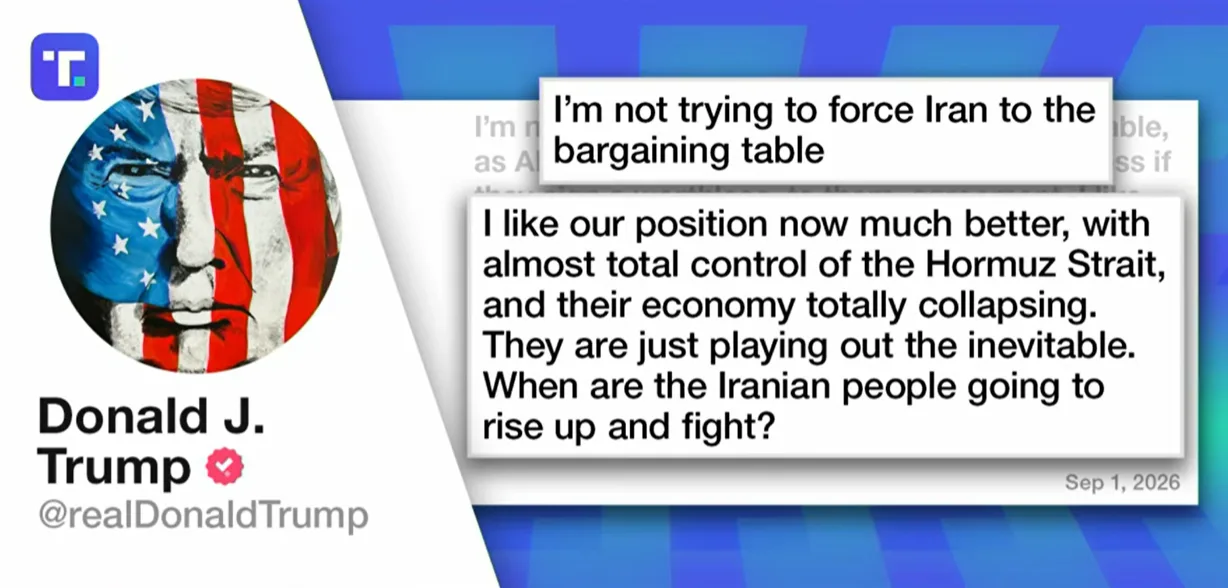
Just hours after reports surfaced that Washington sent a sweeping 15-point plan to Tehran, Iranian officials formally rejected the proposal, calling it excessive and signaling that any resolution will happen strictly on their terms.
Iran Rejects the Plan — And Signals No Interest in U.S. Terms
Iran has now made its position clear.
Officials dismissed the U.S. proposal outright, with a senior figure describing the demands as unrealistic. A military spokesperson went further, saying the U.S. is “negotiating with itself.”
At the same time, Iranian leadership has indicated:
- No willingness to abandon its missile program
- No acceptance of forced nuclear dismantlement
- No immediate path toward direct negotiations
This is a critical shift.
What initially appeared to be a diplomatic opening is now looking more like a public power play, with both sides far apart on core demands.
Inside the U.S. 15-Point Plan
While the full document has not been released publicly, multiple reports outline the core framework of the proposal.
At its heart, the plan demands a near-total rollback of Iran’s military and nuclear capabilities.
A Complete Nuclear Reset
The United States is reportedly pushing for:
- A full halt to uranium enrichment inside Iran
- The dismantling of key nuclear infrastructure
- The removal or export of enriched uranium stockpiles
- Full access for international inspectors
This goes well beyond prior agreements and effectively eliminates Iran’s domestic nuclear capacity.
Permanent Ban on Nuclear Weapons
Iran would be required to commit to never developing nuclear weapons under any circumstances.
This has long been a cornerstone of U.S. policy, but the current proposal seeks stronger enforcement mechanisms than past deals.
Missile Program Limits
The plan also targets Iran’s ballistic missile capabilities, pushing for restrictions or a halt to development.
These systems are viewed as critical to Iran’s deterrence strategy, making this one of the most contentious demands.
Ending Regional Influence
Iran would also need to cut support for proxy groups across the Middle East, including Hezbollah, Hamas, and the Houthis.
This would significantly reduce its regional power projection.
Securing the Strait of Hormuz
A key economic component of the proposal involves guaranteeing free and uninterrupted shipping through the Strait of Hormuz.
Given the strait’s role in global oil supply, this demand is central to stabilizing energy markets.
What the U.S. Is Offering
The proposal includes incentives designed to bring Iran to the table.
Sanctions Relief
The U.S. is signaling:
- Potential removal of nuclear-related sanctions
- A halt to new sanctions escalation
- Expanded access to global financial systems
For Iran’s economy, this could be transformative.
Civilian Nuclear Program
Iran would be allowed to maintain a civilian nuclear program under strict international oversight.
This may include limitations on where enrichment occurs or reliance on externally supplied nuclear fuel.
Temporary Ceasefire
The proposal includes a roughly one-month ceasefire window to allow negotiations to proceed.
However, with Iran rejecting the plan, even this temporary pause is now uncertain.
Confusion Surrounds the Plan Itself
Adding another layer of uncertainty, there are conflicting reports about whether Iran even formally received the proposal.
- Some sources say it was delivered through intermediaries, including Pakistan
- Others suggest Iran is denying any real engagement
- Even foreign governments have expressed uncertainty about the plan’s existence
This highlights the reality: negotiations, if they exist at all, are happening indirectly and without a clear framework.
Military Escalation Continues
While diplomatic headlines dominate, the situation on the ground is not improving.
Reports indicate:
- The U.S. is preparing to deploy additional troops to the region
- Missile strikes and air attacks are ongoing
- Tensions around the Strait of Hormuz remain elevated
This is a key disconnect.
Markets are reacting to the idea of diplomacy, but the actual conflict environment is intensifying.
Markets React — Then Reconsider
The initial reaction to the proposal was swift.
Oil Drops on De-Escalation Hopes
Oil prices fell sharply, dropping around 5 percent as traders priced in the possibility of reduced conflict risk.
Risk Assets Stabilize
Equities and other risk-sensitive assets saw support as fears of immediate escalation eased.
But the Narrative Is Shifting
With Iran rejecting the proposal, the market is now facing a new reality.
This is no longer a simple de-escalation story.
It is a binary outcome scenario:
- A breakthrough deal that lowers risk
- Or a breakdown that accelerates conflict
This creates a whipsaw effect across markets, particularly in oil.
What Investors Should Watch Now
This situation is evolving rapidly, and several key indicators will determine where markets go next.
Oil Price Volatility
Oil remains the most sensitive asset in this story.
- Any signs of renewed negotiations could push prices lower
- Escalation or disruptions in the Strait of Hormuz could send prices sharply higher
Defense Sector Movement
Defense stocks are directly tied to expectations around conflict.
- De-escalation would likely pressure these names
- Escalation would reinforce demand
Inflation Implications
Energy prices feed directly into inflation.
Lower oil prices could ease inflation pressures, while spikes would complicate the Federal Reserve’s outlook.
Global Risk Sentiment
Markets are now trading on headlines.
This creates an environment where sentiment can shift quickly, impacting equities, currencies, and commodities simultaneously.
The Bottom Line
The U.S. 15-point plan is one of the most aggressive diplomatic proposals in years.
But it has already hit a wall.
Iran’s rejection signals that a resolution is far from guaranteed, and the conflict may continue to escalate despite public attempts at diplomacy.
For investors, the takeaway is clear.
This is not a resolution story.
It is a volatility story.
And how it unfolds will shape oil prices, inflation, and global market direction in the weeks ahead.
About Author