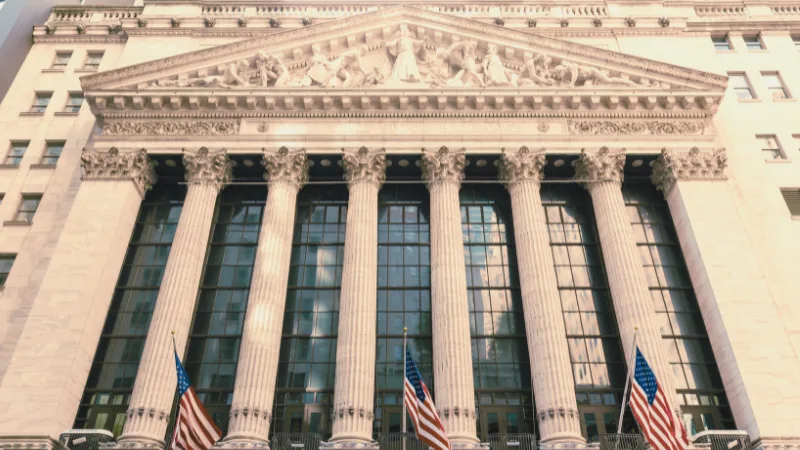
For more than two centuries, the New York Stock Exchange has stood as the ultimate symbol of traditional finance. Fixed trading hours, centralized control, and tightly regulated systems defined its dominance.
Now, that same institution is making one of the most aggressive pivots in its history.
Behind the scenes, the NYSE and its parent company Intercontinental Exchange are positioning themselves for a future where blockchain, tokenized assets, and round-the-clock trading could redefine global markets.
And investors should be paying close attention.
Wall Street’s Biggest Shift Since Electronic Trading
The transformation underway is not incremental. It is structural.
NYSE leadership believes the financial system is entering its next evolution. After moving from paper-based trading to electronic systems in the late 20th century, the next phase is digital infrastructure built on blockchain.
“We’ve been on the forefront of the evolution of markets from analog to electronic, and I think now we’re seeing, a quarter-century later, the next wave of transition from electronic to digital,” said Michael Blaugrund, a senior executive at ICE.
That vision includes:
- Blockchain-based trading systems
- Tokenized equities
- Instant settlement of trades
- 24/7 market access
If successful, this would fundamentally reshape how securities are issued, traded, and settled.
The Push Toward 24/7 Markets
One of the most disruptive ideas being explored is continuous trading.
Traditional stock markets operate on fixed hours. Crypto markets do not.
NYSE is now working to bridge that gap by developing tokenized securities that can trade around the clock. Through partnerships with firms like Securitize, the exchange is exploring a system where stocks exist as blockchain-based tokens.
This could allow:
- Instant settlement instead of T+2 delays
- Reduced counterparty risk
- Global participation at any time
In simple terms, Wall Street could start operating more like crypto.
Strategic Investments Signal Long-Term Commitment
This is not just talk. ICE is putting real capital behind the shift.
One of the most notable moves is a reported $200 million investment in crypto exchange OKX, valuing the platform at $25 billion.
The partnership goes further than capital:
- ICE plans to launch regulated crypto futures tied to OKX pricing
- OKX users may gain access to U.S. futures markets
- Tokenized equities could eventually be distributed globally
That creates a powerful bridge between traditional finance and crypto-native platforms.
Wall Street Is Moving Together, Not Alone
NYSE is not acting in isolation. The broader financial system is shifting in the same direction.
- Nasdaq is working with Kraken to explore tokenized stock trading
- Major banks like JPMorgan Chase and Bank of America are evaluating stablecoin launches
- Institutional demand for digital assets continues to rise
This is not a niche trend anymore. It is becoming core financial infrastructure.
Why Now? Policy and Demand Are Aligning
Two forces are accelerating the shift.
First is regulation.
Under Donald Trump, the regulatory environment has become more favorable toward digital assets. That has removed some of the uncertainty that previously kept institutions on the sidelines.
Second is investor demand.
Retail and institutional investors alike are pushing for:
- Access to alternative assets
- Faster settlement
- More flexible trading hours
Wall Street is responding.
Even as Crypto Prices Struggle
Ironically, this institutional push is happening during a period of weakness for crypto markets.
Bitcoin recently experienced one of its worst starts to a year since 2018, falling well below previous highs.
In past cycles, that kind of downturn would have slowed institutional adoption.
This time, it has not.
That tells you something important. Wall Street is not chasing price. It is building infrastructure.
The Rise of Prediction Markets
NYSE’s ambitions are not limited to trading stocks and crypto.
ICE has also made a significant move into prediction markets through a major investment in Polymarket.
Prediction markets allow users to wager on outcomes ranging from elections to economic data releases. The sector has exploded in popularity, particularly among younger investors.
However, it is also controversial.
Regulators are still debating whether these markets should be treated like financial instruments or gambling platforms.
NYSE leadership has signaled that it prefers to focus on areas like:
- Weather-related contracts
- Corporate event predictions
- Economic indicators
Rather than more legally complex areas like sports betting.
Lessons From Past Wins and Failures
This is not NYSE’s first bet on crypto.
Back in 2015, the exchange took an early stake in Coinbase when Bitcoin was still trading around $300. That investment reportedly generated about $900 million in returns.
But not every bet has worked.
The launch of Bakkt in 2018 was intended to bring institutional crypto trading into the mainstream. Instead, it struggled with shifting business models and declining relevance.
ICE ultimately wrote down more than $1 billion tied to Bakkt, highlighting the risks of entering emerging markets too early or without product-market fit.
What This Means for Investors
The key takeaway is simple.
Wall Street is not abandoning crypto. It is integrating it.
That distinction matters.
Instead of treating digital assets as a speculative side market, institutions like NYSE are embedding blockchain into the core financial system.
For investors, that creates several implications:
1. Infrastructure Plays May Outperform Speculation
The biggest winners may not be cryptocurrencies themselves, but the companies building the rails.
2. Tokenization Could Unlock New Liquidity
Assets that were previously illiquid could become tradable in real time.
3. Market Hours May Become Irrelevant
The concept of a “closing bell” could eventually disappear.
4. Regulation Will Define Winners
Companies that align with U.S. regulatory frameworks will likely dominate.
The Bottom Line
The New York Stock Exchange is not being disrupted by crypto.
It is adapting to it.
Whether this transformation succeeds or fails will depend on execution, regulation, and market adoption. But one thing is clear.
The line between traditional finance and digital assets is disappearing.
And once that happens, the entire investing landscape changes.
About Author