For decades, Iran survived by staying just below the threshold of direct confrontation. It relied on shadow oil shipments, asymmetric attacks, and strategic disruption. That formula worked against sanctions.
It is now colliding with something it was never built to handle: a sustained, enforced blockade.
And markets are only beginning to understand what that means.
How a Shipping War Turned Into Economic Containment
The escalation did not begin with the blockade. It began with Iran attempting to weaponize uncertainty.
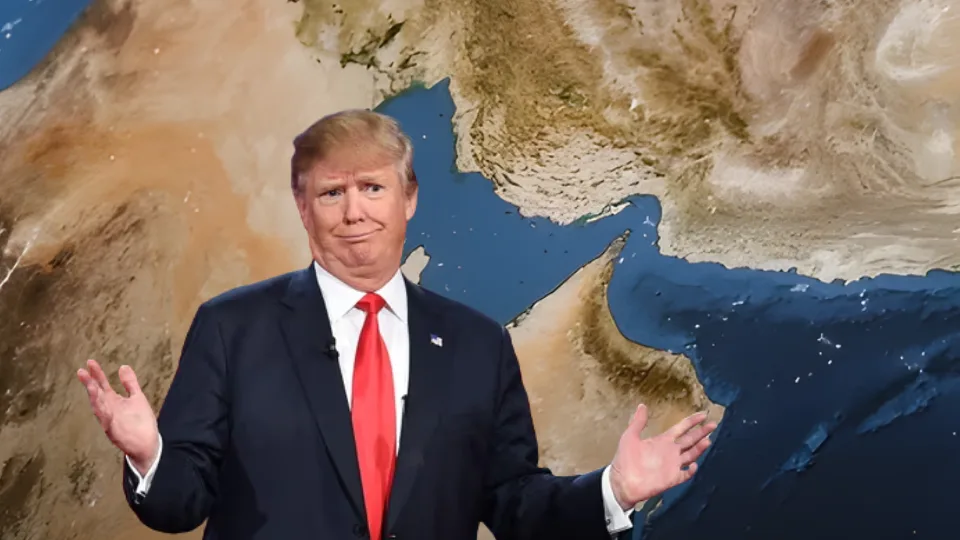
Early in the conflict, Tehran targeted commercial shipping in the Strait of Hormuz, effectively freezing traffic through one of the world’s most critical energy chokepoints. Roughly 20 percent of global oil and liquefied natural gas flows pass through that corridor. By disrupting movement, Iran triggered a spike in market anxiety without needing to fully control the waterway.
That distinction matters.
“Iran was able to create a crisis of market confidence. But disruption is not control,” said David Des Roches, a former Defense Department official focused on the Persian Gulf. “With the U.S. blockade, it’s facing a reckoning.”
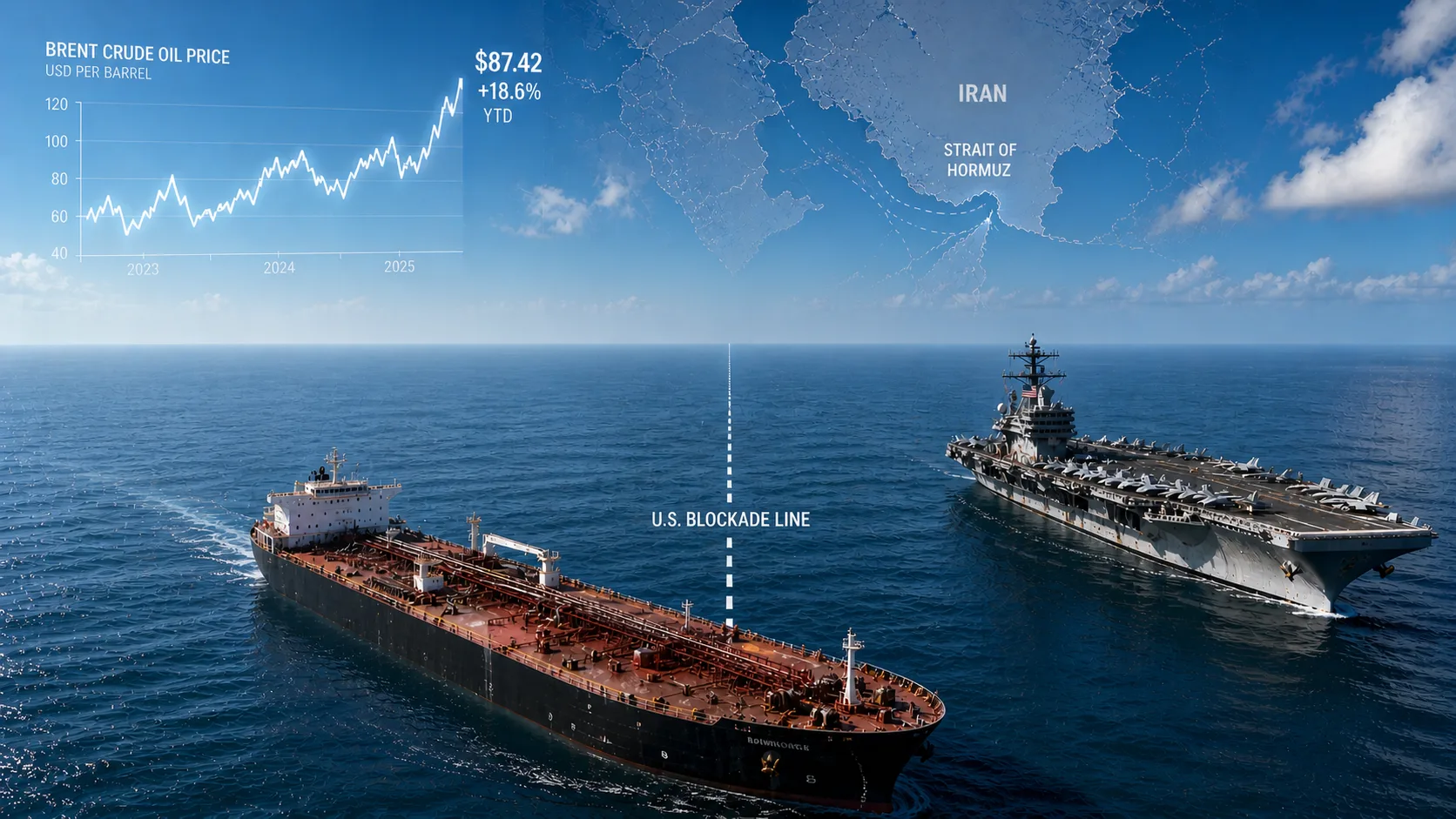
Six weeks later, the U.S. responded with a move that rewrote the rules. Instead of defending shipping lanes alone, it targeted Iran’s economic lifeline directly by blockading all Iranian ports.
The impact was immediate.
Iran’s shadow tanker network, built over years to bypass sanctions, stalled. Ships that previously went dark and transferred oil at sea were tracked, intercepted, or turned back. According to U.S. Central Command, at least 44 vessels tied to Iranian trade were forced to reverse course. Data from Kpler shows no confirmed Iranian oil shipments successfully reaching China since the blockade tightened.
That is the critical break.
Iran’s workaround system did not fail gradually. It stopped functioning.
Meanwhile, Iran’s domestic economy is deteriorating fast. The currency has collapsed, losing more than half its value over the past year. The exchange rate surged to 1.81 million rials per dollar. Food prices are rising sharply. Over a million people are reportedly out of work. Internet disruptions have compounded the economic damage by hitting digital businesses.
At the political level, the pressure is splitting decision makers.
Moderates are pushing for negotiations, viewing continued conflict as unsustainable. Hard-liners are pushing for escalation, arguing that only a dramatic move can force the U.S. to lift the blockade.
That tension is where the next phase of this story will come from.
The Strategy Collapse Nobody Was Pricing In
The headlines focus on ships, missiles, and threats in the Strait of Hormuz. That is not where the decisive shift is happening.
The real battle is logistical.
Iran’s entire economic survival model has depended on one assumption: that it could always move enough oil to China to stay afloat. That assumption was built on evasion tactics, not dominance. Shadow fleets, covert transfers, and partial enforcement created just enough leakage to keep cash flowing.
The blockade changes that equation from leakage to containment.
Iran is now attempting to reroute trade through land corridors, including rail shipments to China and overland imports via Pakistan and the Caucasus. But these alternatives only cover about 40 percent of trade capacity, according to its own shipping association.
That gap is the story.
This is no longer about sanctions that can be dodged. It is about physical restriction of movement.
And that introduces a new variable into global markets: durability.
Sanctions create friction. Blockades create ceilings.
Iran can survive friction for years. It cannot survive a hard ceiling indefinitely without either collapsing economically or escalating militarily.
That binary outcome is what markets are starting to price.
Where the Pressure Shows Up First in Markets
The immediate impact is volatility, but the deeper shift is structural.
Oil markets are no longer reacting purely to disruption risk in the Strait of Hormuz. They are now factoring in sustained supply removal from Iran. That changes pricing dynamics from temporary spikes to potentially longer-lasting supply tightness.
Equities tied to energy are responding accordingly. Companies with exposure to upstream production, transport infrastructure, and refining margins are positioned differently in a world where supply constraints are persistent rather than episodic.
The broader market is also recalibrating geopolitical risk premiums.
This is not a flashpoint event. It is a drawn-out pressure campaign with unclear resolution timing.
The Interest Rate Wildcard Nobody Wants Right Now
Energy feeds inflation expectations, and inflation feeds rates.
If oil prices remain elevated due to constrained supply, central banks face renewed pressure. Even if core inflation moderates, energy shocks can destabilize expectations quickly.
That matters because the market had been positioning for easing cycles.
A sustained energy-driven inflation floor complicates that outlook. It pushes rate cuts further out or reduces their magnitude.
Bond markets are sensitive to that shift, especially at the long end.
The Second-Order Winners and Losers
Energy is the obvious beneficiary, but second-order effects matter more.
Industrials tied to shipping and logistics may see cost pressures rise. Airlines and transportation companies face margin compression. Defense stocks gain from sustained geopolitical tension. Technology infrastructure could become a target, especially given threats to undersea cables.
One underappreciated angle is telecommunications risk.
Iran has signaled potential disruption of undersea internet cables in the Strait of Hormuz. That introduces a non-energy layer of global disruption that could affect data flows, financial systems, and cloud infrastructure.
Markets are not fully pricing that yet.
When a Regional Conflict Becomes a Global Cost Problem
This conflict is shifting from regional tension to global economic friction.
A prolonged blockade introduces the possibility of stagflationary pressure: slower growth combined with higher input costs.
It also reinforces a broader trend already underway, which is fragmentation of global trade routes. Supply chains become less efficient. Costs rise. Redundancy replaces optimization.
That is not a short-term story.
It is a multi-year investment theme.
The “Choke Point Cascade” Model
To make sense of this situation, investors need a repeatable way to evaluate similar events.
Call it the Choke Point Cascade.
Stage 1: Disruption
A geopolitical actor creates instability at a critical node. Markets react to uncertainty. Prices spike temporarily.
Stage 2: Containment
A stronger actor responds by restricting the source of disruption. This moves the conflict from uncertainty to constraint.
Stage 3: Compression
The constrained actor loses flexibility. Economic pressure builds internally. Alternative routes fail to compensate.
Stage 4: Decision Point
The constrained actor must choose between escalation or concession.
Stage 5: Spillover
The outcome spreads beyond the original choke point into adjacent systems, including energy, trade, and financial markets.
We are currently between Stage 3 and Stage 4.
That is the most unstable phase.
It is where volatility is highest, outcomes are uncertain, and market mispricing is most likely.
The Risk Everyone Sees vs. The One That Actually Matters
The obvious narrative is straightforward.
Blockade leads to supply constraints. Supply constraints lead to higher oil prices. Higher oil prices drive inflation and volatility.
That is already priced to some extent.
The less obvious risk sits elsewhere.
If the blockade holds and Iran cannot export oil, global supply might tighten less than expected in the long term because the disruption becomes predictable. Markets adapt to predictable shortages faster than chaotic ones.
The real wildcard is escalation.
Hard-liners within Iran are arguing for renewed military action to force oil prices higher and pressure the U.S. politically. That could involve targeting infrastructure, including undersea cables or broader regional assets.
That kind of escalation introduces nonlinear risk.
It is not about gradual price increases.
It is about sudden system shocks.
The Signals That Will Tell You Who Blinks First
Several signals will determine how this evolves.
Watch for changes in Iranian behavior at sea. If attacks on shipping resume at scale, it suggests hard-liners are gaining influence.
Monitor oil flow data closely. Any evidence of Iranian crude reaching buyers again would signal cracks in the blockade.
Pay attention to internal Iranian politics. Statements from leadership will reveal which faction is gaining control.
Track energy price reactions to non-events. If oil remains elevated without new disruption, markets are pricing structural risk.
Watch for cyber or infrastructure incidents. Threats against undersea cables could materialize quickly and expand the conflict.
Finally, monitor U.S. policy signals. Any shift in the blockade strategy changes everything.
What This Means If You’re Allocating Capital Right Now
The Strait of Hormuz was never the endgame.
The blockade is.
Iran’s long-standing strategy depended on flexibility, evasion, and controlled disruption. The U.S. response removes that flexibility and forces a decision.
This is no longer a short-term geopolitical flare-up.
It is a structural shift in how energy supply risk is created and managed.
Positioning for temporary volatility misses the point.
The real opportunity lies in understanding how sustained constraints, political fracture, and escalation risk interact.
That is where pricing inefficiencies will emerge.
About Author