While investors increasingly debate whether artificial intelligence has entered dangerous bubble territory, the Amazon founder effectively argued that even a collapse would still produce long-term winners worth owning.
That matters because markets are currently being held up by a small cluster of AI-driven mega caps, massive data center spending, and the belief that artificial intelligence will reshape the global economy faster than the internet did. Bezos is telling investors the spending itself may be the real opportunity, even if parts of the market eventually implode.
Silicon Valley’s Biggest Bet Keeps Getting Bigger
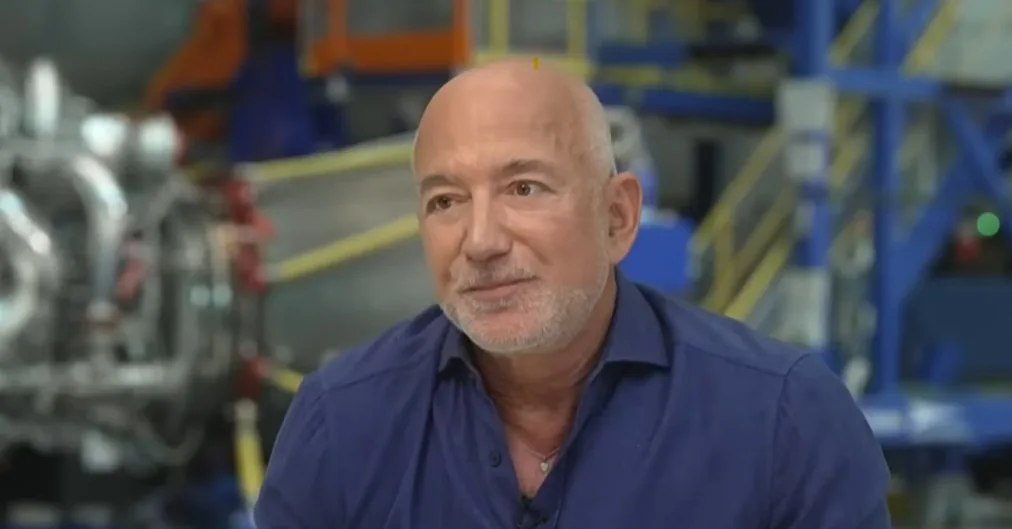
Speaking to CNBC on Wednesday, Bezos brushed aside concerns that today’s AI boom resembles previous speculative manias.
“Even if it does turn out to be a bubble, you shouldn’t worry about it because the bubble is driving investment and a lot of the investment is going to turn out to be very healthy,” Bezos said.
That is a striking comment considering how stretched valuations already appear across parts of the AI trade. Nvidia, OpenAI-linked firms, cloud providers, and infrastructure suppliers have all seen enormous capital inflows as investors race to position themselves for what many believe could become the defining technology cycle of the next decade.
Bezos acknowledged that “every experiment is getting funded,” including weak business ideas. But he argued that this is exactly how technological revolutions historically work.
“It’s because investors at this moment haven’t learned yet how to discriminate between good ideas and bad ideas,” Bezos said. “So from a point of view of civilization, of society, these kinds of industrial cycles can actually be very healthy because they drive the technology forward.”
The comparison Bezos used was important. He pointed to the biotech boom of the 1990s, where investors lost enormous sums after speculative excesses faded, yet the industry still produced transformative medical breakthroughs.
For investors, that analogy carries a major implication: the companies that survive the shakeout may become dominant cash-flow machines for decades.
The New Arms Race Isn’t About Apps
Bezos’ comments come as spending across the AI ecosystem reaches historic levels.
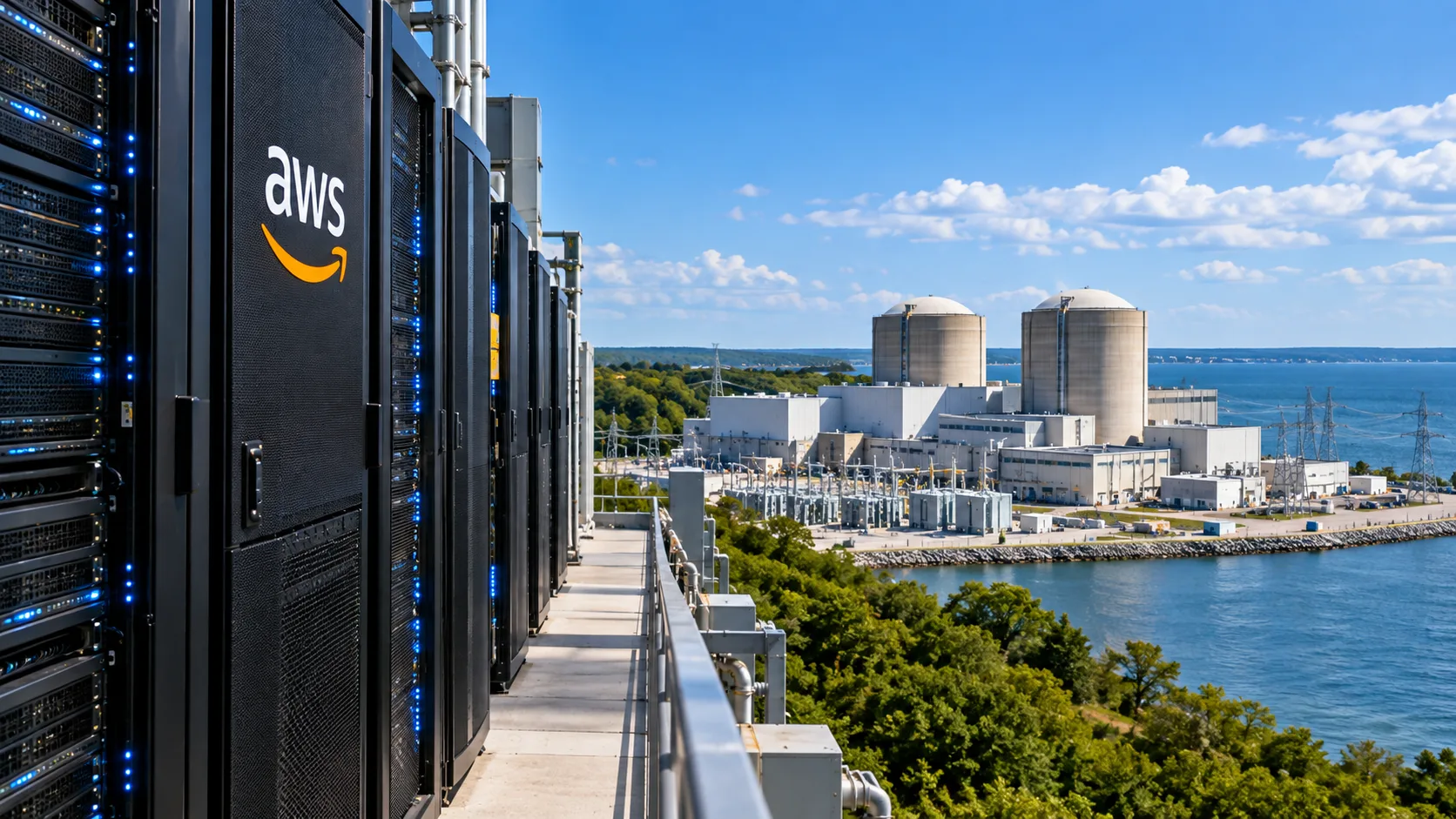
Amazon, Microsoft, and Alphabet are expected to collectively spend hundreds of billions of dollars building AI infrastructure, expanding cloud capacity, securing chips, and constructing data centers capable of handling next-generation models.
Wall Street increasingly understands that AI is becoming an infrastructure war as much as a software battle.
The winners may not simply be chatbot creators or flashy consumer apps. Instead, enormous value could accrue to the companies controlling compute power, semiconductor supply chains, electricity demand, cloud infrastructure, and enterprise integration.
That is why Nvidia has become one of the market’s most important stocks. It is also why energy companies, utility providers, cooling system manufacturers, and industrial suppliers have quietly become secondary beneficiaries of the AI boom.
Bezos appears to recognize this dynamic clearly.
His new startup, Project Prometheus, is focused on applying AI to physical-world engineering tasks rather than consumer chatbots alone. According to Bezos, the company aims to build what he called an “artificial general engineer.”
That phrase may end up becoming one of the more important clues investors hear this year.
Where the Smart Money May Actually End Up
Much of the AI conversation still revolves around software interfaces and language models. Bezos is pointing investors toward something deeper: AI’s industrial application layer.
If AI moves beyond generating text and begins meaningfully designing physical systems, engineering products, manufacturing processes, drug discovery pipelines, or robotics workflows, the economic impact could become exponentially larger than today’s consumer-focused AI narrative.
That shifts the investment landscape dramatically.
Suddenly, the AI winners are no longer limited to cloud giants and chipmakers. Industrial automation firms, advanced manufacturing companies, robotics suppliers, aerospace contractors, pharmaceutical developers, and engineering software providers could all become major beneficiaries.
Bezos specifically described Project Prometheus as a modern evolution of CAD software.
That should immediately put companies connected to industrial design ecosystems on investor watchlists.
The broader market may still be underestimating how quickly AI could begin penetrating physical industries that historically moved much slower than software markets.
The Market Has Seen This Movie Before
Bezos has earned the right to be taken seriously when discussing technological platform shifts.
Amazon was once viewed as an overhyped money-losing internet company during the dot-com era. The stock collapsed more than 90% after the bubble burst. Yet the infrastructure Amazon built during that speculative cycle eventually helped create AWS, one of the most profitable businesses in modern corporate history.
That historical parallel matters now.
The AI boom could absolutely produce a painful correction. Many speculative companies will likely disappear. Capital destruction is common during technology revolutions.
But the infrastructure built during the frenzy may become foundational for the next generation of global commerce, defense systems, healthcare development, logistics, and manufacturing.
That is effectively Bezos’ argument.
The market may be overly focused on whether a bubble exists while missing where durable long-term value is actually being created.
Pressure Points Investors Need to Watch Closely
• AI infrastructure spending guidance from Amazon, Microsoft, Alphabet, and Meta
• Semiconductor demand trends tied to Nvidia and AI server production
• Electricity demand growth linked to data center expansion
• Industrial AI partnerships involving engineering, robotics, and manufacturing firms
• Enterprise AI monetization results versus consumer AI adoption
• Potential regulatory scrutiny as AI models become more integrated into critical infrastructure
• Signs of speculative excess in private AI startup valuations
• OpenAI’s continued fundraising activity and capital spending expansion
One Takeaway Matters More Than the Rest
Jeff Bezos is effectively arguing that investors are asking the wrong question.
The real issue may not be whether an AI bubble exists. It may be whether the infrastructure, tools, and industrial systems being built during this cycle become essential parts of the global economy afterward.
History suggests technological bubbles often leave behind world-changing platforms once the speculation burns off.
The internet boom created Amazon.
The biotech boom created revolutionary drugs.
Bezos clearly believes the AI boom will create something even bigger.
For investors, the challenge now is identifying which companies are building lasting infrastructure before the market fully understands where the real long-term value will sit.
About Author