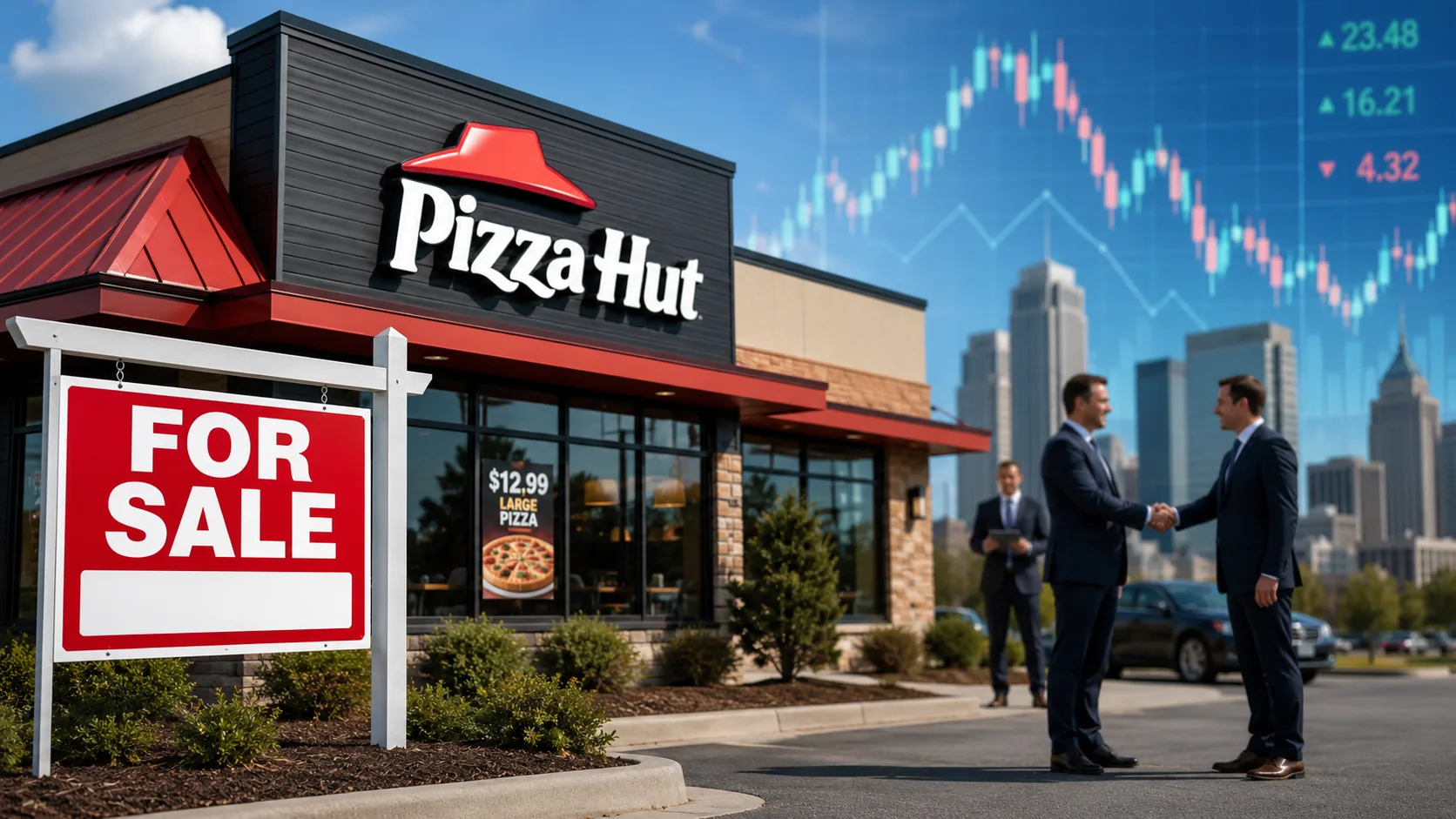
Reports indicate that Yum Brands is in exclusive discussions with private equity firm LongRange Capital regarding a potential sale of Pizza Hut. No final agreement has been announced, and negotiations could still fall apart. But the fact that Yum is willing to entertain offers for one of its flagship brands raises important questions about the future of the company and the broader restaurant industry.
For investors, this story is about much more than pizza.
It is about corporate portfolio management, changing consumer habits, private equity’s growing appetite for underperforming brands, and what a potential sale could mean for Yum shareholders.
Why Would Yum Brands Sell Pizza Hut?
At first glance, selling Pizza Hut may seem surprising.
After all, Pizza Hut is one of the most recognizable restaurant chains in the world. The brand operates thousands of locations across more than 100 countries and generates billions of dollars in annual sales.
But investors should remember an important principle:
A famous brand is not always a great business.
Over the past several years, Pizza Hut has become the weakest link in Yum’s portfolio.
The company has struggled to keep pace with competitors such as Domino’s and Little Caesars, both of which have successfully capitalized on value pricing, digital ordering, and delivery innovations.
Pizza Hut’s U.S. same-store sales have reportedly declined for 10 consecutive quarters.
That kind of performance becomes increasingly difficult to justify inside a public company that also owns faster-growing assets.
Meanwhile, Yum’s other major brands continue to perform relatively well:
- Taco Bell remains one of the strongest-performing restaurant brands in America.
- KFC continues to expand internationally.
- Digital ordering and loyalty programs continue gaining traction across the company’s portfolio.
From a shareholder perspective, management may simply view Pizza Hut as a distraction.
Pizza Hut’s Long Decline
Pizza Hut was once the undisputed king of pizza.
For decades, families gathered under its iconic red roofs for dine-in experiences that helped define the brand.
But consumer behavior has changed dramatically.
Today’s pizza market revolves around:
- Delivery speed
- Mobile ordering
- Loyalty rewards
- Value promotions
- Convenience
Companies like Domino’s invested heavily in technology years before many competitors recognized its importance.
The results speak for themselves.
Domino’s became synonymous with delivery innovation, while Pizza Hut often appeared to be playing catch-up.
The rise of food delivery apps further intensified competition.
Consumers suddenly had access to dozens of restaurant options with just a few taps on their smartphones.
Pizza was no longer competing solely against other pizza chains.
It was competing against every restaurant on DoorDash and Uber Eats.
That shift fundamentally changed the economics of the business.
Why Private Equity Wants Pizza Hut
The more interesting question may not be why Yum wants to sell.
It may be why someone wants to buy.
Private equity firms often look for businesses that have three characteristics:
- Strong brand recognition
- Stable cash flow
- Operational problems that can potentially be fixed
Pizza Hut checks all three boxes.
Despite its challenges, the company still benefits from enormous consumer awareness.
Millions of customers already know the brand.
Thousands of franchisees already operate locations.
The infrastructure already exists.
From a private equity perspective, Pizza Hut may represent a turnaround opportunity rather than a broken business.
LongRange Capital could potentially focus on:
- Store optimization
- Franchise restructuring
- Cost reductions
- Improved digital ordering systems
- Marketing changes
- Menu simplification
Private equity firms often believe they can unlock value where public companies no longer see opportunity.
Whether that ultimately works remains to be seen.
What This Could Mean for Yum Shareholders
Investors often reward companies that simplify their operations.
If Yum successfully sells Pizza Hut at an attractive valuation, several benefits could emerge.
1. More Focus on Growth Brands
Management could devote more attention and resources to Taco Bell and KFC.
Both brands currently offer stronger growth profiles than Pizza Hut.
Investors generally prefer businesses that concentrate resources on their highest-return opportunities.
2. Cash Proceeds
A sale would likely generate significant cash.
Yum could potentially use the proceeds to:
- Repurchase shares
- Reduce debt
- Increase dividends
- Invest in expansion opportunities
Each option could potentially create shareholder value.
3. Improved Financial Metrics
Removing a slower-growing business from the portfolio could improve:
- Revenue growth rates
- Operating margins
- Return on invested capital
- Investor sentiment
Wall Street often rewards companies that become simpler and easier to understand.
Could This Be a Warning Sign?
Not every investor will view a sale positively.
Some may wonder whether Yum is selling because Pizza Hut’s challenges are becoming increasingly difficult to fix.
That concern deserves consideration.
If Pizza Hut commands a lower-than-expected sale price, investors could interpret it as evidence that the brand’s problems are more severe than management has publicly acknowledged.
The final valuation will matter.
A strong sale price could reinforce confidence in Yum’s strategy.
A weak sale price could raise questions.
The Restaurant Industry Is Facing Major Headwinds
Pizza Hut’s challenges are not unique.
The entire restaurant industry faces growing pressure from multiple directions.
Inflation
Although inflation has cooled from peak levels, food, labor, insurance, and operating costs remain elevated.
Many restaurants continue facing margin pressure.
Consumer Spending Concerns
Consumers are becoming more selective.
Higher interest rates, housing costs, and economic uncertainty have caused many households to pull back on discretionary spending.
Dining out often becomes one of the first expenses families reduce during difficult times.
Labor Costs
Restaurant operators continue grappling with labor shortages and wage pressures.
Higher payroll expenses can significantly impact profitability.
Technology Investments
Restaurants increasingly need to invest in:
- Mobile apps
- Loyalty programs
- Artificial intelligence
- Delivery integration
- Digital marketing
Those investments require substantial capital.
Chains that fall behind technologically risk losing market share.
A Larger Trend: Companies Are Becoming More Focused
Investors should view the Pizza Hut situation within a broader corporate trend.
Many large companies have spent the last decade simplifying their operations.
Management teams increasingly ask a simple question:
“Does this business help us achieve our highest growth potential?”
If the answer is no, divestitures often follow.
We’ve seen similar moves across numerous industries, including:
- Consumer goods
- Technology
- Healthcare
- Financial services
- Energy
The goal is usually the same.
Focus resources on the strongest businesses.
Eliminate distractions.
Improve shareholder returns.
Pizza Hut may simply be the latest example.
What Investors Should Watch Next
Several developments will determine whether this story becomes a major catalyst for Yum stock.
Sale Price
The most important factor will be valuation.
Investors should pay close attention to how much LongRange Capital is willing to pay.
Use of Proceeds
How Yum allocates any proceeds could significantly influence shareholder returns.
Management Commentary
Executives will likely provide additional details regarding their long-term strategy if a deal moves forward.
Pizza Hut Performance
If negotiations collapse, investors should continue monitoring Pizza Hut’s sales trends.
Continued deterioration could create ongoing pressure on Yum’s valuation.
Why This Matters for Investors
The potential sale of Pizza Hut is not simply a restaurant industry story.
It is a case study in how public companies evolve.
Yum Brands appears increasingly focused on its strongest growth engines, particularly Taco Bell and KFC. If management believes Pizza Hut can generate greater value under different ownership, shareholders could ultimately benefit from a sale.
At the same time, investors should remember that iconic brands do not guarantee strong returns.
Markets reward growth, profitability, and execution.
For years, Pizza Hut has struggled to deliver all three.
The coming months may determine whether Yum can successfully turn that challenge into an opportunity for shareholders.
And if a deal gets done, it may mark the end of Pizza Hut’s chapter within Yum Brands and the beginning of one of the largest restaurant turnaround stories in recent years.
About Author