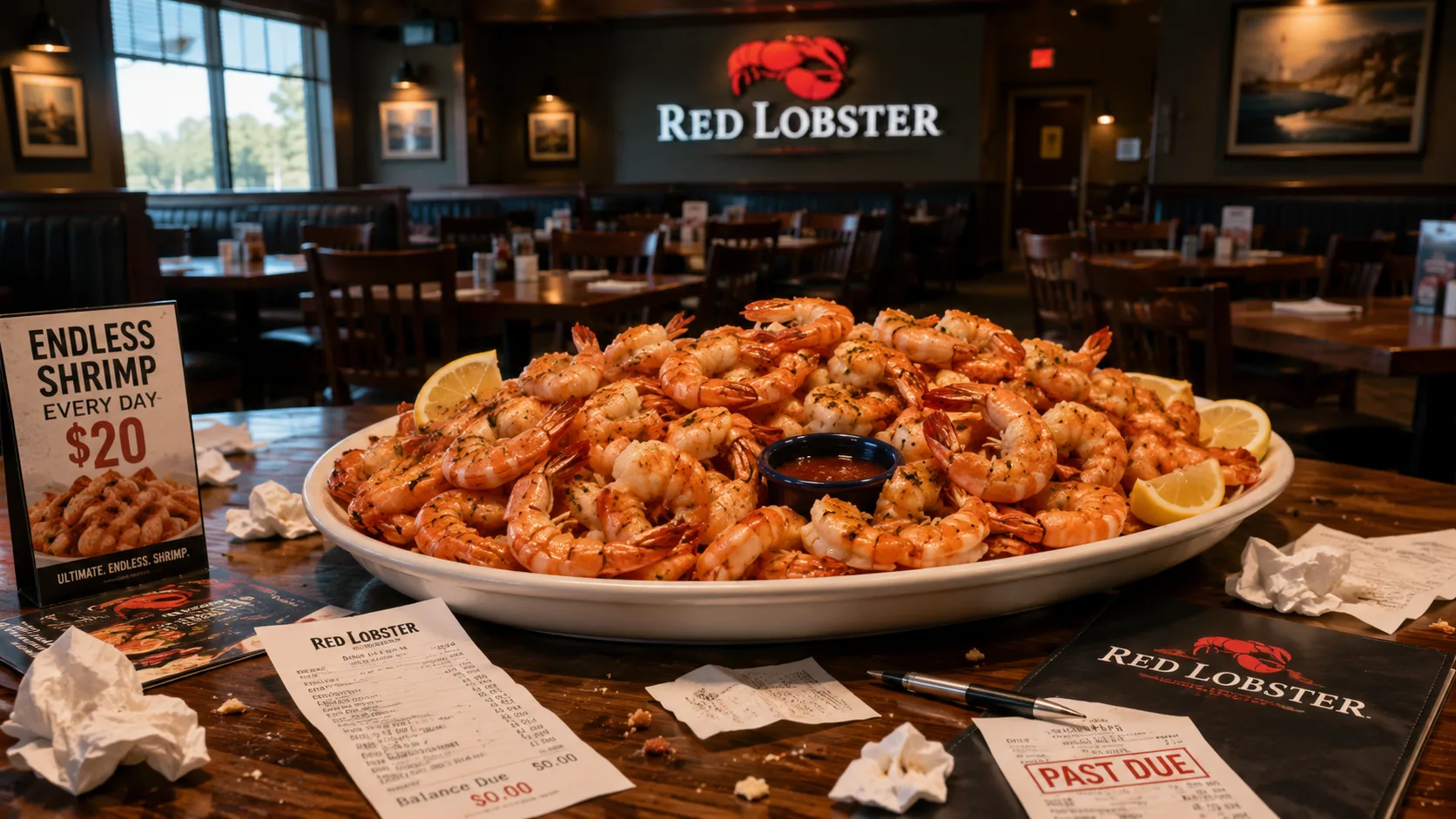
For years, Red Lobster’s Ultimate Endless Shrimp promotion was one of the restaurant industry’s most recognizable marketing campaigns. But according to a new lawsuit, the promotion that was supposed to fill dining rooms instead became a financial disaster that helped push the iconic seafood chain toward bankruptcy.
Creditors are now accusing former controlling shareholder Thai Union of putting its own profits ahead of Red Lobster’s survival by forcing the struggling restaurant chain to buy overpriced shrimp while expanding the unlimited promotion despite mounting losses.
The lawsuit offers the clearest picture yet of how one of the most talked-about restaurant promotions in recent history allegedly became a major contributor to the company’s collapse.
Key Takeaways
- Creditors claim Red Lobster’s $20 Ultimate Endless Shrimp promotion became a financial “car crash.”
- The lawsuit alleges Thai Union forced Red Lobster to buy shrimp at above-market prices.
- Restaurants reportedly ran out of shrimp, slowing table turnover and hurting profitability.
- Red Lobster filed for Chapter 11 bankruptcy protection in May 2024 before emerging later that year under new ownership.
- The lawsuit seeks damages and will ultimately be decided by a jury if it proceeds.
A Promotion That Spiraled Out of Control
According to the lawsuit filed in Orange County, Florida, Thai Union knew Red Lobster was already facing serious financial challenges throughout 2023.
Instead of helping stabilize the company, creditors allege the seafood supplier pushed management to expand the Everyday $20 Ultimate Endless Shrimp promotion while requiring Red Lobster to purchase increasing amounts of shrimp directly from Thai Union at prices above prevailing market rates.
The complaint argues the arrangement primarily benefited Thai Union while significantly worsening Red Lobster’s financial position.
Creditors described the promotion as a “car crash” that overwhelmed restaurants across the country.
Why Unlimited Shrimp Became So Costly
The lawsuit paints a picture of operational chaos.
According to the filing, former interim CEO Paul Kenny and Thai Union allegedly moved forward with the promotion despite objections from Red Lobster employees who warned it would be unsustainable.
As customer demand surged, many restaurants reportedly ran out of shrimp entirely.
Instead of quickly serving diners and turning over tables, locations became backed up as kitchens struggled to keep pace with demand.
That created a double hit to profitability:
- Higher food costs
- Fewer customers served per hour
The lawsuit alleges that even after those problems became obvious, management continued the promotion rather than scaling it back.
Creditors claim that decision generated tens of millions of dollars in additional shrimp purchases from Thai Union while leaving Red Lobster with excess inventory after the promotion slowed.
Allegations Go Beyond One Promotion
While the endless shrimp campaign has become the headline, the lawsuit alleges broader conflicts of interest.
Creditors claim Thai Union effectively treated Red Lobster as a distribution channel for its own seafood products rather than operating the chain in the best interests of the business.
Among the allegations:
- Red Lobster was allegedly required to purchase shrimp at above-market prices.
- Competing shrimp suppliers were allegedly prohibited from selling to the chain.
- Thai Union allegedly continued extracting value even as Red Lobster approached insolvency.
- The lawsuit claims Thai Union failed to contribute new capital during the bankruptcy process before selling its ownership stake.
Thai Union acquired a minority investment in Red Lobster in 2016 before gaining effective control in 2020 through a majority ownership position and three of the company’s five board seats.
The company later exited its investment in May 2024 shortly before Red Lobster entered bankruptcy.
Bankruptcy Didn’t Mark the End
Red Lobster officially filed for Chapter 11 bankruptcy protection in May 2024 after battling several headwinds simultaneously.
Beyond the shrimp promotion, the company faced:
- Rising operating costs
- Expensive restaurant leases
- Increased competition across the casual dining industry
- Softer consumer spending
- A $275 million loan default in late 2023
The restructuring ultimately closed dozens of restaurants nationwide before Red Lobster emerged from bankruptcy in September 2024 under new ownership.
The chain is now owned by RL Holdings, a private investment group reportedly led by Fortress Investment Group.
Interestingly, Red Lobster has since brought back its Endless Shrimp promotion on a limited-time basis, suggesting the company still views the offer as a valuable marketing tool when carefully managed.
What This Means for Restaurant Investors
The lawsuit highlights an important lesson that extends well beyond Red Lobster.
Promotional campaigns can generate headlines and customer traffic, but if pricing fails to account for food costs, supply chain constraints, and restaurant operations, even popular promotions can become financially destructive.
For investors, the case also underscores the importance of corporate governance.
When a controlling shareholder also serves as a major supplier, conflicts of interest can emerge if decisions begin prioritizing one business over another.
Those governance risks are often overlooked until financial performance begins deteriorating.
The Bigger Picture
Red Lobster’s bankruptcy has frequently been blamed on its Endless Shrimp promotion, but the new lawsuit argues the reality was far more complicated.
According to creditors, the promotion itself was not necessarily the sole problem. Rather, they claim it became financially disastrous because of the way it was structured, supplied, and managed under Thai Union’s control.
Thai Union has not publicly responded to the allegations, and Red Lobster has also not commented on the lawsuit.
As the litigation moves forward, investors and restaurant operators alike will be watching closely to see whether a jury agrees with creditors’ claims that one of America’s most recognizable restaurant promotions became a costly example of poor corporate decision-making.
Disclosure: The allegations described in this article come from a lawsuit filed on behalf of Red Lobster’s creditors. The claims have not been proven in court, and Thai Union has not responded publicly to the allegations.
About Author