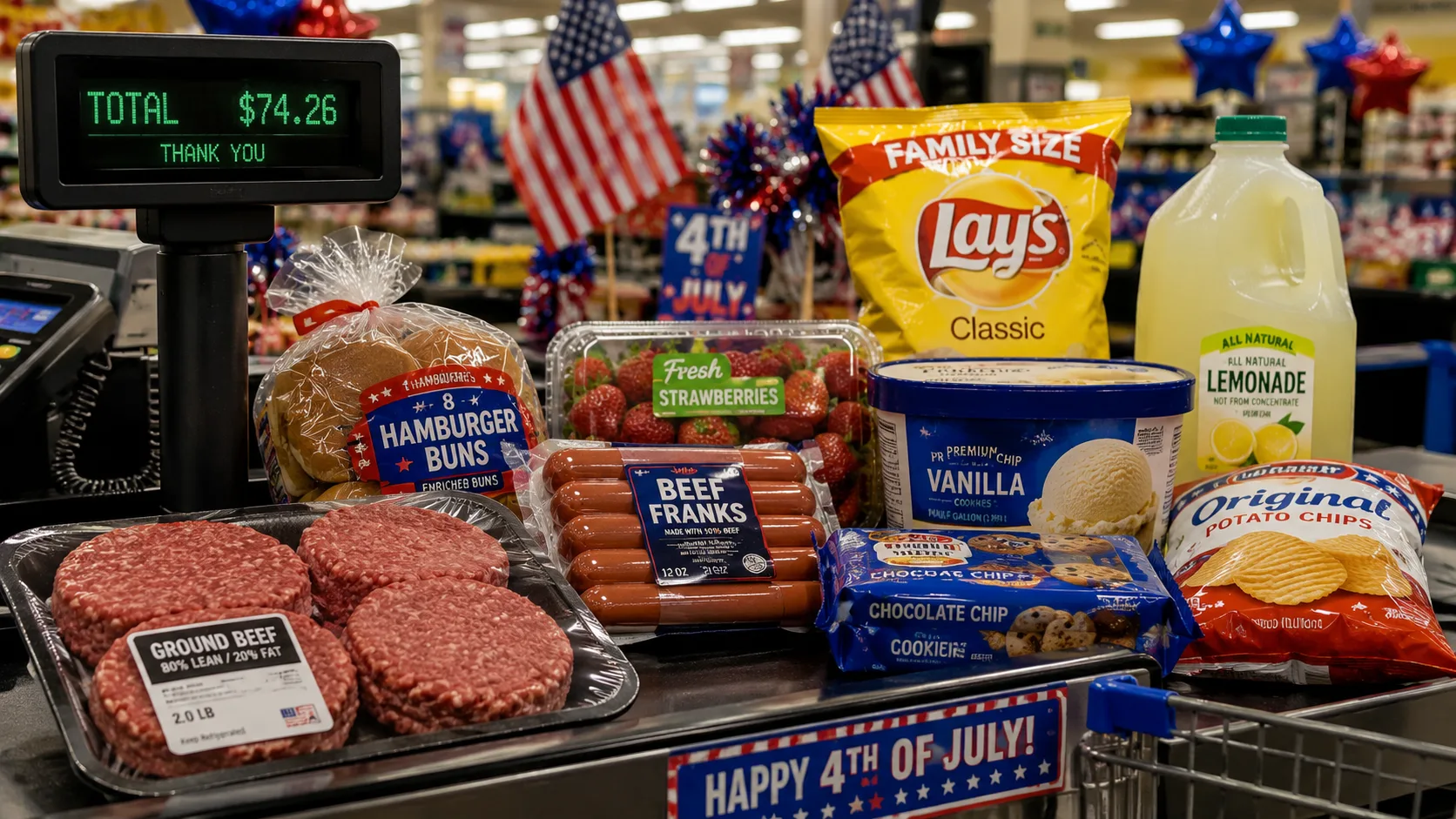
Americans celebrating the nation’s 250th birthday this Fourth of July will be paying more than ever to host a backyard barbecue.
According to the latest Summer Cookout Cost Survey from the American Farm Bureau Federation, the average cost of a traditional Independence Day cookout for 10 people has climbed to $73.82, the highest level since the organization began tracking prices in 2016. At roughly $7.38 per person, that’s nearly 4% higher than last year, highlighting how inflation continues to affect household budgets even as overall price pressures have moderated.
For investors and consumers alike, the report offers another reminder that while headline inflation has eased from its peaks, food prices remain under pressure due to supply shortages, weather disruptions and higher production costs.
The Typical Fourth of July Cookout Now Costs More Than Ever
The Farm Bureau’s annual survey measures the cost of a classic summer cookout using a consistent basket of popular holiday foods, including:
- Cheeseburgers
- Chicken breasts
- Pork chops
- Pork and beans
- Potato salad
- Potato chips
- Strawberries
- Fresh lemonade
- Chocolate chip cookies
- Ice cream
The total bill reached $73.82, up $2.90 from last year’s survey.
While that represents a record nominal price, the Farm Bureau noted that the increase closely mirrors broader inflation. Consumer prices rose 4.2% over the 12 months ending in May, meaning cookout costs have generally kept pace with the overall economy rather than dramatically outpacing it.
After adjusting for inflation using the Consumer Price Index, the purchasing power required to buy this year’s basket was actually slightly lower than last year.
In other words, shoppers are spending more dollars at checkout, but the real inflation-adjusted cost has changed very little.
Beef Continues to Lead the Price Increases
The biggest contributor to higher cookout costs remains beef.
Two pounds of ground beef now cost $14.06, representing a 5.5% increase from last year and the highest beef price recorded in the survey’s history.
Several factors are keeping prices elevated:
- The U.S. cattle herd has fallen to its lowest level in roughly 70 years after prolonged drought conditions.
- Ranchers continue to face higher feed, labor and operating costs.
- Tight supplies have limited the ability of producers to increase production despite strong consumer demand.
For many families, burgers remain the centerpiece of the holiday meal, making beef prices one of the most noticeable increases this year.
Chicken and pork also became more expensive.
Two pounds of chicken breasts increased 3.5% to $8.06, while three pounds of pork chops rose 4.7% to $14.79.
Although pork prices moved higher this year, they remain below their 2024 levels.
Produce and Desserts Also Saw Sharp Price Increases
Some of the fastest-growing costs came from produce and desserts.
Fresh strawberries jumped 12.4% to $5.27 for two pints.
The Farm Bureau cited multiple reasons for the increase, including frost damage to Florida crops earlier this year along with higher labor, fuel, refrigeration and transportation expenses.
Fresh-squeezed lemonade also became more expensive.
A 2.5-quart serving now costs $4.54, up 3.9%, largely due to higher lemon prices.
Desserts also added to grocery bills.
- Chocolate chip cookies increased 6.3% to $4.25
- Half a gallon of ice cream climbed 5.3% to $5.99
Meanwhile, pork and beans posted the largest percentage increase of any item in the survey.
The price rose 13.8% to $3.06, with higher aluminum can costs contributing to the jump.
Not Every Item Is More Expensive
There were a few bright spots for shoppers.
Homemade potato salad became significantly cheaper this year.
The average cost fell 17.8% to $2.91, largely because egg prices declined after egg-laying flocks recovered from previous avian influenza outbreaks.
Potato chips also edged lower.
A bag now averages $4.76, down 0.8% from last year thanks in part to lower potato prices.
These modest savings help offset some of the increases elsewhere but aren’t enough to prevent the overall cookout from reaching a new record.
Where You Live Makes a Difference
Location also plays a major role in holiday grocery costs.
According to the Farm Bureau survey:
| Region | Average Cookout Cost |
|---|---|
| West | $80.00 |
| South | $72.08 |
| Midwest | $71.45 |
| Northeast | $71.35 |
The West remains the most expensive region by a wide margin, with average cookout costs exceeding the national average by more than $6.
The Northeast was the least expensive region despite generally higher living costs in many of its metropolitan areas.
What Higher Food Prices Mean for Investors
The latest cookout survey illustrates that inflation remains uneven across the economy.
While energy prices and some consumer goods have stabilized, food inflation continues to be influenced by factors that monetary policy alone cannot quickly resolve.
Weather events, livestock shortages, transportation expenses and packaging costs all continue to affect grocery prices.
For investors, those trends could have broader implications across several industries, including:
- Food producers and processors
- Agricultural equipment manufacturers
- Fertilizer suppliers
- Grocery retailers
- Restaurant chains
- Consumer staples companies
Persistent food inflation may also influence future consumer spending patterns, particularly if households continue shifting more of their budgets toward necessities.
With Americans expected to spend billions celebrating Independence Day this weekend, the Farm Bureau’s latest survey serves as another reminder that inflation remains very much part of everyday life, even as broader economic indicators suggest price growth is gradually cooling.
About Author