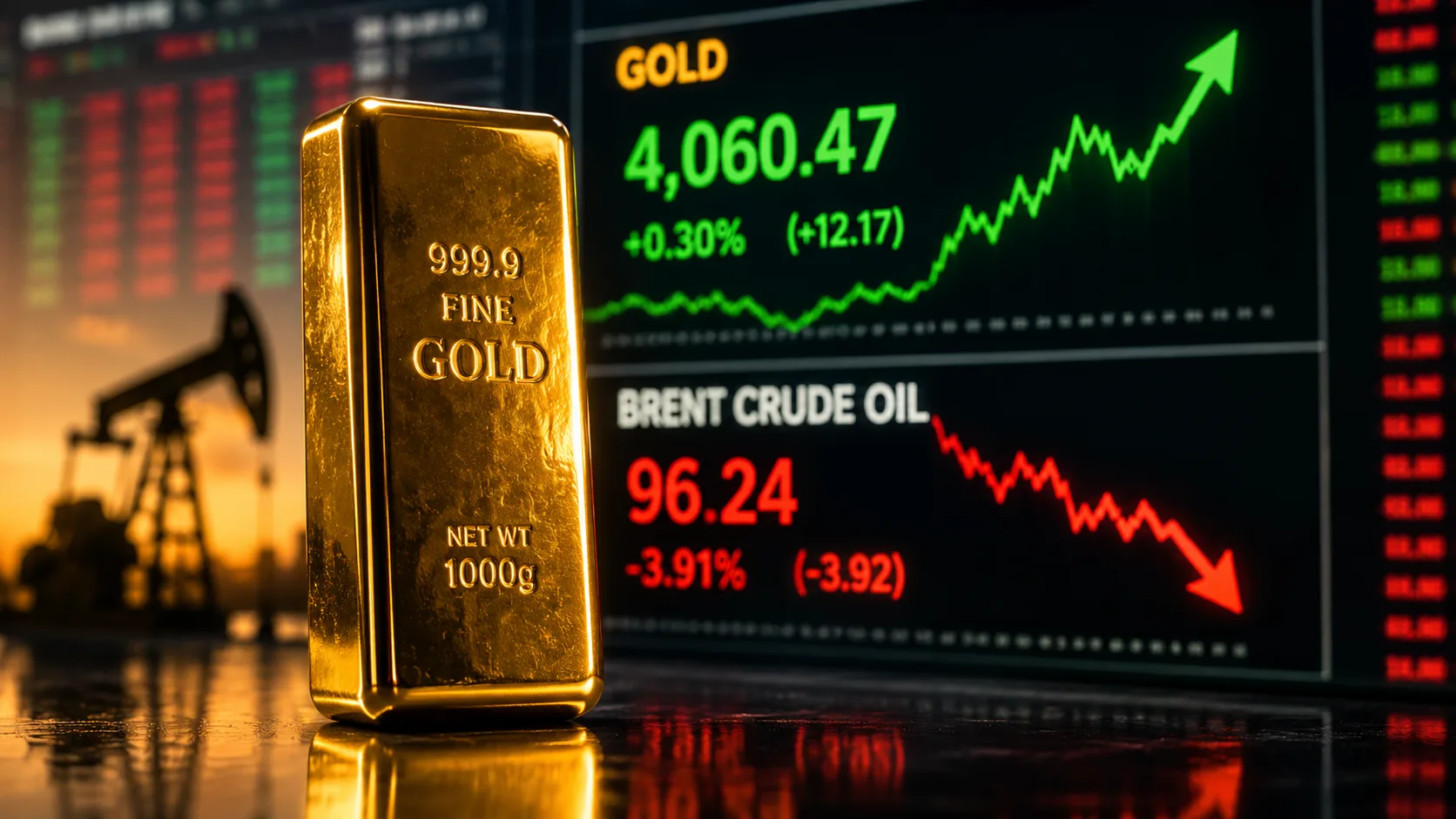
Gold prices moved higher Friday after oil prices pulled back sharply from recent highs, giving investors a chance to reassess inflation risks and the Federal Reserve’s next move.
The rebound comes after one of the most volatile weeks for commodities this year. Brent crude briefly surged above $100 per barrel following attacks on Saudi oil tankers in the Red Sea before falling nearly 4% on Friday, easing some concerns that energy-driven inflation could spiral even higher.
Despite the bounce, gold remains well below its record highs, leaving investors asking whether the recent decline has created a buying opportunity or if more downside is still ahead.
Gold Prices Recover After Sharp Selloff
Spot gold rose 0.3% Friday to around $4,060 per ounce, recovering from Thursday’s nearly 2% decline. U.S. gold futures posted similar gains as investors stepped back into the market after several weeks of heavy selling.
Even with Friday’s advance, gold has fallen roughly 23% since the Middle East conflict escalated earlier this year.
The decline has surprised many investors. Gold is traditionally viewed as a safe-haven asset during periods of geopolitical uncertainty, yet rising Treasury yields and shifting expectations for Federal Reserve policy have outweighed those defensive buying flows.
Many traders now view the recent rebound as bargain hunting rather than the start of a sustained rally.
Oil Prices Could Still Determine Gold’s Next Move
One of the biggest drivers for gold remains crude oil.
Earlier this week, Brent crude jumped more than 7%, briefly climbing above the psychologically important $100-per-barrel level after Iran-backed Houthi forces claimed attacks on Saudi oil tankers in the Red Sea.
Friday’s nearly 4% decline in oil helped calm inflation fears, but investors remain cautious.
If energy prices resume climbing, inflation expectations could move higher again, making it more difficult for the Federal Reserve to begin lowering interest rates.
That environment typically creates headwinds for gold because the metal offers no yield.
Conversely, if oil continues easing and inflation pressures soften, investors could begin anticipating lower interest rates sooner, providing support for precious metals.
All Eyes Turn to the Federal Reserve
The biggest catalyst for gold may arrive next week.
The Federal Reserve is widely expected to leave interest rates unchanged at its upcoming policy meeting.
However, investors will closely analyze every word from Fed Chair Jerome Powell for clues about the central bank’s outlook on inflation and future rate cuts.
Markets currently expect roughly an 80% probability of a September rate increase, according to CME FedWatch pricing, reflecting continued concern that inflation could remain stubbornly high.
If the Fed maintains a hawkish stance, Treasury yields could remain elevated, limiting gold’s upside.
A more cautious tone, however, could reignite buying across precious metals.
Technical Levels Investors Are Watching
Market analysts say gold appears to be building a base after months of selling pressure.
Independent metals trader Tai Wong believes gold has found support near $3,950 per ounce, while ING analysts view $4,000 as the key level to monitor in the near term.
Holding above that level could encourage additional buying from investors who missed the previous rally.
A decisive move below it, particularly if geopolitical tensions intensify or bond yields continue climbing, could trigger another wave of selling.
Silver Continues to Outperform
While gold stabilized, silver delivered stronger gains.
Spot silver climbed more than 1%, continuing to outperform gold as industrial demand expectations remain supportive.
Meanwhile:
- Platinum slipped 0.5%.
- Palladium fell 0.7%.
The mixed performance highlights that investors continue to differentiate between precious metals based on both safe-haven demand and industrial fundamentals.
What Investors Should Watch Next
Gold enters next week at an important crossroads.
The combination of Middle East tensions, volatile oil prices, elevated Treasury yields, and the Federal Reserve’s policy announcement could determine whether the recent rebound develops into a larger recovery or proves to be another short-lived bounce.
For investors, the key questions remain the same:
- Will oil remain below $100 or resume its rally?
- Will the Federal Reserve signal that rates are likely to stay higher for longer?
- Can gold hold above the critical $4,000 support level?
The answers could shape the direction of gold prices through the remainder of the summer and beyond.
About Author