
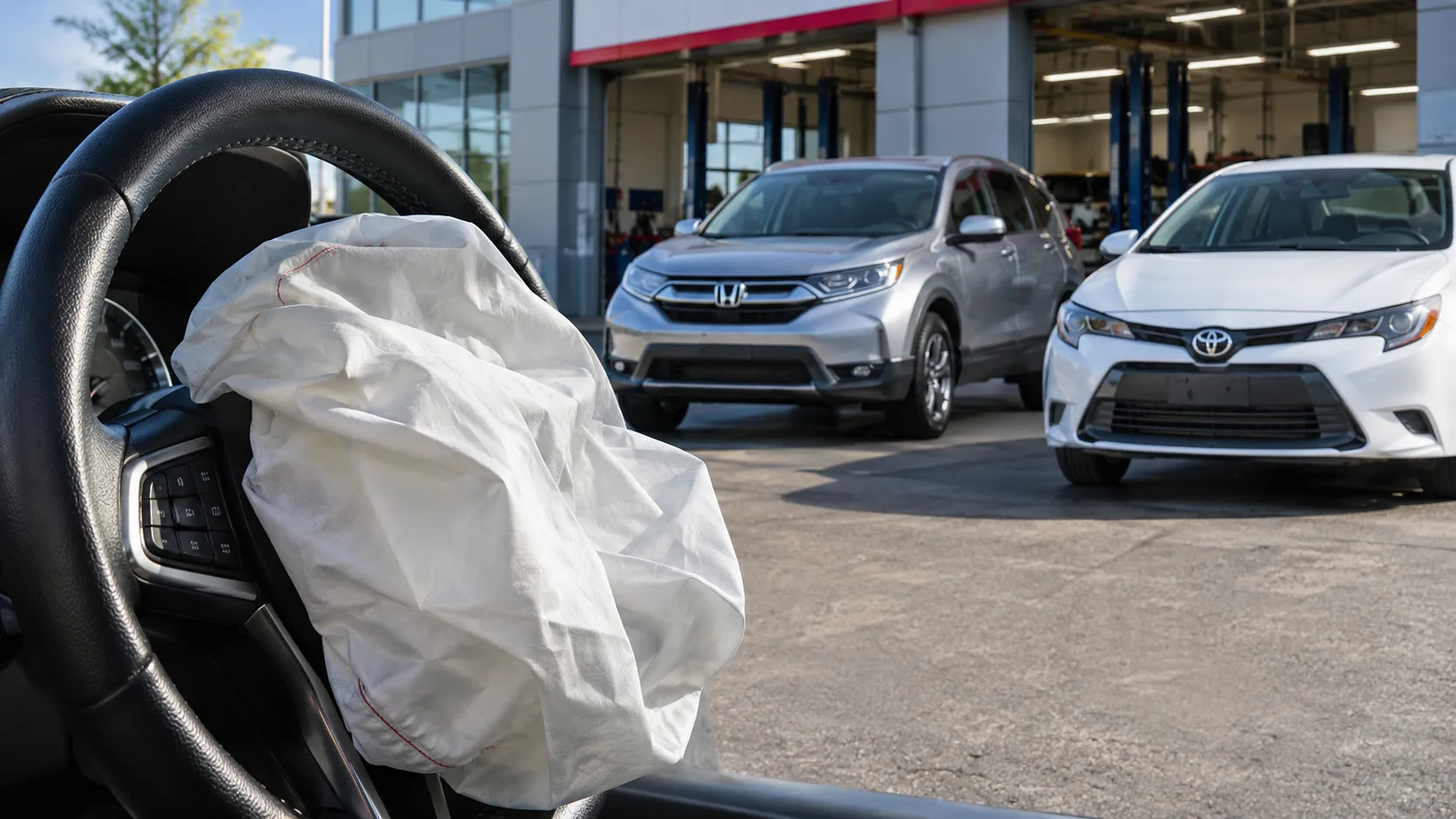
More than 1.1 million Honda, Acura, Toyota and Lexus vehicles are being recalled in the United States over potentially deadly airbag defects, reviving one of the largest automotive safety scandals in history. Even drivers who previously had their airbags replaced could be affected.
Honda is recalling 810,592 vehicles equipped with certain Takata airbag inflators that could rupture during deployment, sending metal fragments into the vehicle’s cabin. The announcement follows a separate Toyota recall affecting 314,029 vehicles in the United States over a similar safety concern.
Federal regulators warn that the defective components could cause serious injury or death.
Which Honda and Acura Vehicles Are Being Recalled?
According to the National Highway Traffic Safety Administration (NHTSA), Honda’s latest recall covers certain vehicles from the following model years:
| Vehicle | Model Years |
|---|---|
| Honda Accord | 2013 |
| Honda Civic | 2012–2013 |
| Honda CR-V | 2012–2013 |
| Acura ILX | 2013 |
| Acura RDX | 2013 |
The recall targets certain vehicles originally sold or previously registered in areas with high temperatures, humidity and significant temperature fluctuations.
Affected locations include Alabama, California, Florida, Georgia, Hawaii, Louisiana, Mississippi, South Carolina, Texas, Puerto Rico, the U.S. Virgin Islands, Guam, American Samoa and the Northern Mariana Islands.
Drivers who purchased their vehicles secondhand should pay particular attention. A vehicle currently registered in New York, Connecticut or another northern state could still be affected if it was previously registered in one of the designated areas.
Honda said it was unaware of any reports of airbag inflator ruptures, injuries or deaths associated with this particular recall.
Toyota and Lexus Owners Are Also Affected
Toyota announced a separate recall covering 790,000 vehicles worldwide, including 314,029 vehicles in the United States.
The recall involves certain front passenger airbags manufactured by Takata, including components installed during previous recall repairs.
| Vehicle | Model Years |
|---|---|
| Toyota Corolla | 2003–2008 |
| Toyota Tundra | 2005–2006 |
| Toyota Sequoia | 2005–2007 |
| Toyota 4Runner | 2016–2017 |
| Lexus SC430 | 2002–2010 |
| Lexus IS250 | 2011 |
| Lexus GX460 | 2017 |
Toyota and Lexus dealerships will replace the affected components at no cost to owners.
The Airbag Recalls by the Numbers
| Recall Details | Figures |
|---|---|
| Total U.S. vehicles affected | 1,124,621 |
| Honda and Acura vehicles affected | 810,592 |
| Toyota and Lexus vehicles affected in the U.S. | 314,029 |
| Toyota and Lexus vehicles affected worldwide | 790,000 |
| Cost of recall repairs for owners | $0 |
| Honda initial owner notifications | December 18, 2026 |
Why These Airbags Are Still Dangerous
The problem stems from a chemical propellant inside the Takata airbag inflators. Prolonged exposure to heat, moisture and repeated temperature changes can cause the material to deteriorate.
If the airbag deploys during an accident, the degraded propellant can create excessive pressure inside the inflator. That pressure can rupture the metal housing, sending sharp fragments toward the driver or passengers.
What makes Honda’s latest recall particularly concerning is that the affected inflators contain a moisture-absorbing material known as a desiccant. The material was designed to reduce the risk of deterioration caused by humidity, but long-term testing revealed that some inflators could still become dangerous.
The findings suggest that the automotive industry’s multiyear effort to resolve the Takata airbag crisis still faces significant challenges.
Already Had Your Airbag Replaced? Check Again
One of the most important details in the latest announcements could easily be overlooked by vehicle owners.
Toyota’s recall includes certain airbags that were installed as replacement components during earlier recalls. That means some drivers who believed their vehicles had already been repaired may need to return to the dealership.
Consumers should check their individual vehicle identification numbers rather than rely on previous repair records or assume that their vehicle is safe because they have never experienced an airbag problem.
The defect can remain undetected during years of normal driving, only becoming apparent when an airbag deploys during an accident.
What Vehicle Owners Need to Do Now
Honda expects to begin mailing initial safety notifications on December 18, 2026, with additional communications once replacement parts become available. However, owners can check whether their vehicles are affected without waiting for a letter.
Drivers should take the following steps:
- Locate their 17-character vehicle identification number (VIN), typically found near the bottom of the windshield, on the vehicle registration or on insurance documents.
- Check the manufacturer’s recall database or the NHTSA recall lookup tool.
- Contact an authorized dealership if their vehicle is affected.
- Follow any interim safety instructions and arrange for the free repair as soon as it becomes available.
- Check the recall database periodically for additional safety notices.
Important Contact Information:
| Company or Agency | Phone Number |
|---|---|
| Honda and Acura | 888-234-2138 |
| Toyota | 800-331-4331 |
| NHTSA Vehicle Safety Hotline | 888-327-4236 |
A Decades-Old Problem That Continues to Cost Automakers
The Takata airbag scandal has become one of the largest and most persistent product safety crises in automotive history, affecting tens of millions of vehicles.
For automakers, the latest recalls demonstrate how manufacturing decisions made more than a decade ago can continue to create financial liabilities long after vehicles have left dealership lots.
Although the repairs are free for consumers, manufacturers must contend with replacement components, dealership labor, customer communications and potential legal expenses.
The financial impact also extends beyond the immediate cost of repairs. Repeated safety recalls can damage consumer confidence, complicate used-vehicle transactions and undermine the reputation for reliability that has historically helped Honda and Toyota distinguish themselves from competitors.
What Honda and Toyota Investors Should Monitor
The size of a recall does not necessarily determine its financial impact on an automaker. Investors should pay closer attention to three factors over the coming months.
- Recall expansion: Additional testing could identify other vehicles or replacement components requiring repairs.
- Financial provisions: Future earnings reports may reveal whether manufacturers need to increase reserves for recall-related expenses.
- Repair completion rates: Replacement part availability and the ability to reach owners of older vehicles will influence how quickly the companies can resolve the issue.
Because the latest recalls primarily involve older vehicles, their immediate impact on new-car production may be limited. However, any significant expansion of the affected vehicle population could increase long-term costs.
Neither the number of recalled vehicles nor the severity of the defect alone establishes the potential impact on company earnings.
Don’t Wait for a Letter in the Mail
For millions of Americans who continue to drive older Honda, Acura, Toyota and Lexus vehicles, the latest announcements serve as a reminder that safety problems can emerge years after a vehicle is purchased.
The risk may be especially easy to overlook for consumers who bought their vehicles used or previously completed an airbag recall repair.
Checking a vehicle’s VIN takes only a few minutes, and the necessary recall repairs are free. Given the potential consequences of an inflator rupture, drivers have little reason to postpone checking their vehicles.
Sources
- https://hondanews.com/en-US/honda-corporate/releases/release-b26ae02ff5dca50cb32a1f47831d8dd1-statement-by-american-honda-regarding-takata-desiccated-airbag-inflator-recall
- https://pressroom.toyota.com/toyota-recalls-front-passenger-airbags-in-certain-vehicles/
- https://www.nhtsa.gov/vehicle-safety/takata-recall-spotlight
- https://www.nhtsa.gov/recalls
- https://apnews.com/article/2b22dc69ff3d92502ebd8de57532b241
About Author