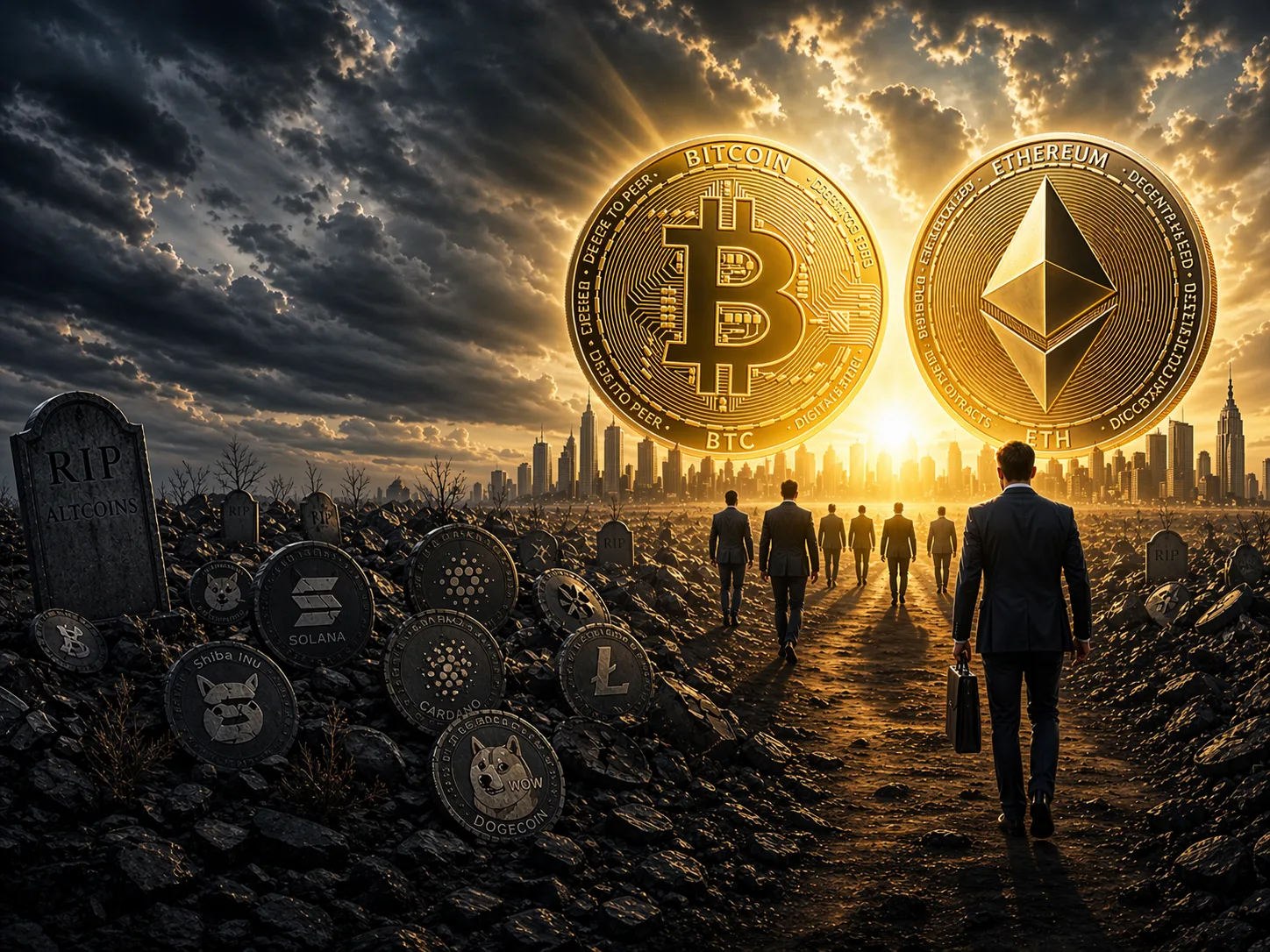
Once hailed as the ultimate financial equalizer, Bitcoin now faces an inconvenient truth: its wealth is more concentrated than even the U.S. dollar. Is the decentralized dream already dead?
Bitcoin’s Promise vs. Reality
When Bitcoin emerged in 2009, it was sold as a revolution—an antidote to fiat currency controlled by governments and central banks. Its core ideals were decentralization, financial freedom, and democratized wealth. Enthusiasts saw it as a tool to wrest power from Wall Street and put it in the hands of everyday people.
But a decade and a half later, data paints a very different picture.
According to BitInfoCharts, the top 1% of Bitcoin addresses hold more than 90% of all Bitcoin in circulation. Just 100 addresses alone hold nearly 15% of all BTC.
This wealth imbalance raises critical questions: Can Bitcoin truly be decentralized when its ownership is so top-heavy? Is it becoming just another wealth-preserving asset for the elite?
Let’s dive into what’s really going on behind the scenes of the Bitcoin economy—and what it means for the future of the world’s most well-known cryptocurrency.
The Numbers: How Unequal Is Bitcoin?
Over 90% Held by 1% of Wallets
BitInfoCharts’ real-time data shows that the top 1% of wallet addresses control the overwhelming majority of Bitcoin’s circulating supply. While not every wallet equates to a unique individual (some are cold storage for exchanges or institutions), the degree of concentration is undeniable.
- Top 100 addresses: Hold over 15% of all Bitcoin.
- Top 1% of wallets: Hold over 90% of the total BTC supply.
Even if you factor out exchange wallets and lost coins, the data suggests an ecosystem dominated by a small group of “whales.”
A 2021 study by the National Bureau of Economic Research (NBER) confirmed this, finding that the top 10,000 investors control about 5 million BTC, worth over $230 billion at the time.
That’s not just inequality. That’s oligarchy.
How Did We Get Here?
Bitcoin’s extreme wealth concentration didn’t happen overnight—it was baked into the system by a combination of early adoption, technology barriers, and human behavior.
1. Early Mover Advantage
Bitcoin was virtually free in its earliest days. People who mined or bought it in 2010–2013 could accumulate thousands of coins for pennies. These early adopters still control large wallets today—and many have never sold.
2. Lost Coins
A significant chunk of Bitcoin is simply lost. According to Chainalysis, up to 20% of BTC is gone forever, often sitting dormant in old wallets. These dead coins artificially inflate the concentration metrics for the remaining holders.
3. Whales and Exchanges
Some top wallets belong to centralized exchanges like Binance and Coinbase, which hold BTC on behalf of millions of users. Others belong to institutional holders and family offices who’ve been accumulating since the mid-2010s.
Still, as Glassnode’s research shows, the influence of large whales—individual or corporate—remains outsized.
4. HODL Culture
Bitcoiners love to “HODL”—hold on for dear life. This long-term mentality, while great for scarcity and price appreciation, has led to stagnation in actual circulation and further entrenched large holders.
The Consequences of Concentration
Bitcoin’s unequal distribution isn’t just a philosophical problem. It has real-world effects that shape its utility, volatility, and even its political vulnerability.
1. Price Manipulation Risk
When a few wallets hold massive amounts of BTC, they have disproportionate power to move the market. A large sell-off or transfer from a whale address can spook retail investors and cause cascading price drops.
2. Undermines Decentralization
Bitcoin’s pitch as a decentralized system is challenged when decision-making and market movement are essentially in the hands of a small elite. It mimics, rather than disrupts, the traditional financial structure.
3. Reinforces Wealth Inequality
Economist Eswar Prasad, a senior fellow at Brookings, has warned that “Bitcoin may actually worsen inequality.” In a Brookings analysis, he notes that the bulk of gains have gone to early adopters and speculators—leaving latecomers exposed to wild volatility.
4. Political and Regulatory Scrutiny
As Bitcoin becomes more like a digital asset class for the ultra-wealthy, governments and regulators are more inclined to treat it as such. This could lead to tighter regulation and scrutiny, particularly in anti-money laundering (AML) and taxation.
Is Bitcoin Still Worth Holding?
Despite these concerns, Bitcoin remains a key pillar of the crypto ecosystem—and many investors still see it as a worthy hedge against fiat currency debasement.
Why It Still Matters:
- Fixed Supply: Only 21 million BTC will ever exist. That scarcity still gives it appeal in an inflationary environment.
- Institutional Adoption: ETFs, corporate treasuries, and international use are increasing.
- Global Accessibility: Even with concentration, anyone with an internet connection can buy and store Bitcoin securely.
Emerging Trends That Could Improve Distribution:
- Layer-2 Solutions: Lightning Network and apps like Strike and Cash App are making BTC more usable in everyday commerce.
- Micro-Investing: Fractional ownership and automated investment tools are lowering barriers to entry.
- Retail Growth: The number of wallets with <1 BTC is steadily increasing—indicating growing grassroots participation.
Expert Opinions: Bitcoin’s Unequal Future
Some experts are skeptical of Bitcoin’s long-term promise unless it addresses its centralization problem.
In a peer-reviewed study titled “The Inequality of Bitcoin Wealth Distribution” (arxiv.org), researchers found Bitcoin’s Gini coefficient—a standard measure of inequality—approaches 1, which would imply near-total concentration.
As the study bluntly states:
“Bitcoin is not immune to the same forces of centralization that affect traditional systems. The gap between early adopters and newcomers will likely continue to widen.”
Meanwhile, the CBS News analysis of NBER data adds:
“Bitcoin might be decentralized in theory, but in practice, its wealth distribution mimics—and in some ways exceeds—the inequality seen in fiat systems.”
What Should Investors Do Now?
For retail and institutional investors alike, the takeaway is clear: Bitcoin’s dream of decentralization remains unfinished. That doesn’t mean it’s without value—but it does mean strategies need to be pragmatic.
Tips for Smart Bitcoin Investing in 2025:
- Don’t Overexpose: Treat BTC as part of a diversified portfolio, not a cornerstone of wealth.
- Look for On-Ramps: Consider buying small amounts via platforms that offer recurring purchase plans.
- Monitor Whales: Use tools like Whale Alert or Glassnode to track large wallet movements.
- Support Broader Adoption: Encourage merchants, peers, and businesses to accept and integrate BTC, helping shift the usage balance.
The Decentralized Dream Isn’t Dead—But It’s in Trouble
Bitcoin’s original vision—financial freedom for the masses—has run into a real-world paradox. Despite all its tech and idealism, the majority of Bitcoin wealth is trapped in the digital vaults of a tiny elite.
But that doesn’t mean the story is over.
Bitcoin is still evolving. Regulation is still forming. New technology is emerging. And millions of people are only just entering the ecosystem.
The next chapter of Bitcoin’s life will depend not on what Satoshi envisioned—but on what users, developers, and investors do to correct the imbalance.
If Bitcoin is to fulfill its promise as a decentralized currency of the people, the wealth gap must shrink. Until then, it’s not financial freedom—it’s just digital feudalism.
About Author