Gasoline prices may finally be headed lower, offering welcome relief to American drivers after months of elevated fuel costs tied to the conflict with Iran.
Following President Donald Trump’s announcement of a tentative peace agreement with Iran, oil prices plunged more than 5%, fueling expectations that gas prices could soon follow. While consumers shouldn’t expect an immediate return to sub-$3 gasoline, energy analysts say prices at the pump could begin falling noticeably within the next one to two weeks.
For investors, consumers, and businesses alike, the key question now is simple: How quickly will lower oil prices translate into lower costs at the pump?
Trump’s Iran Deal Just Changed The Outlook For Gas Prices
The biggest driver behind the anticipated decline in gasoline prices is the sharp drop in crude oil.
Since the announcement of a framework agreement between U.S. and Iranian officials aimed at ending the nearly four-month conflict, traders have aggressively sold oil futures on expectations that global energy supplies will normalize.
The war had effectively choked off traffic through the Strait of Hormuz, one of the world’s most important energy shipping routes. Roughly one-fifth of global oil supplies move through the narrow waterway.
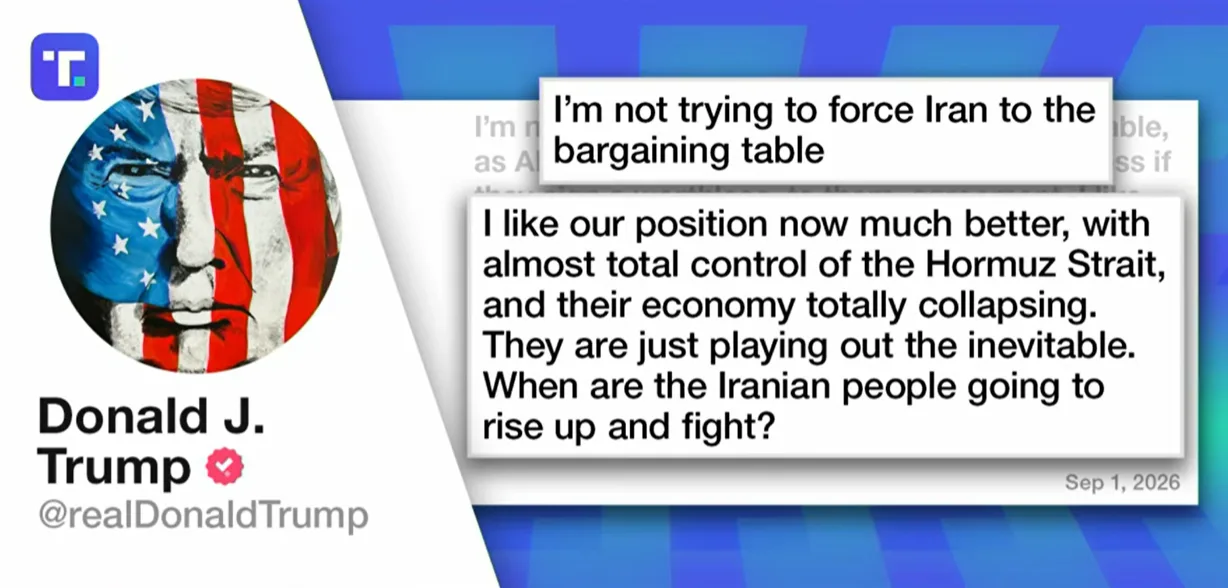
Trump celebrated the apparent breakthrough on social media.
“Ships of the World, start your engines. Let the oil flow!” the president wrote as markets rallied and oil prices fell.
West Texas Intermediate crude dropped more than 5% to roughly $80 per barrel following the announcement, reversing much of the war-related surge that pushed gasoline prices above $4 nationwide.
Because crude oil accounts for more than half the cost of a gallon of gasoline, falling oil prices are often the first sign that relief is coming for consumers.
The $4 Question: When Will Americans See Relief At The Pump?
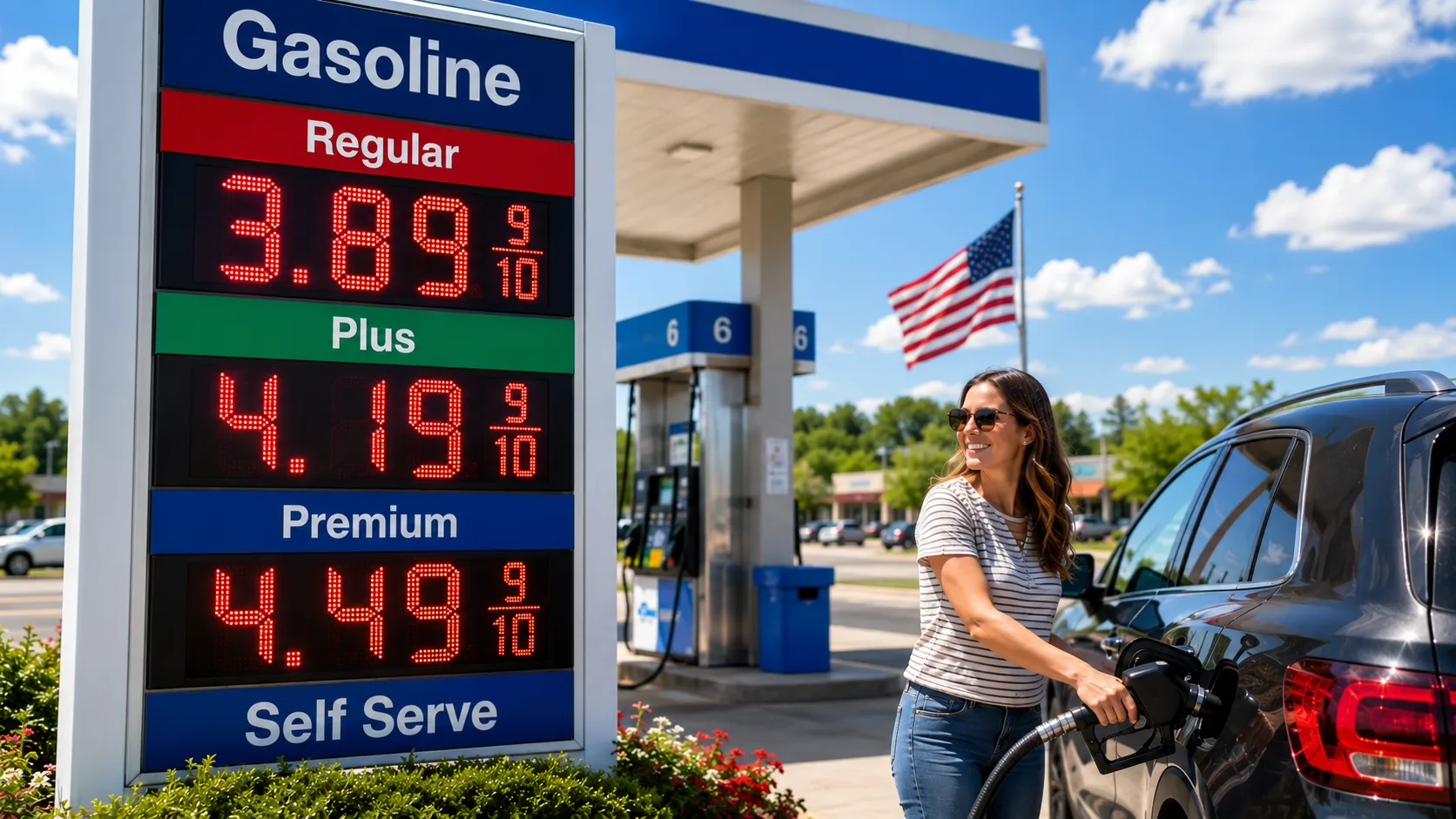
The national average gasoline price stood at $4.06 per gallon Monday, according to AAA.
That’s already significantly below the $4.52 average recorded just one month ago as markets increasingly anticipated a peace agreement.
According to GasBuddy data, the national average has already slipped to roughly $3.99 per gallon.
Patrick De Haan, head of petroleum analysis at GasBuddy, believes additional declines are likely if the agreement remains intact.
In what he described as an optimistic scenario, national average gasoline prices could fall to approximately $3.75 per gallon by the Fourth of July.
Pavel Molchanov, senior investment strategist at Raymond James, offered a more conservative outlook, projecting national average prices near $3.90 per gallon within the next one to two weeks.
For many Americans, simply seeing prices consistently below $4 again would represent a psychological victory after months of elevated fuel costs.
Why Gas Stations May Not Rush To Pass Along Savings
Drivers may be wondering why gasoline prices remain stubbornly high even as oil prices tumble.
The answer lies in a phenomenon energy experts often describe as “rockets and feathers.”
Gasoline prices tend to rise rapidly when oil becomes more expensive but decline much more slowly when oil prices fall.
According to Molchanov, gas stations typically increase prices within three to five days after oil prices rise. However, when oil falls, it usually takes one to two weeks before consumers see meaningful savings at the pump.
Gas station owners must first sell fuel inventories purchased at higher wholesale prices before passing along lower costs.
As a result, the decline consumers experience is usually gradual rather than immediate.
Could Gas Really Fall To $3.75 By Independence Day?
The possibility of gasoline falling to $3.75 per gallon has generated significant attention among drivers and investors.
While De Haan believes such a scenario is possible, much depends on whether the peace agreement remains intact and whether oil continues its recent decline.
Even with a signed agreement, restoring normal oil flows from the Persian Gulf will take time. Shipping companies must resume operations, damaged infrastructure requires repairs, and insurers remain cautious about covering cargo moving through the region.
“There is a lengthy logistical process of restoring the oil supply from the Persian Gulf,” Molchanov noted.
Most analysts believe gasoline prices will continue moving lower through late June and early July, though the pace of decline may be slower than many consumers hope.
The Hidden Risks That Could Derail Lower Fuel Prices
Several factors could prevent gasoline prices from falling as much as expected.
The summer driving season is traditionally the busiest period of the year for U.S. motorists. Increased road travel typically boosts gasoline consumption and places upward pressure on prices.
Hurricane season is another major wildcard. Any storm that disrupts Gulf Coast refineries or energy infrastructure could quickly reverse the recent decline in oil prices.
Most experts also believe a return to the prewar national average of $2.98 per gallon is unlikely this year.
Some analysts argue that gasoline would only fall that far if the global economy entered a significant recession that sharply reduced demand for energy.
Costco And Walmart Shoppers May See Savings First
Not every gas station will lower prices at the same pace.
According to industry experts, large retailers such as Costco and Walmart may be among the first to pass along savings.
Because these retailers sell enormous fuel volumes and receive fresh deliveries daily, they can adjust prices much faster than smaller independent stations.
Smaller operators often receive fuel deliveries every five to fifteen days, delaying the impact of lower wholesale costs.
As a result, bargain-hunting consumers may find the biggest savings first at warehouse clubs and major grocery chains.
What Falling Gas Prices Mean For Consumers, Investors, And The Economy
Lower gasoline prices could provide a meaningful boost to consumer spending during the second half of the year.
Fuel costs represent one of the most visible inflation measures for households. When prices at the pump decline, consumers often have more discretionary income available for retail purchases, travel, dining, and entertainment.
The decline in diesel prices could also benefit businesses by reducing transportation and shipping expenses, potentially easing inflationary pressures throughout the broader economy.
For investors, the outcome of the Iran agreement could have implications far beyond the energy sector. Falling oil prices generally support consumer discretionary stocks, transportation companies, retailers, and sectors that benefit from stronger household spending.
If the U.S.-Iran peace agreement holds, drivers should begin seeing lower gasoline prices within the next one to two weeks. Most experts expect the national average to fall below $4 per gallon shortly, with prices potentially reaching $3.90 in the near term and possibly $3.75 by Independence Day under favorable conditions.
For now, after months of rising fuel costs, the trend is finally moving in the right direction.
About Author