Global Rate Shake-Up: Fed Holds as Europe Cut: Are Markets Mispricing Risk?
The Federal Reserve held interest rates steady on Wednesday, but that’s where the consensus ends.
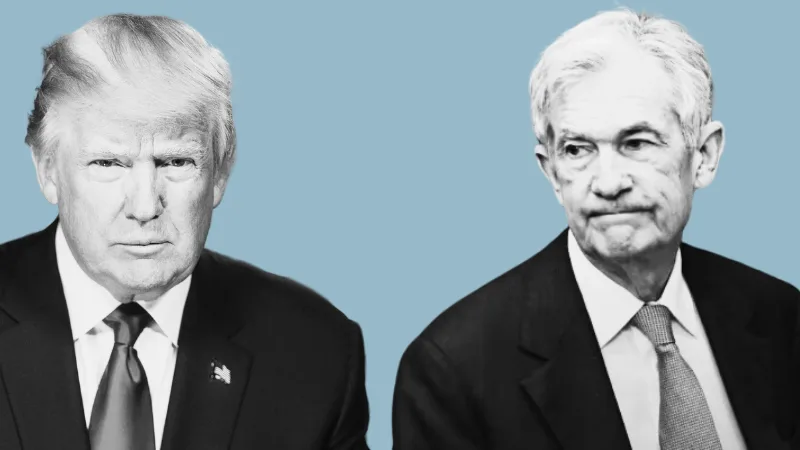
In the past 24 hours, central banks across the globe—from Switzerland to Brazil—made sharply diverging moves. Some cut, others hiked, and a few held firm. Add to that a fresh round of attacks from President Trump against Fed Chair Jerome Powell, and you get a fractured monetary landscape with major implications for investors.
This global divergence is signaling that the post-pandemic era of coordinated monetary policy is over. Investors need to understand how these disjointed decisions are reshaping currencies, equities, bonds, and commodities, especially as political pressure starts bleeding into monetary policy decisions.
Fed Holds Steady, But Projects Cuts Ahead
The U.S. Federal Reserve left its benchmark interest rate unchanged at 4.25% to 4.50%, marking the seventh consecutive meeting with no change. Fed Chair Jerome Powell emphasized that while inflation has come down from its peak, it remains above the Fed’s 2% target. However, the central bank’s updated projections still suggest two rate cuts before the end of 2025.
“We are not out of the woods yet,” Powell said in his post-meeting remarks. “Inflation remains above our target, and external shocks like tariffs and conflicts abroad continue to complicate the path forward.”
The Fed’s forecast of two cuts, even while holding rates now, represents a dovish tilt compared to earlier expectations. Yet markets had hoped for a more aggressive tone, given softening economic data and falling inflation prints in recent months.
President Trump Unleashes on Powell: “A Real Dummy”
President Donald Trump wasted no time launching a scathing attack on Powell following the decision. Taking to Truth Social, Trump called the Fed Chair “a real dummy” and accused him of “costing America billions” by refusing to act more decisively.
“We have the highest interest rates in the developed world—thanks to Powell. Other countries are cutting, and we’re stuck with this clown,” Trump wrote.
Trump’s criticism is more than just bluster. He has proposed slashing rates by 1 to 2.5 percentage points to lower the federal government’s debt servicing costs. Trump has also promised to remove Powell once his term ends in May 2026, signaling that the Fed’s independence could be at risk if Trump wins another term.
“He’s done enough damage. He shouldn’t finish his term,” Trump said at a recent campaign rally.
While Powell didn’t respond directly to Trump’s comments, he reaffirmed the Fed’s commitment to independence:
“That is what matters to us… pretty much that’s all that matters to us.”
These growing political attacks create another layer of uncertainty for markets that are already struggling to parse conflicting signals from global central banks.
A Fractured Global Rate Landscape
Elsewhere in the world, monetary authorities are increasingly pursuing their own paths, driven by local economic conditions, inflation trajectories, and political pressures. Here’s a breakdown of the major moves:
Swiss National Bank (SNB)
The SNB cut its policy rate to 0.0%, the second reduction this year, citing softening inflation and a contracting economy. Switzerland now holds one of the lowest policy rates among developed economies.
“The outlook has deteriorated, and we believe easing is necessary to avoid recession,” said SNB Governor Thomas Jordan.
Norges Bank
Norway’s central bank cut its key rate by 25 basis points to 4.25%, aligning with weaker consumer demand and falling inflation. The move supports the housing market and signals more potential easing by year-end.
Brazil
In contrast, Brazil’s central bank raised its Selic rate to 15%, the highest since 2006. Officials are responding to resurging inflation fueled by rising food and energy prices. The Brazilian real firmed slightly on the news, but equity markets fell.
“We cannot afford to fall behind inflation,” said Banco Central do Brasil President Roberto Campos Neto.
Turkey
Turkey’s central bank held its interest rate at an astonishing 46%, attempting to cool its still-volatile inflation without stalling the economy. Policymakers signaled a potential easing cycle later this year as price pressures ease.
Bank of England (BoE)
The BoE opted to hold at 4.25%, but its post-meeting statement included warnings about “elevated uncertainty” stemming from the Middle East conflict, global trade realignments, and tariff impacts. While domestic inflation is moderating, external risks remain high.
What This Means for Investors
With major economies headed in different directions, here are the key investment implications:
Currencies: Volatility Is Back
Diverging central bank actions are leading to increased volatility in global currency markets. The U.S. dollar may continue strengthening if the Fed delays cuts while others move more aggressively to ease.
Winners: USD, CHF (safe-havens)
At Risk: EUR, GBP, TRY, BRL (more volatile under diverging policy)
Equities: Local Forces Matter More
Equity markets will react more to domestic policy decisions than to global sentiment. European stocks may benefit from easier money, while EM equities could remain pressured by rising rates and FX instability.
The U.S. Treasury market remains the global benchmark. With the Fed holding and Trump applying pressure, traders should watch for sudden shifts in yield curve steepness.
Short-term U.S. debt may become volatile if markets sense Powell could cave to political pressure.
European bonds could rally on easing, while Brazilian bonds remain risky due to rate hikes.
Commodities: Risk-On/Risk-Off Whiplash
Geopolitical flare-ups and central bank easing are bullish for gold and oil. If Iran-Israel tensions escalate and global central banks keep easing, commodities will likely outperform.
Gold: Strong support above $2,300 as central bank demand increases.
Oil: Rising on fears of supply chain disruption, especially if U.S. joins military conflict.
What Happens Next?
The divergence in global monetary policy reflects deeper economic splits between regions. Some are still fighting inflation, others are slipping into deflationary slowdowns. Overlay this with U.S. political uncertainty and you get a market environment that is anything but stable.
Powell is walking a tightrope—balancing inflation control, recession fears, and political attacks. Trump’s growing influence on the 2026 Fed leadership and 2025 economic direction is something markets can’t ignore.
“The Fed is now as much a political target as it is a monetary institution,” said Mohamed El-Erian, chief economic advisor at Allianz.
Takeaway for Investors
The synchronized monetary era is over. Investors now face a decentralized, politically charged, and highly reactive central banking landscape.
The U.S. may be the most powerful economy, but it’s no longer acting in lockstep with its global peers. The Fed’s decisions now compete with Brazilian hikes, Swiss cuts, and political bombs lobbed from Trump’s Truth Social account.
In this fractured world, opportunity and risk go hand in hand. It’s time to get selective, stay diversified, and monitor both the economic data and the political calendar closely.
To provide the best experiences, we use technologies like cookies to store and/or access device information. Consenting to these technologies will allow us to process data such as browsing behavior or unique IDs on this site. Not consenting or withdrawing consent, may adversely affect certain features and functions.
Functional
Always active
The technical storage or access is strictly necessary for the legitimate purpose of enabling the use of a specific service explicitly requested by the subscriber or user, or for the sole purpose of carrying out the transmission of a communication over an electronic communications network.
Preferences
The technical storage or access is necessary for the legitimate purpose of storing preferences that are not requested by the subscriber or user.
Statistics
The technical storage or access that is used exclusively for statistical purposes.The technical storage or access that is used exclusively for anonymous statistical purposes. Without a subpoena, voluntary compliance on the part of your Internet Service Provider, or additional records from a third party, information stored or retrieved for this purpose alone cannot usually be used to identify you.
Marketing
The technical storage or access is required to create user profiles to send advertising, or to track the user on a website or across several websites for similar marketing purposes.