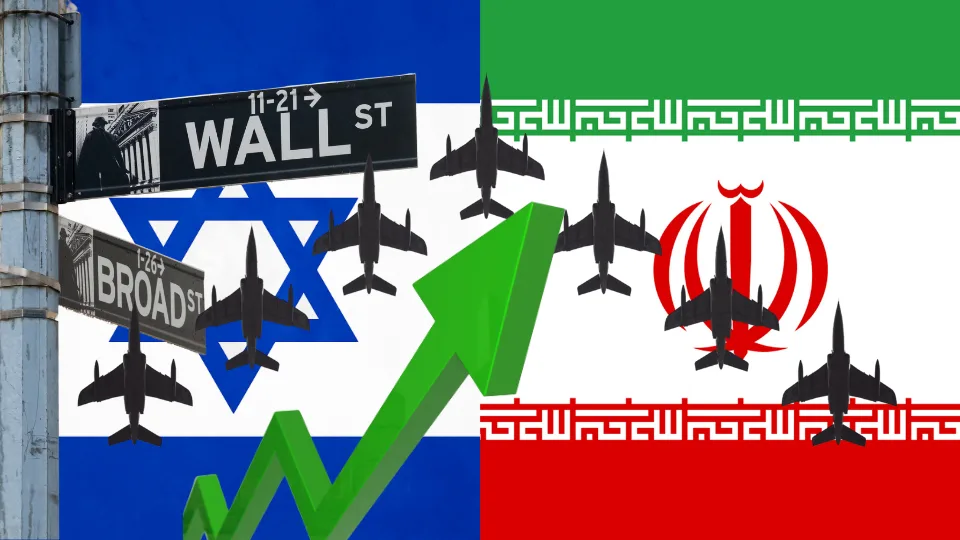
U.S. equity futures opened modestly higher on Friday, June 20, 2025, signaling cautious optimism that the ongoing Israel–Iran flare-up might not spiral into broader U.S. military involvement. Wall Street’s major indices ticked upward as investors digested the Federal Reserve’s latest policy signals and braced for a volatile “triple witching” options expiry.
- Dow Jones Industrial Average: +142 pts (+0.3%)
- S&P 500: +0.4%
- Nasdaq Composite: +0.6%
The lift came on relief that Washington may continue its current approach—support from afar, but a reluctance to enter the conflict directly.
Middle East Tensions: U.S. Shoots for Diplomacy
On Thursday, a White House statement—delivered by Press Secretary Karoline Leavitt—said President Trump will make a decision within two weeks on a potential U.S. strike against Iran. But the tone was guarded: peace talks are still on the table, though they “may or may not take place.”
This dovish posture gave Wall Street a breather. Market strategist Andrew Brenner emphasized Trump’s historical aversion to full-scale intervention, even if he publicly increases U.S. military posture with carrier deployments or diplomatic threats.
Still, as the Reuters headline warned—U.S. military involvement could prompt a “knee-jerk” selloff, largely tied to a surge in oil prices and broad geopolitical unease Reuters.com.
Oil Prices: The Invisible Hawk
Oil has been the wild card: Brent crude surged above $78/barrel during holiday-thinned trading this week—the highest peak since January. Concern over a region-wide escalation, including Iran’s missile and drone responses from June 13 onward, have kept risk premiums elevated.
Despite this, Citi analysts suggest global spare capacity will likely keep prices capped between $70–80. Citi remains bullish on U.S. equities—projecting the S&P 500 could climb to 6,300 by year-end, or even 7,000 if economic conditions stabilize.
Citigroup’s Outlook: Calm Amid Chaos
Citi strategists argue that while geopolitical risks can rattle markets short-term, they rarely derail the broader bull market—unless there’s a sustained spike in oil. With ample capacity in OPEC, they see no such scenario unfolding yet Marketwatch.com.
They remain constructive on U.S. equities and tech stocks (especially those riding the AI wave), while advising caution in long-duration U.S. Treasuries and yen-denominated Japanese debt. Their dollar outlook is bearish, favoring European currencies and equities.
Calm Markets or Complacent Construct?
Nevertheless, markets are oddly unflappable. Despite a 20%-plus rally in U.S. equities since April’s lows and ballooning geopolitical risk, volatility remains remarkably subdued Ft.com. FT’s analysts warn this “market silence” may conceal deep-seated unease—bubble-caused shock or not.
UBS issued a reality check: stretched valuations, slowing growth, and Middle East fires could push the S&P into a turbulent summer. With forward P/Es at 22, they advise investors to move toward defensive sectors—though tech and AI stocks like Broadcom and Zscaler still receive a nod.
Likewise, RBC sees significant downside potential: if tensions spiral, P/E compression, consumer/investor sentiment breakdown, and oil-driven inflation could knock the S&P down 20% into the 4,800–5,200 range.
Federal Reserve Keeps Rates, Eyes Cuts
In parallel, the Federal Reserve maintained interest rates at its June 18 meeting. Its updated projections—dubbed the “dot plot”—anticipate two rate cuts by end-2025. However, Powell described the outlook as “shrouded in fog,” noting that upside inflation risks, especially energy-related, could mess with the Fed’s plans Barrons.com.
In the aftermath, bond yields slipped and the dollar steadied, yet uncertainty remains. Concurrently, Fed Governor Christopher Waller suggested that a rate cut could come “as soon as July,” opening markets to renewed speculation Stocktwits.com.
This dovish signal also positions Waller as a potential guiding force in future Fed policy—possibly even a successor to Powell.
Triple Witching: Volatility on Deck
Friday’s trading adds another layer: triple witching—the simultaneous expiry of options and futures tied to stocks and indices. Nearly $6.5 trillion in notional value is set to expire on June 20, squeezing liquidity and amplifying volatility.
Historical precedent shows volatility spikes of 30%–50% higher than normal on such days, especially when they coincide with recent holidays Ainvest.com. Expect increased intraday swings, “volatility flare-ups,” and potential breakout moves once the contracts clear Cryptorank.io.
🚦 Key Themes Driving Markets This Week
- Geopolitical risks – The Israel–Iran exchange pushed oil up ~7–11%. Markets have yet to price in sustained conflict, but limited U.S. involvement remains the pivot.
- Federal Reserve indecision – The Fed paused rates but hinted at cuts. Governor Waller’s July rhetoric shifts odds—but Powell’s cautious tone still weighs.
- Triple witching volatility – The $6.5 trillion expiry could shake out complacency and set the tone for the post-midyear market cycle Yahoo Finance.
What to Watch Today
- Market volatility: Sudden spikes—especially early afternoon—could indicate breakout opportunities.
- Oil prices: Any further sharp rise (>$80) would threaten rates and Fed outlook.
- Fed speak: Watch for any tightening tone ahead of the July FOMC: hawkish vs. dovish divergence.
- Positioning resets: Post-expiry, shifts in large-cap flows—especially in tech—could set July dynamics.
Actionable Insights for Investors
- Protect the downside: Consider modest hedges—stops, strategic options—on cyclical and high-growth names.
- Favor quality: Look to resilient sectors—energy, defense, select staples—amid macro uncertainty.
- Stick with AI: Tech earnings remain strong. If oil and geopolitics stabilize, AI and mega-cap tech may outperform.
- Watch bond proxies: Yield-sensitive sectors—utilities, REITs—could benefit if rate-cut bets firm up.
Bottom Line
Wall Street is gingerly optimistic. A combination of U.S. restraint in the Middle East, dovish Fed cues, and triple witching expiry is producing a calm—but precarious—market tone. In theory, this sets the stage for a breakout in the second half of 2025, depending on:
- Oil stabilization (≤$80).
- Fed clarifying rate path (cuts in autumn).
- Geopolitical de-escalation.
Yet, the biggest risk is complacency. With valuations stretched and potential shockwaves looming, volatility around the expiry could catalyze a shift—from “silent creep” to sharp repricing. Investors should calibrate for both volatility and opportunity.
About Author