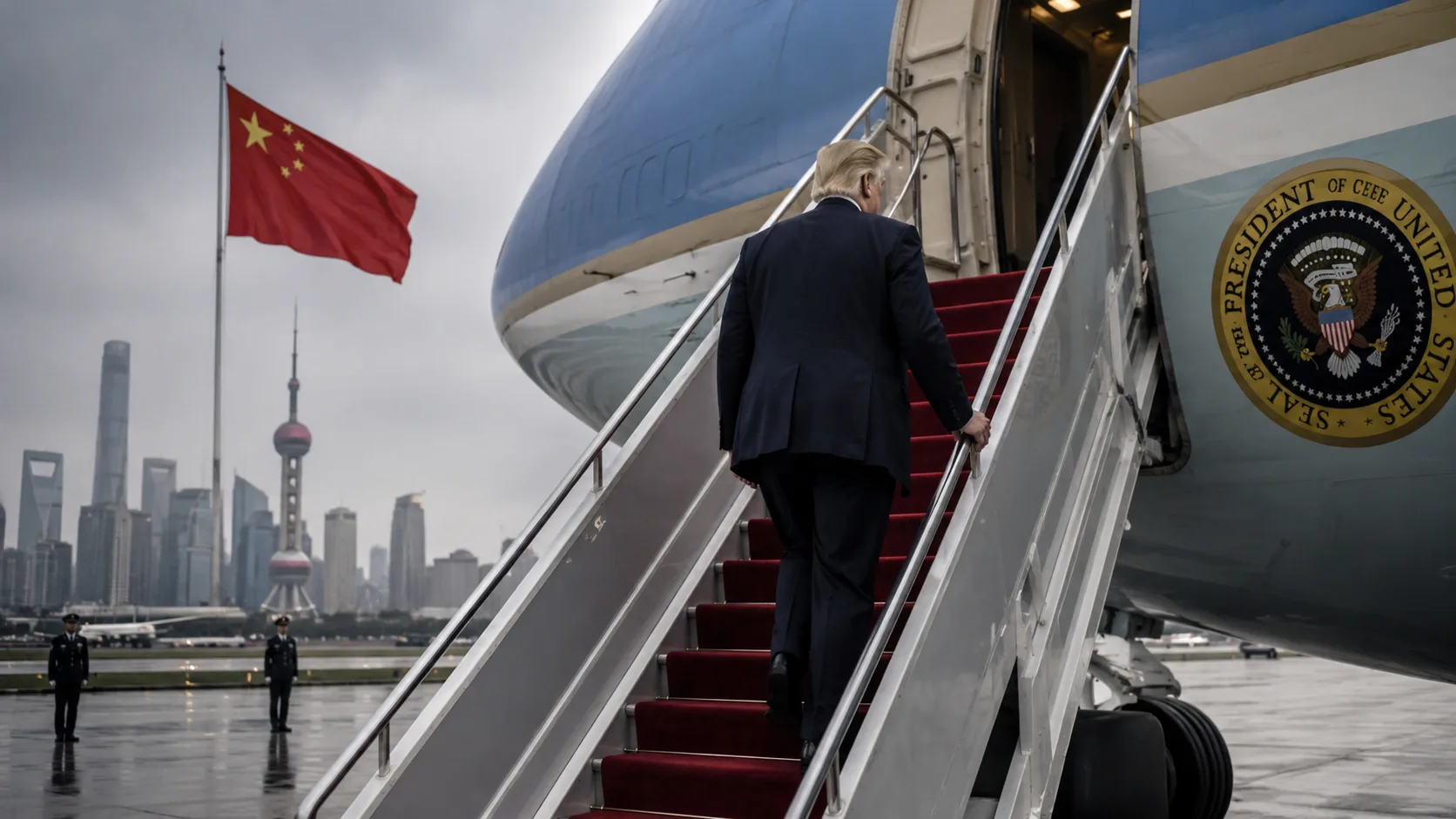
President Donald Trump’s directive to the U.S. Navy to “shoot and kill any boat” laying mines in the Strait of Hormuz isn’t just another escalation headline. It’s a signal that something far bigger is unfolding beneath the surface of global markets, military command, and energy control.
With roughly 20% of the world’s oil supply flowing through that narrow chokepoint, this isn’t just about Iran. It’s about who controls the pricing mechanism of the global economy itself. And based on the latest developments, including Trump’s assertion that the U.S. has “total control” of the strait, the market is being forced to reprice risk in real time.
But here’s where most coverage gets it wrong. This isn’t just a geopolitical standoff. It’s a coordinated power shift.
This Isn’t About Mines, It’s About Control
Mainstream coverage is framing this as a reactive military move. That’s surface-level thinking.
What’s actually happening is far more strategic.
The Strait of Hormuz is not just a shipping lane. It’s the single most important pressure valve in the global energy system. Whoever effectively controls it has leverage over oil prices, inflation, and by extension, global monetary policy.
Trump’s order does three things simultaneously:
- Establishes de facto U.S. control over global oil flow
- Forces Iran into a corner without a formal declaration of war
- Signals to markets that supply disruptions are now policy-driven, not just risk-driven
When Trump says no ship can enter or leave without U.S. approval, he is not making a threat. He is describing a reality he intends to enforce.
And that changes everything.
A New Framework: The “Global Energy Control Stack”
To understand what’s happening, investors need a better model than “war risk” or “supply disruption.”
Here’s a cleaner way to think about it:
The Global Energy Control Stack
Layer 1: Physical Control
Who controls the actual movement of oil?
Right now, the U.S. Navy is asserting dominance over transit in Hormuz.
Layer 2: Political Leverage
Who sets the rules of engagement?
Trump is tying access to compliance with U.S. demands.
Layer 3: Market Reaction
How do prices respond?
Oil volatility spikes, shipping costs surge, insurers pull back.
Layer 4: Capital Flows
Where does money go next?
Energy equities, defense stocks, commodities, and safe havens.
Most investors focus only on Layer 3. That’s a mistake.
The real money is made by understanding Layers 1 and 2 before the market fully prices them in.
This May Not Be Bearish for Markets
The obvious narrative is simple: rising tensions = bad for markets.
But that’s not always how this plays out.
There’s a strong case to be made that this situation could actually be bullish for certain sectors and even supportive for broader markets in the short term.
Here’s why:
- Controlled disruption is different from chaotic disruption
- If the U.S. maintains order in the strait, it prevents worst-case supply shocks
- Higher oil prices benefit U.S. energy producers significantly
- Defense spending and contracts surge in these environments
In other words, this isn’t a breakdown of the system. It’s a reassertion of control within it.
Markets tend to adapt faster than headlines suggest.
Investor Implications: Where Money Moves Next
If you step back and look at this through the lens of capital flows, the playbook becomes clearer.
1. Energy Stocks Are the First Beneficiaries
Companies tied to oil production and transportation stand to gain from sustained price pressure.
Higher crude prices flow directly into revenue and margins for major producers.
2. Defense Stocks Enter a New Cycle
Whenever military posture shifts from deterrence to enforcement, defense spending follows.
That’s not political. That’s structural.
3. Shipping and Insurance Disruption Creates Secondary Winners
Reduced traffic through Hormuz doesn’t just affect oil. It impacts global logistics pricing.
Expect ripple effects across shipping rates and insurance premiums.
4. Gold and Commodities Reprice Risk
Whenever geopolitical control tightens around critical resources, hard assets gain relevance.
This is not just about fear. It’s about hedging systemic control shifts.
What Investors Should Watch Closely
There are a few key signals that will tell you where this is heading next:
- Daily tanker traffic through the Strait of Hormuz
- U.S. Navy enforcement actions and rules of engagement
- Iran’s response, especially asymmetric tactics
- Oil price stability versus spikes
- Any further military leadership changes
If tanker flow remains suppressed but controlled, oil stays elevated without going parabolic.
If escalation breaks that control, volatility explodes.
This Is About Pricing Power
At its core, this entire situation comes down to one thing.
Pricing power.
Control the flow of oil, and you influence inflation.
Influence inflation, and you influence interest rates.
Influence interest rates, and you influence asset prices globally.
That’s the chain reaction.
And right now, the U.S. is attempting to move upstream in that chain.
This Is a Power Play, Not Just a Conflict
Most investors will look at this and see geopolitical noise.
That’s a mistake.
This is a calculated move to assert control over one of the most important economic chokepoints in the world. The military order, the blockade, the messaging, and even the leadership shifts all point in the same direction.
This is not reactive policy.
It’s strategic positioning.
And markets will eventually reflect that reality.
About Author