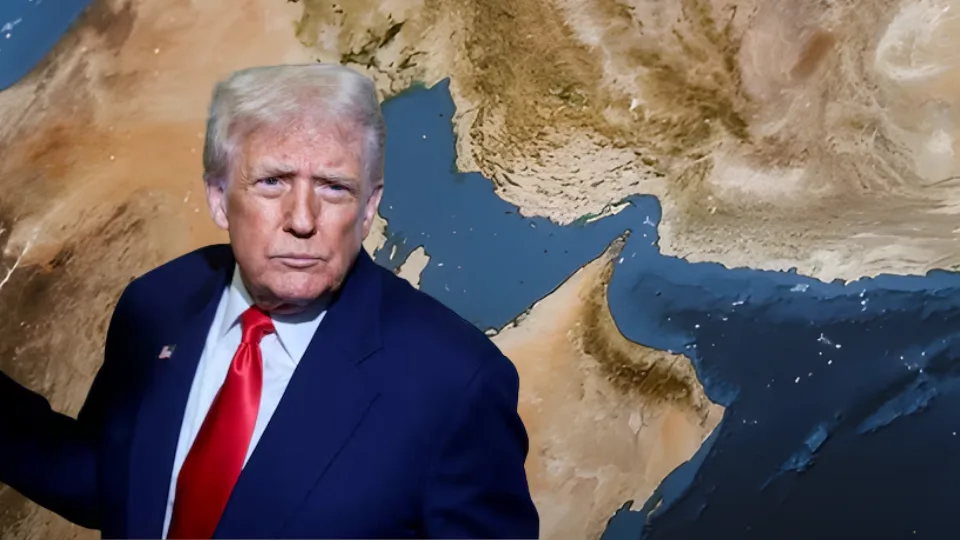
Iran is once again testing the limits of geopolitical brinkmanship. After a series of U.S. airstrikes targeted key Iranian nuclear sites, Tehran’s parliament has responded with a bold—some might say reckless—gesture: approving a measure to potentially close the Strait of Hormuz, the most critical oil artery on the planet.
The move, announced Sunday via Iran’s state-run Press TV, has not been independently verified by outside observers. But the messaging is loud and clear: Iran is signaling that it’s willing to weaponize one of the world’s most vital trade routes. Yet experts believe that Tehran is bluffing—and for good reason.
While the saber-rattling might stir nationalist sentiment at home, actually shutting down the strait could spell disaster for Iran’s already fragile economy and risk triggering blowback from powerful trade partners like China, as well as its neighbors across the Gulf.
A Threat That Could Boomerang
Iran has long toyed with the idea of disrupting the Strait of Hormuz whenever tensions with the West flare. This isn’t new. What is new, however, is how cornered Tehran appears to be, and how little leverage it realistically has.
Vandana Hari, founder of energy intelligence firm Vanda Insights, described the probability of a full closure as “absolutely minimalistic.” In comments to CNBC’s Squawk Box Asia, she said Iran has far more to lose than gain. Blocking the strait would not only isolate Tehran diplomatically—it could also invite military retaliation from regional powers and economic sanctions from nations that currently buy its oil.
“If Iran blocks the strait, it turns its own neighbors into adversaries. Countries like the UAE, Saudi Arabia, and Qatar depend on that route. Tehran would be threatening their economic lifelines—and they won’t stand for it,” Hari explained.
The China Factor: Tehran’s Unlikely Restraint
One key reason Iran is unlikely to escalate to that point? China.
China isn’t just Iran’s biggest customer for oil—it’s also one of its few remaining allies of convenience. In the first quarter of 2025, Iran shipped approximately 1.5 million barrels per day through the Strait of Hormuz, much of it bound for Chinese ports. Jeopardizing that relationship would be a monumental miscalculation.
Andrew Bishop, head of policy research at Signum Global Advisors, agrees: “Iran doesn’t want to antagonize China. Disrupting energy flows would put a target on Tehran’s own infrastructure at a time when U.S. and Israeli military resolve is high. This is not the moment to tempt fate.”
China’s interest in maintaining stability in the Gulf isn’t just about oil from Iran—it’s about the region as a whole. Clayton Seigle, senior fellow at the Center for Strategic and International Studies, noted that China relies on energy flows from multiple Gulf nations. “Beijing’s national security depends on a stable Persian Gulf. Any escalation that threatens the Strait of Hormuz could push China to recalibrate its relationship with Tehran,” he said.
Reality Check: No Immediate Threats to Shipping
Despite fiery rhetoric, shipping through the strait remains uninterrupted for now. According to the Joint Maritime Information Center, “U.S.-associated vessels have successfully transited the Strait of Hormuz without interruption,” offering a rare piece of good news amid rising tension.
Still, the psychological impact of the threat is real. Global markets are on alert, and energy traders are eyeing every headline for signs of escalation. Iran may not follow through on its threat, but it doesn’t have to. Just the possibility is enough to move markets.
Why the Strait of Hormuz Matters
It’s difficult to overstate the importance of the Strait of Hormuz. Roughly 20% of the world’s daily oil supply—about 20 million barrels—passes through this narrow waterway, which serves as the only sea route connecting the Persian Gulf to the open ocean. The U.S. Energy Information Administration calls it the “world’s most important oil transit chokepoint.”
A disruption here would have global ripple effects. S&P Global Commodity Insights warned in a Sunday note that any Iranian closure would halt not only Iran’s own exports but also those of major regional producers like Saudi Arabia, Kuwait, the UAE, and Qatar.
More than 17 billion barrels of oil per year could be taken offline, according to the report. Refineries across Asia, Europe, and even North America would be impacted due to feedstock shortages. The economic consequences wouldn’t stop at oil.
Qatar’s liquefied natural gas (LNG) exports—amounting to roughly 77 million metric tons annually—would also be at risk. That’s nearly 20% of the global LNG supply. Losing that flow, even temporarily, would cause chaos in energy markets.
Limited Workarounds, High Stakes
One of the reasons Iran’s threat carries weight, even if hollow, is the lack of viable alternatives to the Strait of Hormuz.
According to the Commonwealth Bank of Australia, pipeline capacity in the region is woefully insufficient. Saudi Arabia and the UAE can collectively redirect only 2.6 million barrels per day via pipeline—just a fraction of the 20 million barrels that typically transit through the strait.
That leaves global supply chains incredibly vulnerable. And energy prices are already reflecting the risk.
Goldman Sachs estimates the market has baked in a $12 per barrel geopolitical premium. If flows were to drop by 50% for just a month, Goldman projects Brent crude could spike to around $110 per barrel—even if output recovers shortly thereafter.
Patrick De Haan, head of petroleum analysis at GasBuddy, echoed those concerns. He noted that U.S. gasoline prices could soon rise to between $3.35 and $3.50 per gallon—up sharply from the national average of $3.14 as of mid-June.
What a Blockade Might Actually Look Like
If Iran were to act, experts believe it wouldn’t shut down the strait completely. Instead, it would likely engage in a mix of symbolic and asymmetric tactics—harassment of commercial vessels, floating mines, or small boat swarms designed to intimidate rather than destroy.
David Roche, strategist at Quantum Strategy, said Iran could pursue “graduated escalation,” using naval mines or armed speedboats to create uncertainty without crossing red lines that would invite full-scale retaliation.
This “grey zone” strategy allows Tehran to project strength while avoiding a direct confrontation with the U.S. Navy’s Fifth Fleet, which patrols the region. But it’s a dangerous game. Miscalculation is always a risk.
The Bigger Picture: Iran’s Domestic Gamble
Behind the bluster, Iran’s leadership faces a growing credibility crisis at home. The economy is crumbling under sanctions, inflation is soaring, and domestic unrest continues to simmer. Closing the Strait of Hormuz—or even pretending to—serves a political purpose: distracting the Iranian public from economic pain.
But the international cost of such a move may prove too steep.
By threatening to disrupt global oil markets, Tehran risks triggering not only military reprisal but also diplomatic isolation. Beijing, which has thus far shielded Iran in international forums, could pivot away if its energy interests are threatened.
And in Washington, any move to block the strait would likely unify political factions—something rare these days—around a call for swift retaliation.
Investor Takeaway: Volatility Isn’t Going Anywhere
For investors, the Strait of Hormuz flashpoint reinforces a simple reality: geopolitical risk is back in the driver’s seat. Even without a full-blown conflict, the perception of risk is enough to drive energy prices higher—and rattle broader markets.
Defensive positioning, energy exposure, and hedging strategies will remain critical in the months ahead. For those watching oil, expect upward pressure to persist—especially if Iran continues to play brinkmanship without crossing into open conflict.
In short, Tehran’s posturing may be more bark than bite. But that bark is echoing across global markets—and it’s not going away anytime soon.
About Author