Artificial intelligence stocks continue dominating financial headlines, but one of the market’s quieter winners this year has nothing to do with semiconductors, chatbots, or cloud software. It builds trucks.
PACCAR, the parent company behind Kenworth, Peterbilt, and DAF Trucks, has quietly emerged as one of the more overlooked industrial winners of 2026. While investors remain fixated on companies directly tied to artificial intelligence infrastructure, PACCAR has benefited from a less obvious reality: someone still has to physically move the machinery powering America’s economic expansion.
The Hidden Infrastructure Winner Behind the AI Boom
The current AI boom is often discussed as if it exists entirely in the digital world. Investors hear constant conversations about chips, software platforms, and cloud computing. What gets far less attention is the enormous amount of physical infrastructure required to support this transformation.
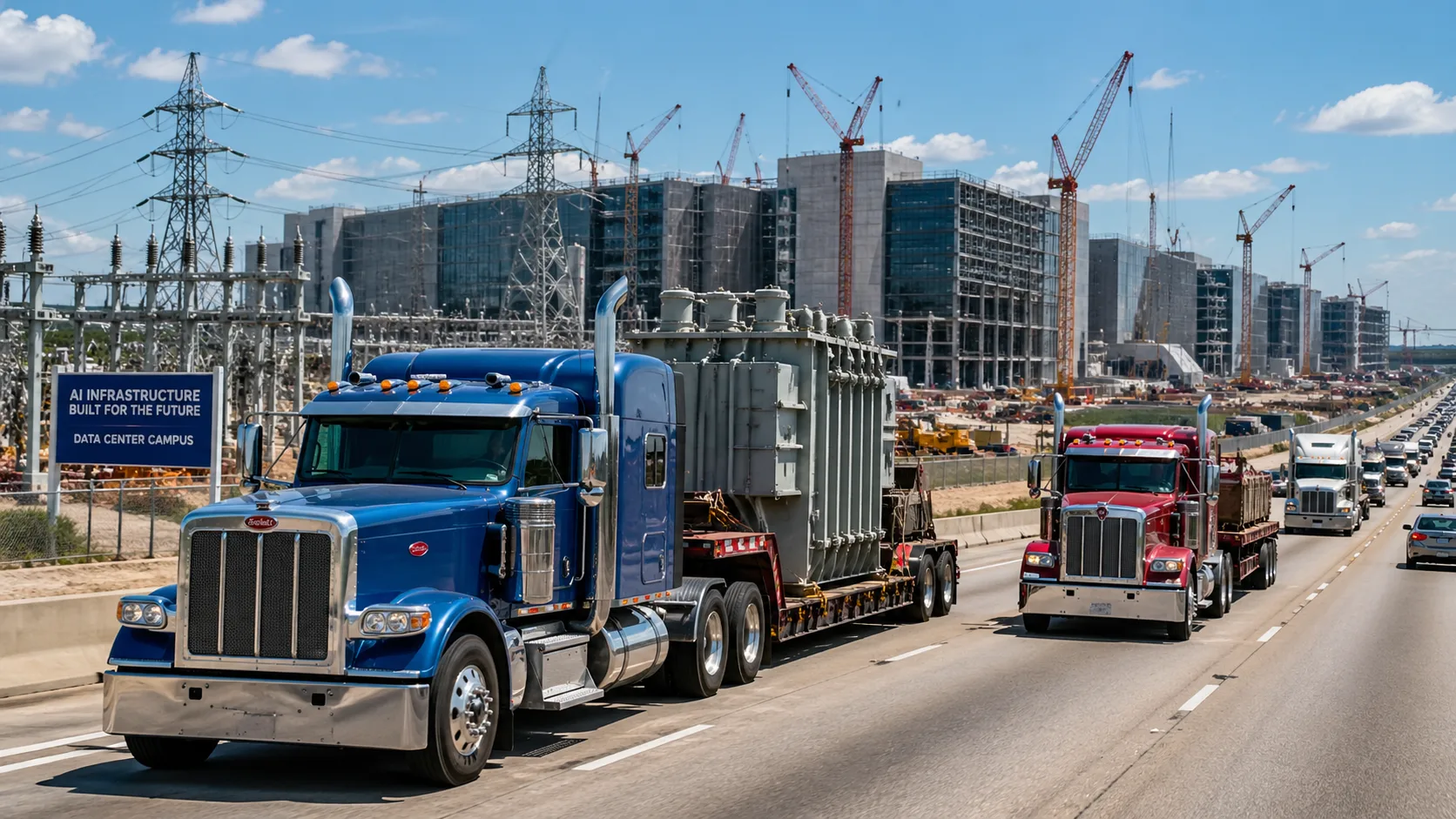
Massive data centers are being built across the country. Utilities are expanding power grids. Manufacturing facilities are being upgraded. Construction firms are rushing to meet rising infrastructure demand. Every one of those projects requires heavy equipment, raw materials, and industrial components to be transported across long distances.
That creates a direct opportunity for trucking companies.
PACCAR operates in a business many investors often dismiss as cyclical and boring. But boring businesses can become extremely attractive when they generate consistent profits while benefiting from major economic tailwinds.
87 Consecutive Years of Profitability
The company has reportedly produced profitable net income for 87 consecutive years, a remarkable achievement that few publicly traded companies can match. In a market where investors continue pouring capital into expensive growth stocks with uncertain earnings profiles, PACCAR’s consistency stands out.
Over the past decade, the company has steadily grown both cash flow and dividends, reportedly compounding those figures at roughly 7% to 11% annually. That kind of growth may not create viral headlines on financial media, but it tends to appeal to long-term investors looking for durable businesses.
Why PACCAR’s Parts Business Could Be Its Biggest Growth Driver
What makes PACCAR particularly interesting right now is that truck manufacturing is only part of the story.
Its parts business has become an increasingly important growth engine.
Vehicle sales can fluctuate depending on economic conditions. Freight demand rises and falls. Companies may delay buying new trucks during uncertain periods.
But trucks constantly need maintenance.
They require repairs, replacement components, and servicing regardless of broader economic cycles.
PACCAR has built a massive dealer network of roughly 2,400 locations that helps create recurring revenue through parts and servicing. Management has reportedly targeted an additional $3.5 billion in parts revenue by 2030, which could provide a more stable stream of growth compared to truck sales alone.
That recurring revenue model is one reason some investors are paying closer attention.
How AI Could Make PACCAR Even More Valuable
There’s another reason investors are beginning to take PACCAR more seriously.
Artificial intelligence may also help improve PACCAR’s own business.
The company has increasingly integrated connected fleet technology and AI-powered services that help customers improve fuel efficiency, reduce maintenance costs, and optimize logistics operations. Fleet operators care deeply about lowering operational costs, and even modest improvements can significantly impact margins.
This gives PACCAR exposure to the AI boom without relying on speculative valuations.
That may become increasingly valuable if investors begin rotating out of overextended technology names and into companies with stronger cash flow fundamentals.
Why Investors Should Watch PACCAR Closely
There’s also a broader macroeconomic story unfolding that could continue helping PACCAR.
The United States remains in the middle of major infrastructure expansion tied to manufacturing reshoring, energy development, transportation upgrades, and AI-related construction spending. Those projects require freight transportation on a massive scale.
At the same time, the trucking industry continues facing higher equipment costs, labor shortages, regulatory challenges, and elevated financing expenses.
That combination could create an advantage for large, established players with stronger balance sheets and national service networks.
PACCAR fits that description.
This is ultimately what makes the company interesting right now.
It sits at the intersection of several major trends reshaping the U.S. economy, including AI infrastructure spending, industrial reshoring, freight demand, and infrastructure modernization.
Most investors remain focused on the obvious AI winners.
PACCAR represents a different kind of opportunity.
It’s a company that has survived wars, recessions, inflation cycles, technological disruption, and changing transportation trends for more than a century.
And in 2026, it may be quietly proving that some of the market’s best opportunities are hiding in businesses investors stopped paying attention to years ago.
About Author