Wall Street delivered a dramatic reversal this week as traders rushed back into stocks following early fears that the escalating Iran conflict could trigger a deeper market selloff. Instead, investors appeared to make a different bet. They are increasingly convinced that markets will rebound if geopolitical tensions begin to ease and that President Donald Trump will ultimately avoid policies that push the economy or markets into a severe downturn.
The result was a powerful rally that erased a large intraday selloff and highlighted a pattern investors have become familiar with during Trump’s presidency.
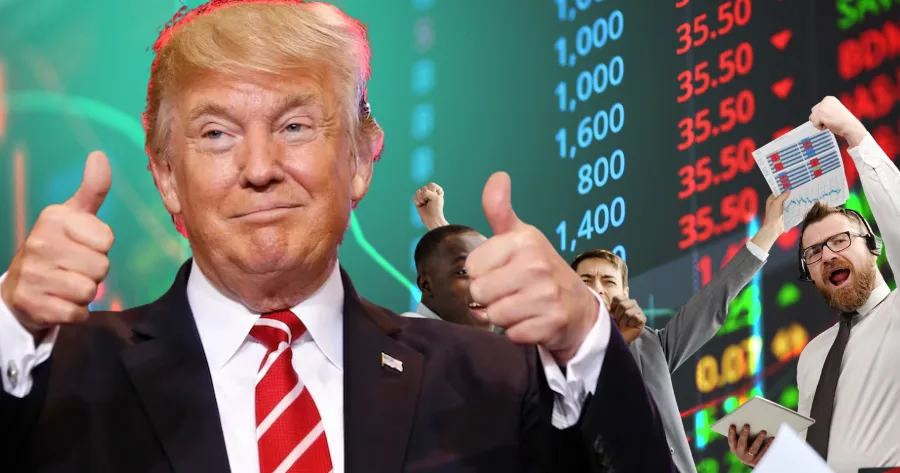
Many traders now refer to this dynamic as the “Trump TACO trade”, shorthand for the idea that markets tend to rebound after investors initially panic over aggressive policy announcements.
Whether that belief proves correct again could have major implications for stocks, oil prices, and investor portfolios.
A Wild Trading Day on Wall Street
Markets experienced a dramatic swing Monday.
The Dow Jones Industrial Average finished the day more than 200 points higher after staging a major comeback. Earlier in the session, the Dow had plunged as much as 886 points amid fears that the U.S. conflict with Iran could escalate into a broader regional war.
By the close, however, investors had changed their tune.
The rebound came after signals from the Trump administration suggested that the conflict with Iran might be nearing a resolution. Traders interpreted the comments as a sign that Washington may attempt to de escalate the situation rather than expand military operations in the region.
The rapid shift in sentiment illustrates how sensitive financial markets have become to geopolitical developments in the Middle East.
Energy markets, defense stocks, and volatility gauges all reacted sharply during the trading session.
Oil Prices and Market Volatility Spike
Energy markets were among the first to react to the conflict.
Crude oil prices surged above $110 per barrel earlier in the week as traders feared that supply disruptions could occur in the Persian Gulf. The rally was fueled by concerns that Iran might attempt to interfere with shipping through the Strait of Hormuz, a vital global energy chokepoint through which roughly one fifth of the world’s oil supply flows.
However, prices later retreated sharply as traders began pricing in the possibility that the conflict may remain contained.
Oil eventually pulled back to around $90 per barrel, suggesting that markets do not yet expect a prolonged disruption in global energy supplies.
Volatility also spiked.
The Cboe Volatility Index, often referred to as Wall Street’s “fear gauge,” surged to 35.3 during the trading session before falling back toward 25 by the end of the day.
The drop in volatility reflected the same sentiment that fueled the stock rebound. Investors increasingly believe that the worst case geopolitical scenarios may not materialize.
The Return of the “Trump TACO” Trade
The current market reaction mirrors a pattern that first emerged during the early years of Trump’s presidency.
Investors have noticed that markets often plunge when aggressive policy proposals are announced, only to rebound once those proposals are softened or delayed.
The term “TACO”, which stands for “Trump Always Chickens Out,” has been used by some traders to describe this dynamic.
The pattern was especially visible during the tariff battles of 2025.
When the White House announced sweeping tariffs on imports during the so called “Liberation Day” tariff rollout, the market initially reacted with panic. The S&P 500 plunged more than 9 percent during the week of the announcement as investors feared a full scale trade war.
But sentiment quickly shifted.
Within a week, the S&P 500 rebounded more than 5 percent after the administration signaled that the most aggressive tariff proposals might not be implemented in full.
Stocks ultimately surged to new highs later that year.
For many traders, that experience reinforced the belief that initial market shocks under Trump often give way to rallies once policy risks moderate.
Traders Fear Missing the Rally
Because of that history, many investors are now more worried about missing a rebound than about remaining invested during volatility.
Adam Crisafulli of Vital Knowledge explained that the psychology behind the rally reflects this mindset.
“The fear is much greater about missing the Trump TACO rally than there is about being caught long in the event of a further escalation,” he said.
Crisafulli added that investors believe the White House will act to prevent oil prices or market conditions from deteriorating significantly.
Many traders assume that if energy prices spike too aggressively or financial markets begin to falter, the administration will seek diplomatic or economic solutions to stabilize the situation.
That belief is fueling the current wave of dip buying across equities.
Markets Are Pricing in Historical Precedent
Some analysts believe the market is reacting to geopolitical precedent rather than predicting the exact outcome of the current conflict.
Amy Wu Silverman, head of derivatives strategy at RBC Capital Markets, said recent trading patterns resemble the early stages of other international conflicts.
She explained the situation during an appearance on CNBC.
“The market’s clearly decided to price the geopolitical historical precedent, which is this is going to be similar to Russia Ukraine … where you begin to fade volatility.”
In other words, investors have learned that markets often recover faster than expected after geopolitical shocks.
Following Russia’s invasion of Ukraine in 2022, stocks initially plunged before staging a recovery as investors realized the conflict would not immediately derail the global economy.
Many traders now believe the Iran conflict may follow a similar pattern.
The Risk That Markets May Be Ignoring
Despite the rally, analysts warn that the situation remains unpredictable.
Silverman cautioned that the outcome of the conflict does not depend solely on U.S. policy decisions.
“It’s not up to us to say the war is over,” she said.
“There’s obviously another actor who could continue to do damage to other countries in Gulf, to the Strait of Hormuz.”
That actor is Iran.
If Iran were to target oil infrastructure, shipping lanes, or regional allies, the conflict could escalate quickly.
Such an escalation could send energy prices sharply higher and reignite volatility across global markets.
For investors, that risk remains the biggest wildcard.
Why This Matters for Investors
The current market environment highlights a key lesson for investors navigating geopolitical uncertainty.
Short term volatility often creates opportunities.
Historically, markets have rebounded from geopolitical shocks faster than many investors expect. Panic selling during crises frequently results in investors missing the recovery that follows.
At the same time, the current situation carries risks that cannot be ignored.
If oil prices surge again or if the conflict spreads across the Middle East, inflation pressures could return just as central banks are trying to stabilize global economies.
Higher energy prices would also impact transportation costs, manufacturing expenses, and consumer spending.
That combination could weigh on equities if the conflict drags on.
Sectors to Watch
Several sectors could see significant movement depending on how the situation develops.
Energy companies stand to benefit if oil prices remain elevated. Major producers such as ExxonMobil and Chevron historically perform well during periods of rising crude prices.
Defense contractors may also attract investor attention. Companies involved in military technology, missile systems, and surveillance equipment often see increased demand during geopolitical conflicts.
Meanwhile, airlines and transportation companies tend to suffer when fuel prices spike.
Technology stocks may remain volatile as investors balance geopolitical risks against long term growth prospects.
The Bottom Line
For now, markets appear to be betting that the conflict will remain contained and that economic damage will be limited.
That belief is fueling another wave of dip buying on Wall Street.
Whether that optimism proves justified will depend on developments in the Middle East over the coming weeks.
If tensions ease, the rally could continue.
If the conflict escalates, markets may face another wave of volatility.
For investors, the key takeaway is simple. Geopolitical shocks can move markets quickly, but history shows that panic rarely produces the best long term investment decisions.
About Author