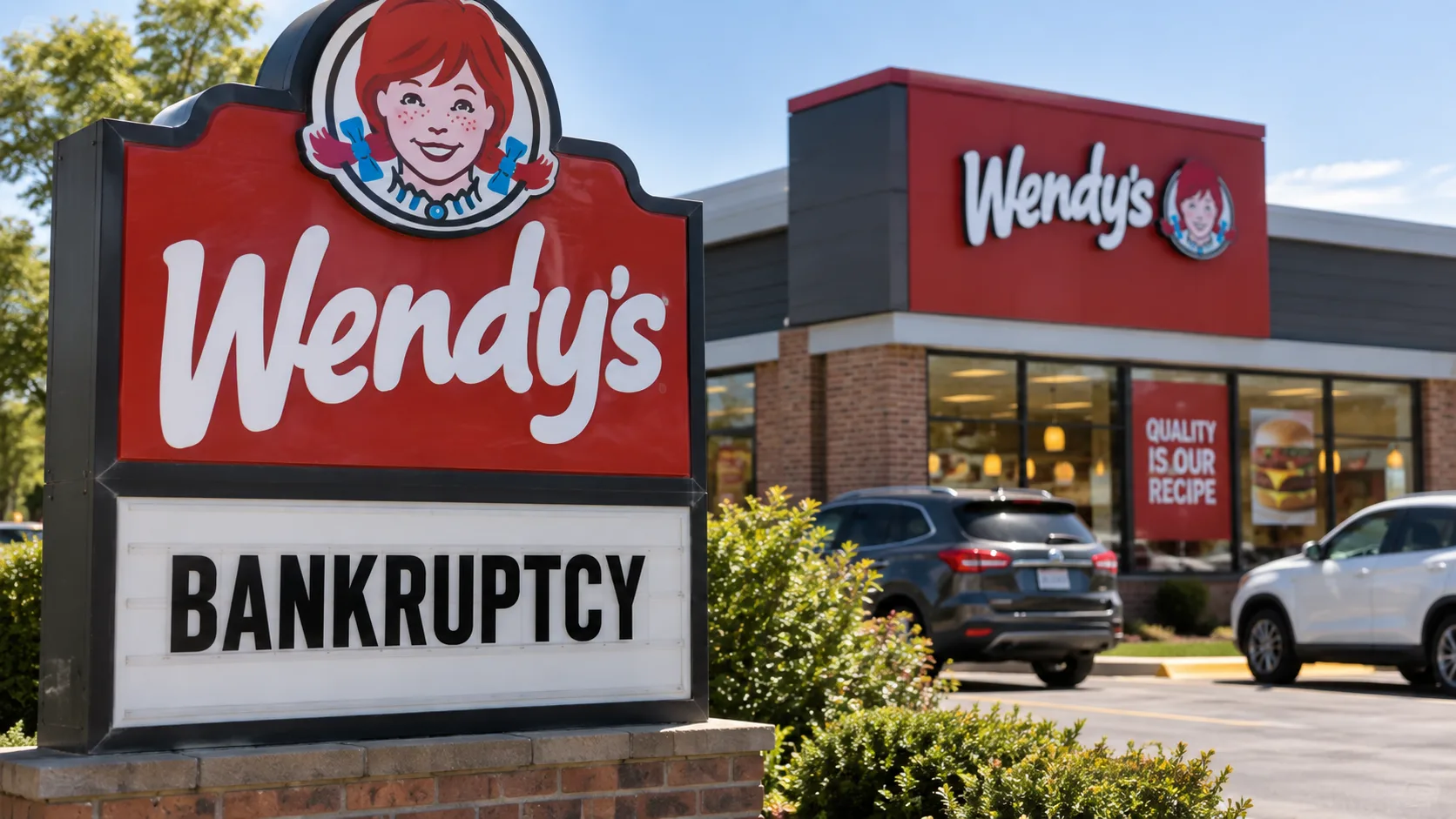
Wendy’s has been struggling with falling sales for more than a year. Now those problems are hitting one of the burger chain’s largest franchisees hard enough to push it into bankruptcy.
Meritage Hospitality Group, which operates 314 Wendy’s restaurants across 15 states, filed for Chapter 11 bankruptcy protection Thursday as it looks to restructure its finances while keeping its restaurants open.
The filing offers a closer look at the financial pressure building inside the Wendy’s system as customers pull back, beef costs rise and restaurants rely more heavily on discounts to keep people coming through the door.
Six Straight Quarters of Falling Sales
Wendy’s has reported declining same-store sales for six consecutive quarters, a troubling stretch for a restaurant chain that competes directly with McDonald’s, Burger King and a growing number of fast-casual options.
Value has become a particularly difficult issue.
Consumers have become more sensitive to restaurant prices after several years of food inflation, forcing fast-food chains to offer more promotions and discounts. Those deals can help generate traffic, but they also squeeze restaurant-level margins, particularly when ingredient and labor costs remain elevated.
Meritage appears to have felt both sides of that squeeze.
CEO Bob Schermer Jr. said in June that the company’s store-level earnings before interest, taxes, depreciation and amortization fell 48% in 2025. Meritage cited higher beef costs and increased discounting as factors hurting profitability.
Because most of Meritage’s restaurants operate under the Wendy’s brand, the company said Wendy’s broader challenges had a significant effect on its financial position.
The $24.9 Million Detail That Stands Out
Meritage estimated both its assets and liabilities at between $10 million and $50 million in its bankruptcy filing.
One number deserves particular attention.
Quality Is Our Recipe LLC, Wendy’s franchise business, is listed as Meritage’s largest unsecured creditor with a $24.9 million claim related to deferred franchise fees.
That suggests financial stress had already been building between the franchisee and Wendy’s before the Chapter 11 filing.
Meritage says the restructuring is intended to strengthen its balance sheet and that its restaurants will continue operating during the bankruptcy process.
For customers, that means the filing does not necessarily translate into hundreds of immediate Wendy’s closures. For investors, however, the size of Meritage makes the situation harder to dismiss as an isolated problem at a handful of weak locations.
Wendy’s Bigger Problem
Franchise businesses depend heavily on restaurant-level economics.
The parent company can introduce new menu items, advertising campaigns and promotions, but franchisees ultimately have to make the numbers work at individual restaurants. When sales fall while food, labor and operating costs remain high, those economics can deteriorate quickly.
Wendy’s has also gone through several leadership changes in recent years while trying to revive growth. Meanwhile, the company’s stock has lost roughly two-thirds of its value over the past three years.
The Meritage bankruptcy therefore adds another pressure point to an already difficult turnaround.
The question now is whether Wendy’s can improve traffic and sales without leaning so heavily on discounts that franchisee profitability suffers further.
Three Things Investors Should Watch
First, watch Wendy’s same-store sales. After six consecutive quarterly declines, even stabilization would matter.
Second, pay attention to franchisee profitability and restaurant closures. Meritage is unusually large, but additional signs of stress among operators would suggest the problem is becoming more widespread.
Finally, watch Wendy’s approach to value. Aggressive promotions can bring customers back, but the company needs those customers to generate enough profit for franchisees to justify operating and investing in their restaurants.
The Bottom Line
Meritage entering Chapter 11 does not mean Wendy’s itself is bankrupt, and its 314 Wendy’s locations are expected to continue operating during the restructuring.
Still, the filing exposes the financial strain underneath Wendy’s prolonged sales slump.
Falling traffic is one problem. When one of your biggest franchisees sees restaurant-level earnings plunge 48% and eventually turns to bankruptcy court, the turnaround becomes much more urgent.
About Author