Russell Vought Blasts Jerome Powell’s Fed: What Investors Should Know About This Unfolding Clash
The tension between the White House budget watchdog and the Federal Reserve is spilling into full public view — and investors would be wise to pay attention.
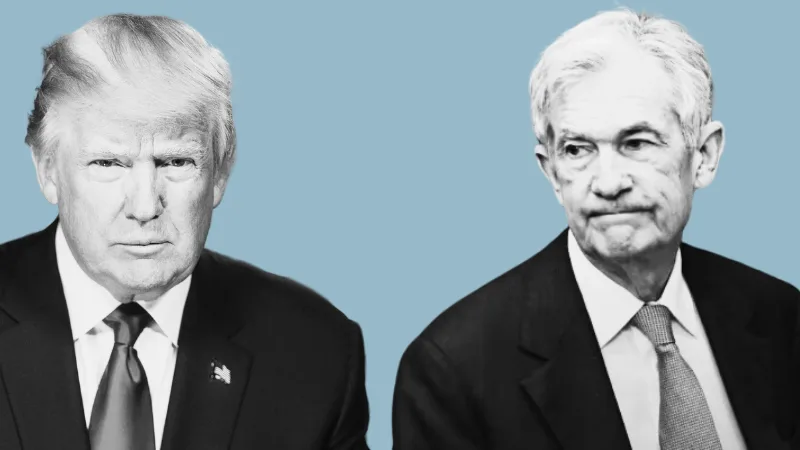
Russell Vought, who directs the Office of Management and Budget (OMB) under President Trump, has unleashed a blistering critique of Federal Reserve Chair Jerome Powell’s stewardship of the U.S. central bank. And unlike past squabbles between the executive branch and the Fed, this dispute isn’t just about interest rates — it’s about alleged financial mismanagement, legal compliance, and even whether Powell should keep his job.
If you’re wondering whether this political drama affects your portfolio, the short answer is: Absolutely. Here’s what’s happening, why it matters, and how you should think about positioning yourself as the story develops.
Why Vought Is Taking Aim at Powell Now
Russell Vought is not a household name for most retail investors. But behind the scenes, he’s one of the sharpest conservative budget hawks in Washington. As OMB Director, he’s tasked with overseeing the federal budget, controlling spending, and ensuring that taxpayer dollars aren’t wasted.
So when Vought accuses Jerome Powell of “gross mismanagement” at the Fed, he’s not just making small talk. He’s aiming to influence policy, shape public opinion — and possibly pave the way for Trump to replace Powell ahead of his scheduled term end in May 2026.
Vought’s beef with Powell centers on two big arguments:
The Fed’s Operating Deficit:
Vought points out that the Federal Reserve has been operating at a loss for more than a year. This is rare — the Fed historically turns a profit, which it remits back to the Treasury. But the current rate environment has flipped the math. The Fed is paying banks and money-market funds more in interest on reserves than it’s earning on its vast holdings of Treasurys and mortgage-backed securities.
The $2.5 Billion Fed Headquarters Renovation:
This is where Vought’s attack gets dramatic. He claims Powell has signed off on a lavish, possibly illegal renovation of the Fed’s historic Eccles Building in Washington, D.C. Originally budgeted at around $1.8 billion, the renovation has reportedly ballooned to at least $2.5 billion — nearly 40% over budget.
According to Vought, this isn’t just cost creep. He says the Fed’s renovation includes questionable luxuries: rooftop gardens, VIP dining rooms, premium marble finishes, and expensive elevators — all while the Fed itself operates in the red.
In Vought’s own words, “You don’t spend like Versailles when you’re running a deficit funded by taxpayers.”
Why This Is More Than Political Noise
To the average observer, this might look like a typical Washington food fight. But this time, the stakes are bigger.
The independence of the Federal Reserve has long been a bedrock of U.S. economic policy. Markets count on the Fed to make tough, sometimes unpopular decisions to fight inflation or ease recessions — decisions that politicians often dislike in the short run.
If Vought’s arguments gain traction, they could give Trump and his allies legal cover to remove Powell “for cause” — something rarely attempted in modern history. The Federal Reserve Act protects the Chair from removal over policy disagreements alone. But alleged financial misconduct or lying to Congress could open the door.
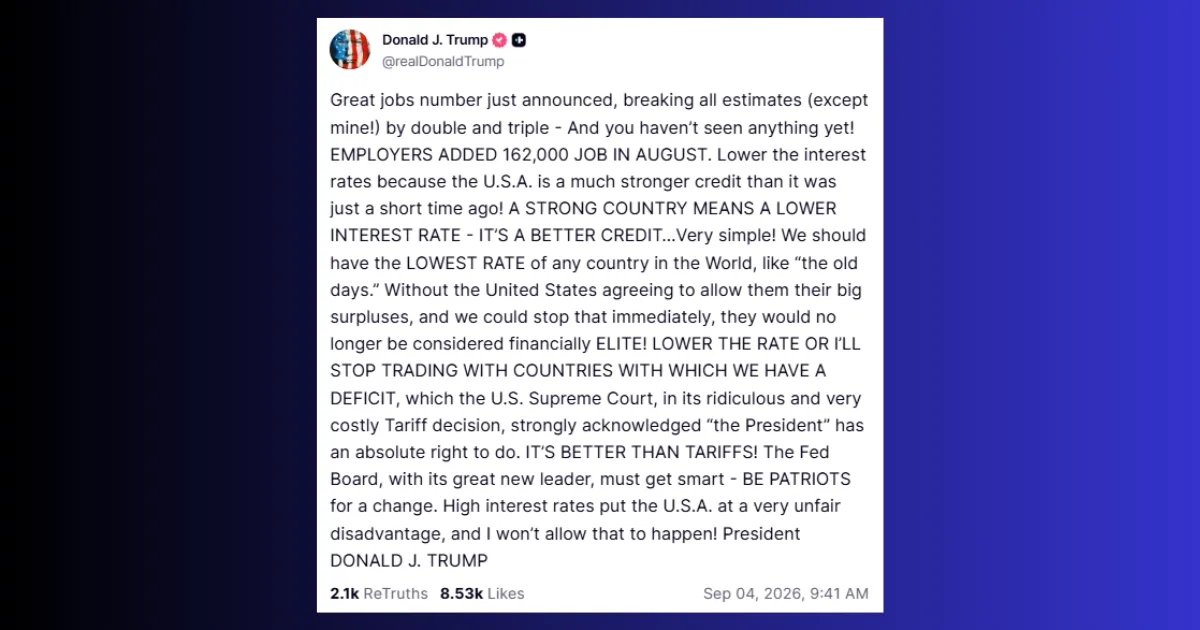
The timing is no accident, either. Trump wants lower interest rates now to support growth and ease borrowing costs ahead of the 2026 election cycle. Powell has been resistant, warning that inflation is still sticky.
So the bigger story here is that the White House may be looking to tighten its grip on the Fed to bend policy in a more accommodative direction — and it’s using Vought’s allegations as the spearhead.
The Legal Battle: Can Trump Fire Powell?
Technically, the president can only remove the Fed chair for “cause.” What does that mean? Legal scholars debate it endlessly.
Vought argues that mismanagement of the Fed’s finances and misleading Congress about cost overruns could qualify. He’s asked Powell to answer 11 pointed questions about the Eccles Building renovation — and he wants the project paused immediately.
If Powell refuses or drags his feet, Vought has hinted that more aggressive measures could follow, including a legal challenge to his tenure.
For investors, this is important because it could inject massive uncertainty into Fed policy. If the White House succeeds in removing Powell — or pressures him to resign — expect the markets to start pricing in more aggressive rate cuts.
How Wall Street Is Reacting
So far, markets have taken the headlines in stride, but traders are watching this closely. Here’s why:
Rate Cuts May Come Sooner
If Powell is forced out or yields to political pressure, it could unleash a faster pivot to rate cuts. That would typically boost equities, weaken the dollar, and lift gold.
Risk of Higher Inflation
A more pliant Fed could reignite inflation worries, especially if rate cuts come before price pressures are truly under control.
Damage to Fed Credibility
Markets thrive on trust. If investors believe the Fed’s independence is eroding, expect more volatility. Yields could spike if bondholders fear the Fed will tolerate higher inflation.
What Should Smart Investors Do Now?
Here’s the bottom line: This clash between Russell Vought and Jerome Powell isn’t just Beltway drama — it could shift monetary policy, move interest rates, and rattle bond markets. Here’s how you can stay ahead:
✅ Diversify for Uncertainty
If this drama spirals, volatility could return in a big way. Make sure your portfolio isn’t overexposed to risk assets that depend heavily on low rates.
✅ Watch Gold and Commodities
If the Fed turns dovish under pressure, commodities and gold could benefit from a weaker dollar and higher inflation expectations.
✅ Mind Your Bond Allocations
Yields might fall if rate cuts come faster — but if credibility erodes, yields could spike instead. Consider a mix of durations and inflation-protected securities.
✅ Stay Tuned for Fed Statements
Keep an eye on any signs Powell may fight back publicly. His next press conference could be market-moving if he defends the Fed’s independence or signals policy changes.
✅ Plan for Scenario A and B
Smart money isn’t betting on just one outcome. Prepare for both: a Fed that stays strong under Powell and a Fed that caves to political heat.
Who Controls America’s Monetary Lever
Russell Vought’s broadside against Jerome Powell is about more than marble hallways and rooftop gardens. It’s about who controls America’s monetary lever — and how far the current administration is willing to go to steer the economy ahead of the election.
If you’re an investor, don’t dismiss it as D.C. theater. This is the kind of institutional fight that can make rates swing, send stocks soaring or sinking, and change the inflation narrative overnight.
About Author