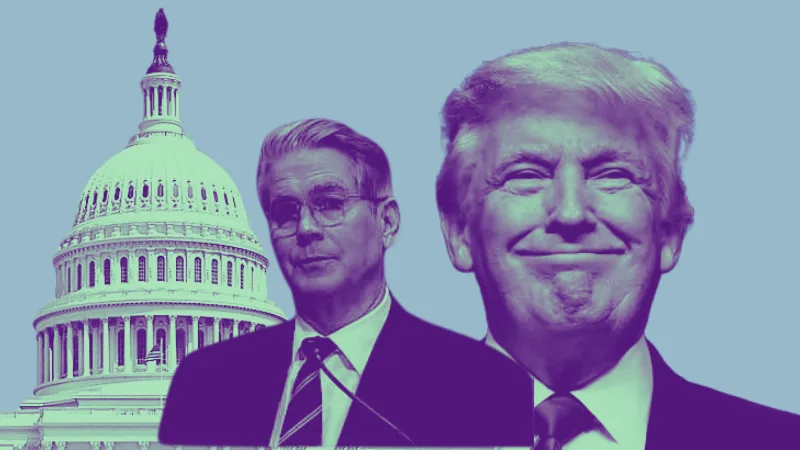
In a bold move that signals escalating tensions between the Trump administration and the U.S. central bank, Treasury Secretary Scott Bessent called for a sweeping review of the Federal Reserve—one that extends far beyond its recent controversy over a $2.5 billion building renovation. During a CNBC interview on “Squawk Box,” Bessent questioned whether the Fed has succeeded in its broader mission, suggesting that its performance, decision-making, and institutional mindset all warrant serious scrutiny.
As Bessent put it:
“If this were the FAA and we were having this many mistakes, we would go back and look at why this has happened.”
This development raises fundamental questions about the future of U.S. monetary policy, the independence of the Federal Reserve, and what it all means for financial markets and investors.
Why This Moment Matters
The timing of Bessent’s remarks is crucial. They come as speculation swirls around whether President Donald Trump will remove Federal Reserve Chair Jerome Powell—an unprecedented and legally murky move. While Trump has denied an imminent dismissal, reports indicate that high-level conversations have taken place about the possibility.
Adding to the intrigue is Bessent’s dual role as both a key economic adviser to the president and a rumored successor to Powell. Though Bessent denied directly influencing Trump’s decision on Powell, he acknowledged the president’s approach of soliciting “a whole range of opinions” before making up his mind.
From an investor standpoint, this moment represents far more than a political sideshow. It signals a potential shift in how America’s monetary system is governed—and who holds the reins of financial power.
The Bigger Issue: What Does a Fed “Review” Actually Mean?
Bessent isn’t just taking aim at Powell. He’s questioning the entire structure and performance of the central bank.
Let’s break down what a comprehensive review of the Fed could entail:
| Area of Focus | Key Questions |
|---|---|
| Monetary Policy Strategy | Has the Fed responded appropriately to inflation and employment targets? |
| Institutional Independence | Should the Fed continue to operate independently of the executive branch? |
| Economic Forecasting Models | Are the Fed’s models outdated or biased toward academic orthodoxy? |
| Structural Composition | Should there be fewer PhDs and more practitioners or entrepreneurs on the board? |
| Oversight and Transparency | Is the Fed accountable enough to Congress and the American public? |
| Operational Spending | Are cost overruns like the $2.5 billion renovation a symptom of deeper issues? |
Bessent specifically criticized the Fed’s reaction to tariffs and inflation, saying:
“They were fearmongering over tariffs, and thus far we have seen very little, if any, inflation.”
He then questioned the value of the academic background of the institution’s staff:
“All these Ph.D.s over there, I don’t know what they do.”
These comments are part of a broader ideological clash between populist policymakers and technocratic institutions, a battle that has deep implications for markets.
A Battle Brewing: The Trump Administration vs. The Fed
The tension between President Trump and Chair Powell isn’t new. Trump has long criticized Powell for not cutting rates aggressively enough to stimulate economic growth.
The recent flashpoint? Interest rates and inflation.
- Trump has demanded deeper rate cuts to fuel investment and growth.
- The Fed has held its ground, only cutting once in December 2024, bringing the federal funds rate down by 1%.
- Bessent, echoing Trump’s frustration, now says easing is appropriate given that inflation remains “moderate.”
But here’s the catch: despite the Fed’s rate cuts, borrowing costs—particularly Treasury yields and mortgage rates—have actually gone up, a dynamic that has puzzled market watchers.
This disconnect adds fuel to Trump’s argument that the Fed’s influence may be overstated—or worse, ineffective in its current form.
What Markets Are Pricing In
Despite the swirl of controversy, Wall Street appears to believe that another rate cut is coming soon—possibly as early as September.
As of this writing, Fed Funds futures show a nearly 70% probability of a rate cut in the next FOMC meeting. Market expectations are shaped by:
- A cooling CPI, with the latest inflation data showing 2.1% year-over-year growth—down from 2.6% earlier this year.
- Rising credit costs despite rate cuts, pressuring business investment.
- Political pressure from the White House to continue easing into the 2026 election cycle.
Fed Funds Rate and Market Expectations (2023–2025)
| Date | Fed Funds Target | Market Cut Probability (Next Meeting) |
|---|---|---|
| Dec 2023 | 5.50% | 20% |
| June 2024 | 5.00% | 45% |
| Dec 2024 | 4.50% | 65% |
| July 2025 | 4.50% | 70% |
(Source: CME FedWatch Tool)
Renovation Spending and Fiscal Optics
A flashpoint of criticism from Bessent and other administration officials is the Fed’s $2.5 billion renovation project for its D.C. buildings. The cost overruns have become a symbol, rightly or wrongly, of perceived waste within the institution.
White House officials reportedly plan to personally tour the site—an unusual level of involvement that underscores the administration’s desire to tighten oversight over the Fed.
While this might seem like a minor budget item in the grand scheme of U.S. governance, it reflects a broader sentiment: the central bank is increasingly seen by Trump-world as bloated, elitist, and out of touch with real-world economic pressures.
Investor Takeaways: What to Watch Now
Here’s what investors should keep a close eye on in the weeks ahead:
1. Rate Cut Timing and Impact
If the Fed moves again in September, sectors like housing, utilities, and consumer staples could benefit from lower borrowing costs. Watch for movement in mortgage-backed securities (MBS) and REITs.
2. Monetary Policy Shakeup
A Trump-led overhaul of the Fed could bring in leadership more aligned with market-friendly policies—at least in the short term. But it could also risk instability or loss of institutional credibility if changes are too abrupt.
3. Gold and Treasury Markets
Political interference with the Fed often sparks volatility in safe-haven assets. Already, gold prices have ticked upward on speculation about Powell’s job security.
4. Market Volatility and Dollar Strength
Any sign of Powell’s dismissal or a radical change in Fed structure could lead to increased volatility and a potential drop in the dollar if investors believe Fed independence is under threat.
The Fed Crossroads Is a Market Risk
Scott Bessent’s call for a top-to-bottom review of the Federal Reserve isn’t just bureaucratic housecleaning—it’s a shot across the bow at one of the most powerful institutions in the global financial system.
Whether the Fed maintains its independence or is forced into a more politically reactive posture will shape monetary policy, inflation expectations, and investor sentiment for years to come.
For now, investors must factor in political volatility as a permanent feature of U.S. economic policy—not an outlier.
Sources
- CNBC – “Treasury Secretary Bessent calls for a review of ‘the entire’ Federal Reserve”
- CME Group FedWatch Tool
- Bloomberg – “Trump Reignites Powell Feud Over Interest Rates”
- Federal Reserve
About Author