In a seismic shift in global energy alliances, the European Union has pledged to purchase $750 billion worth of American energy products during the remainder of President Donald Trump’s term. The deal marks a dramatic escalation in U.S.–E.U. energy cooperation and underscores a decisive pivot by Europe away from Russian energy dependence—one with enormous implications for investors in oil, natural gas, and nuclear energy markets.
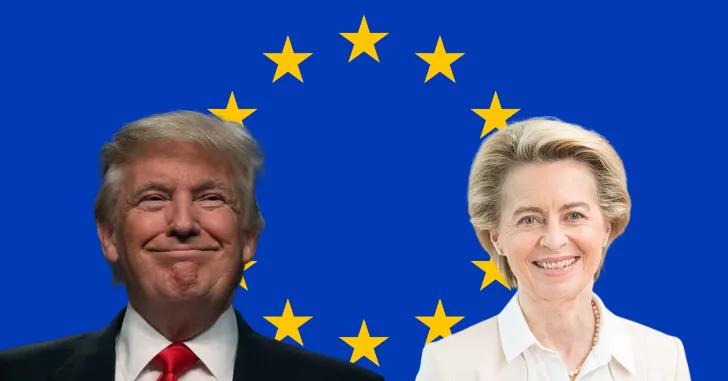
President Trump announced the deal over the weekend, following a summit in Scotland with European Commission President Ursula von der Leyen. The agreement will see Europe buy significant quantities of liquefied natural gas (LNG), oil, and nuclear fuels from U.S. producers, solidifying the United States’ position as a dominant global energy supplier.
The Breakdown: $750 Billion in U.S. Energy Exports
The deal includes:
- Spot purchases of crude oil from American producers.
- Long-term LNG supply contracts between European buyers and U.S. exporters.
- Investment in U.S. nuclear fuel technologies, particularly for power plants phasing out Russian uranium sources.
Von der Leyen praised the deal’s strategic significance, saying it will “diversify our sources of supply and contribute to Europe’s energy security.” She added, “It delivers stability and predictability for citizens and businesses on both sides of the Atlantic.”
Andy Lipow, president of Lipow Oil Associates, told Fox Business that the agreement “solidifies the energy ties as the U.S. continues to be a major exporter of crude oil and refined products with a growing LNG export business.”
Why the Deal Matters: A Post-Russia Energy Future for Europe
Since Russia’s 2022 invasion of Ukraine, the European Union has scrambled to unwind decades of energy interdependence with Moscow. The bloc’s previous efforts—ramping up LNG imports, fast-tracking renewable energy, and setting oil price caps—only scratched the surface. This $750 billion commitment represents Europe’s most direct and sweeping move to replace Russian energy with American alternatives.
The sanctions on Russian oil have led to backchannel arrangements, where nations like India and China refine Russian crude into diesel and ship it back to Europe. According to Lipow, this workaround is being closed off, and U.S. producers stand ready to fill the gap.
“If the U.S. adds more sanctions on countries that still buy Russian oil, it will likely bring the U.S. and Europe even closer when it comes to energy cooperation,” Lipow said.
Nuclear Energy Back in the Spotlight
Perhaps the most underreported element of the agreement is Europe’s pivot toward American nuclear technology and fuel.
For years, several European countries relied on Russian nuclear fuel for their reactors. The new deal signals a structural realignment. Expect U.S. nuclear energy providers like Westinghouse Electric Company and Cameco Corporation to benefit from this trend. Westinghouse, in particular, has deepened its partnerships with European nations like Poland and Ukraine to deliver reactors and fuel.
This is especially relevant for investors watching the comeback of nuclear energy as a low-emission, base-load power source. The broader global nuclear renaissance—driven by energy security concerns and climate goals—could now be accelerated by geopolitical alliances.
The Additional $600 Billion: EU Corporate Capital Floods In
Beyond government-level energy deals, von der Leyen confirmed an additional $600 billion in private European investment is expected to flow into the U.S. economy. While these investments remain unofficial and depend on corporate decisions, the bloc’s signaling is clear: Europe wants a deep, strategic energy partnership with the United States.
For investors, this could drive up valuations across several U.S. sectors:
- Oil and gas producers
- LNG terminal operators (e.g., Cheniere Energy)
- Nuclear technology firms
- Defense contractors, as the framework also includes military equipment purchases
Implications for U.S. Energy Stocks
Let’s look at some of the key players likely to benefit from the deal:
| Company | Sector | Ticker | Why It Matters |
|---|---|---|---|
| Cheniere Energy | LNG export | NYSE: LNG | Long-term contracts with EU buyers boost revenue visibility |
| ExxonMobil | Oil & Gas | NYSE: XOM | Spot sales to EU for crude and refined products |
| Westinghouse (Private) / Cameco | Nuclear fuel | TSX: CCO | Europe turning to U.S. for nuclear reactor fuel |
| Sempra Energy | LNG infrastructure | NYSE: SRE | Major player in West Coast LNG export infrastructure |
| General Dynamics / Lockheed Martin | Defense | NYSE: GD / LMT | Military purchases in the trade framework |
This deal may also be a boon for U.S. ports, railroads, and shipping firms due to increased export volume and logistics demand.
What Investors Should Watch
Here are five key areas where investors should pay close attention:
1. LNG Capacity Constraints
While the U.S. is the world’s top LNG exporter, infrastructure constraints could create bottlenecks in meeting Europe’s growing demand. Watch for announcements around LNG terminal expansions in Texas, Louisiana, and Georgia.
2. Nuclear Fuel Supply Chains
The U.S. lacks sufficient domestic uranium enrichment capacity. Companies expanding in this space may receive government incentives to ramp up production and reduce foreign reliance.
3. Policy Risk
Should a Democratic administration replace Trump in 2028, expect potential reevaluation of the U.S.-EU framework, especially in nuclear and fossil fuel deals.
4. Defense Budgets
The military equipment aspect of the deal is vague, but if European nations begin placing orders with U.S. firms, this could trigger another round of defense-sector growth.
5. Commodity Prices
Massive new demand from Europe may influence global oil and gas prices. Traders should monitor inventory levels and futures markets closely.
A Broader U.S.–EU Strategic Shift
Von der Leyen framed the deal as more than a transactional agreement: “It creates certainty in uncertain times.” That certainty is now a competitive advantage for investors who recognize the structural trends reshaping global trade.
The U.S. and E.U. already trade more than $1.7 trillion annually and represent nearly 44% of global GDP. This new energy and defense alignment adds a national security layer to that economic relationship—and that’s not going away anytime soon.
Energy Is Geopolitical Again
President Trump’s “Landmark Trade Deal” may be the most consequential move yet in shifting Europe’s energy orbit away from Russia and toward the United States. For investors, it marks the opening chapter of a decade-long reordering of global energy flows.
While the headlines focus on the $750 billion figure, the real story is in the strategic interdependence forming between the world’s largest trading blocs. The result? U.S. energy producers, LNG exporters, and nuclear firms may be entering a golden era of demand—powered by politics, policy, and profit.
Sources
- U.S. Energy Information Administration – LNG Export Data
- European Commission – Remarks by President von der Leyen
- Cheniere Energy Investor Relations
- Cameco Investor News
About Author