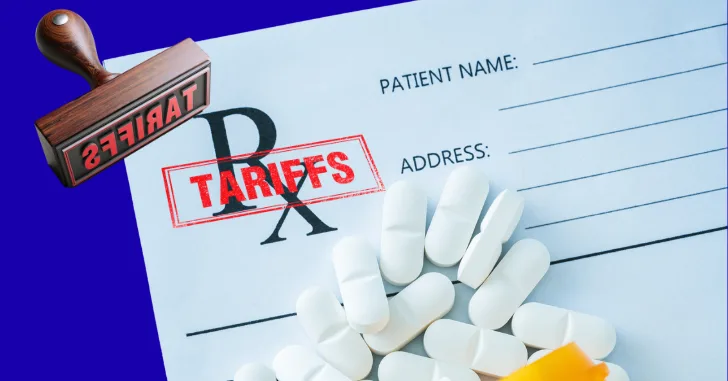
In a bold escalation of his “America First” economic agenda, President Donald Trump told CNBC on Tuesday that the U.S. may soon impose tariffs of up to 250% on imported pharmaceuticals — the highest rate proposed under his administration to date.
Speaking on Squawk Box, Trump said the tariffs would start low but could climb quickly. “We’re going to start with a small tariff,” he explained. “And then in a year to a year and a half maximum, it’s going to go to 150%, and then ultimately 250%.”
The announcement follows a string of aggressive moves from the White House to pressure drugmakers to shift production back to the United States. The Trump administration earlier this year launched a Section 232 investigation into the national security risks of relying on foreign drug imports — the same legal framework used to justify steel and aluminum tariffs in prior years.
“We want pharmaceuticals made in our country,” Trump told CNBC. “It’s a matter of national security.”
Why It Matters for Investors
For pharmaceutical giants with sprawling global supply chains — including Pfizer, Merck, Johnson & Johnson, and Eli Lilly — the threat of triple-digit import taxes could upend business models and squeeze margins.
Industry analysts warn that such tariffs would:
- Drive up drug prices for consumers and insurers
- Disrupt global supply chains, especially for active pharmaceutical ingredients (APIs) sourced abroad
- Detract from R&D spending as companies divert resources to relocate manufacturing
- Deter future investment in U.S. markets amid regulatory and political uncertainty
Pharma stocks could see increased volatility as policy clarity unfolds, particularly those with significant foreign manufacturing exposure.
Drugmakers Push Back
The pharmaceutical industry has issued a sharp rebuke of Trump’s tariff threat. Trade associations and executives warn that such steep levies would not only hurt profits but also jeopardize patient care.
“This could dangerously disrupt the drug supply chain,” one industry executive told Reuters, “especially for critical medicines we rely on daily.”
At the same time, companies like Eli Lilly and Johnson & Johnson have recently announced new U.S. investment initiatives, potentially to curry favor with the administration and hedge against policy risk.
Not Trump’s First Shot at Pharma
The tariff announcement is the latest in a growing list of actions targeting the pharmaceutical industry. In May, President Trump revived the controversial “Most Favored Nation” executive order, which aims to lower U.S. drug costs by tying Medicare prices to lower prices abroad.
Trump claimed this week that he had formally “invoked” the policy, saying it will have a “tremendous impact on the price of medicine.” However, as of now, the order has not yet resulted in formal regulatory implementation.
In addition, Trump last week sent formal letters to 17 major drugmakers, including Pfizer, GSK, Merck, and Novo Nordisk, urging them to cut U.S. prices voluntarily by September 29. The letters demand that companies agree to sell their full portfolio of drugs to Medicaid patients at the lowest price offered in any other developed country.
Some companies have acknowledged receiving the letters and are reviewing them, but have not committed to any price cuts.
Strategic Takeaways for Investors
For investors, this policy trajectory sends a clear message: the Trump administration is willing to escalate economic pressure — even on vital sectors like healthcare — to reassert domestic manufacturing.
If implemented, 250% pharma tariffs would:
- Reward U.S.-based manufacturing firms that are already reshoring operations
- Potentially favor domestic generic drugmakers less reliant on imports
- Pose short-term risks to multinational pharma players exposed to foreign production
Moreover, the uncertainty adds another layer of risk to an already volatile health sector, which has been under scrutiny for years over pricing and access concerns.
The Bottom Line
President Trump’s tariff threats may or may not materialize into final policy — but his message is clear: pharmaceutical companies will face increasing pressure to bring jobs and production back to the U.S.
For patients, the stakes involve access and affordability. For investors, it’s about navigating political headwinds and supply chain recalibrations in one of the most globally intertwined industries.
As election season heats up and drug pricing continues to be a hot-button issue, expect the pressure on pharma to intensify.
Sources:
- CNBC – Trump says pharma tariffs could reach 250%
- Reuters – Trump sends letters to 17 drugmakers
- White House – Executive Order on Most Favored Nation Drug Pricing
About Author