Cracker Barrel Old Country Store has pulled off one of the fastest corporate rebrand reversals in recent memory. After introducing a modernized logo that ditched its iconic “Old Timer” mascot, the company faced a firestorm of criticism from loyal customers, political figures, and market watchers. Within days, Cracker Barrel backtracked—scrapping the new design and reaffirming its commitment to tradition.
For investors, the episode isn’t just a quirky story about branding. It offers a live case study in how consumer sentiment, cultural politics, and corporate governance intersect—and how those forces can move share prices.
The Rebrand That Backfired
In mid-August 2025, Cracker Barrel announced a redesigned logo as part of a broader “All the More” modernization campaign. The new branding removed the image of the company’s “Uncle Herschel” character leaning against a barrel—an emblem synonymous with the chain since 1977. Instead, the updated design left only the words “Cracker Barrel” alongside a yellow barrel outline. The tagline “Old Country Store” was also cut, though the company emphasized its colors were still inspired by “eggs and biscuits” (CBS News).
The intent was clear: appeal to younger diners while signaling that Cracker Barrel was ready to modernize. But the move sparked immediate outrage online. Long-time customers derided the new look as “soulless,” “bland,” and “generic.” Critics accused the company of abandoning its Americana roots. A YouGov poll of 1,000 adults revealed that 65% of Americans were aware of the new logo—and a striking 76% preferred the old one.
The Political Firestorm
The backlash escalated when President Donald Trump entered the debate. On Truth Social, he wrote:
“Cracker Barrel should go back to the old logo, admit a mistake based on customer response (the ultimate Poll) and manage the company better than ever before.”
Within hours, shares of Cracker Barrel surged more than 6% at the close of trading Tuesday (Yahoo Finance). By Wednesday morning, the stock was up nearly 5% again, restoring much of the market value lost when the logo first debuted.
The White House wasted no time framing the reversal as a “culture war win.” Deputy Chief of Staff Taylor Budowich claimed he spoke directly with Cracker Barrel executives, saying they had “thanked the president for weighing in.” Press Secretary Karoline Leavitt lauded Trump’s “unmatched business instincts” and called the reversal proof that companies should “Trust in Trump” (Politico).
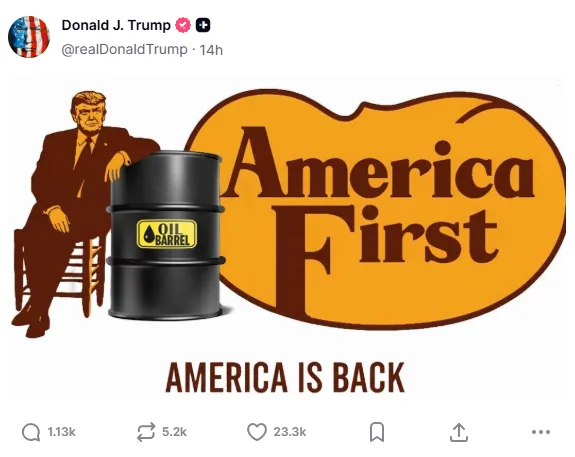
Even the administration’s communications team joined in: posting spoofed versions of the logo with Trump himself leaning on a barrel and slogans like “Go Woke, Go Broke” (Fox Business).
Cracker Barrel’s Swift About-Face
By Tuesday night, the company reversed course. In a statement, Cracker Barrel acknowledged the backlash:
“We thank our guests for sharing your voices and love for Cracker Barrel. We said we would listen, and we have. Our new logo is going away and our ‘Old Timer’ will remain.”
The company doubled down on its identity as “a proud American institution,” emphasizing that its 70,000 employees remained committed to “delicious food, warm welcomes, and the kind of country hospitality that feels like family” (New York Post).
Trump later congratulated the company in another post:
“Congratulations ‘Cracker Barrel’ on changing your logo back to what it was. All of your fans very much appreciate it. Good luck into the future. Make lots of money and, most importantly, make your customers happy again!”
Market Reaction: A Case Study in Sentiment Risk
From a financial perspective, Cracker Barrel’s logo saga is striking. Stocks moved almost entirely on perception and sentiment—not earnings, revenue, or balance sheet fundamentals. Consider the sequence:
- August 20: Rebrand announced, shares drop nearly 10%.
- August 24–25: Social media backlash builds. Polling confirms majority preference for the old logo.
- August 26 (daytime): Trump criticizes the rebrand. Shares rebound 6% by close.
- August 26 (evening): Cracker Barrel announces reversal.
- August 27: Shares rise another 4–5%, regaining much of the initial loss.
This rapid swing illustrates the market impact of brand equity risk—the idea that a company’s value is deeply tied to how consumers perceive its identity and authenticity.
| Date | Event | CBRL Stock Move |
|---|---|---|
| Aug 20 | New logo announced | -10% |
| Aug 24–25 | Public backlash intensifies | Flat to -2% |
| Aug 26 AM | Trump weighs in | +6% |
| Aug 26 PM | Company reverts to old logo | +2% |
| Aug 27 | Shares continue rebound | +4% |
Why It Matters for Investors
This isn’t just a story about a logo. It carries broader lessons for investors in consumer-facing companies:
1. Brand Identity Is a Financial Asset
When a company tampers with its core identity, it risks alienating its base. Cracker Barrel’s logo wasn’t just art—it symbolized authenticity for a brand that thrives on nostalgia. Removing it cost the company nearly $100 million in market value, at least temporarily.
2. Politics and Business Are Intertwined
In today’s polarized climate, brand decisions can spark political firestorms. Trump’s involvement amplified the backlash and likely accelerated the reversal. For investors, this means evaluating political exposure risk—how vulnerable a company may be to becoming a proxy in culture wars.
3. Sentiment Moves Faster Than Fundamentals
Cracker Barrel’s financials didn’t change in a week, but its stock price swung 10% in both directions. This underscores the importance of monitoring sentiment data—polling, social media chatter, and political commentary—as leading indicators for consumer-facing equities.
4. Crisis Management Can Restore Value
Despite the misstep, Cracker Barrel’s swift reversal helped stabilize its share price. By listening quickly and reversing course, the company avoided a prolonged selloff. That responsiveness itself is a signal investors should note—management that can pivot fast often preserves shareholder value.
Lessons Across the Market
Cracker Barrel isn’t the first company to stumble over branding in a polarized environment. Bud Light’s controversial marketing campaign in 2023 led to months of boycotts and billions in lost value. Disney, Target, and Nike have all faced politicized backlash in recent years.
The trend is clear: corporate branding is now political currency. For companies steeped in Americana imagery or cultural symbolism, the stakes are even higher.
For investors, this raises key questions:
- Which companies rely most heavily on tradition and nostalgia for their value proposition?
- How might future rebranding efforts—however well-intentioned—risk alienating core consumers?
- Which firms are most politically exposed, and how might that affect volatility?
Investor Takeaways
- Watch for Overreach: When companies stray too far from their heritage, the market punishes them. Monitor consumer polls and online sentiment to catch early signs of trouble.
- Factor in Political Risk: In the Trump era, cultural backlash can move markets in hours. Investors should expect political figures to weigh in on brand disputes—especially when they resonate with the base.
- Consider Crisis Management Quality: A misstep doesn’t have to be fatal if leadership can correct quickly. Cracker Barrel’s reversal restored much of its lost value within 48 hours.
- Opportunity in Volatility: For nimble traders, moments of brand-driven selloffs can create short-term entry points. But longer-term investors should remain cautious: reputation damage lingers.
Final Word
Cracker Barrel’s logo saga is a reminder that in 2025, branding isn’t just about marketing—it’s about politics, identity, and shareholder value. The company’s swift retreat restored stability, but it also left investors with a cautionary tale: in an age when culture wars spill into markets, brand equity can be as volatile as any commodity.
For investors, the lesson is clear: never underestimate the financial power of sentiment—and always be ready for politics to play a role in your portfolio.
Sources:
About Author