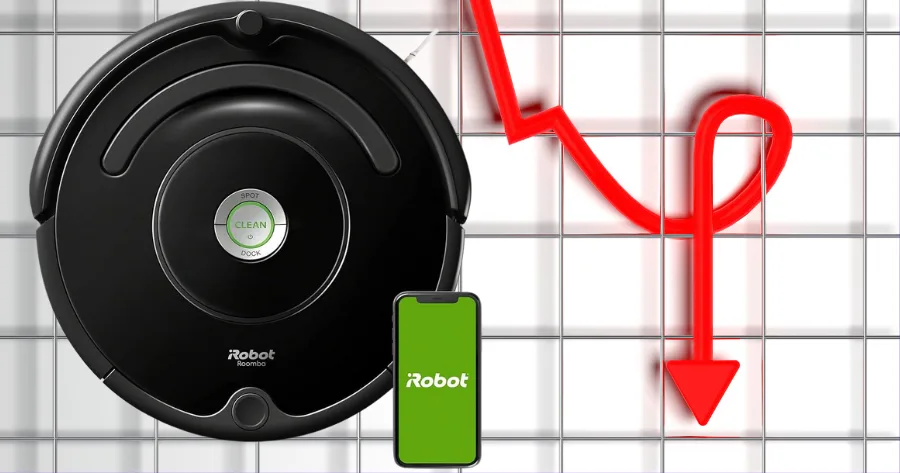
iRobot, the company behind the Roomba robotic vacuum, has filed for Chapter 11 bankruptcy protection as it prepares to be acquired by its primary manufacturing partner, Picea Robotics. The move marks a dramatic reversal of fortune for one of the most recognizable names in consumer robotics and underscores the mounting pressure facing hardware companies competing in a rapidly commoditizing market.
The bankruptcy filing was submitted Sunday in Delaware bankruptcy court. iRobot said the restructuring will allow it to continue operating while transferring ownership to Picea, a China based manufacturer that already plays a central role in producing the company’s devices.
Financial Strain Builds After Years of Competitive Pressure
iRobot generated approximately $682 million in revenue in 2024, according to court filings. Despite solid sales, profitability deteriorated as the company faced intensifying competition from lower priced robotic vacuum makers, particularly Chinese rivals such as Ecovacs Robotics.
While iRobot continues to hold strong positions in key markets, including the United States and Japan, price competition forced the company to reduce margins and increase spending on product upgrades and software development. Those investments were not enough to offset rising costs and shrinking pricing power.
Court documents show iRobot still controls about 42 percent of the U.S. robotic vacuum market and roughly 65 percent of the Japanese market. However, dominance in market share no longer guaranteed financial stability as cheaper alternatives flooded global retail channels.
Tariffs Added New Cost Pressures
Trade policy also played a significant role in accelerating iRobot’s financial distress. The company manufactures many of its robotic vacuums in Vietnam for the U.S. market. A newly imposed 46 percent U.S. tariff on Vietnamese imports significantly increased production costs.
According to iRobot’s bankruptcy filings, tariffs added roughly $23 million in costs in 2025 alone. The company said the unpredictability of trade policy made long term planning more difficult and further strained cash flow.
Debt Load and the Collapse of the Amazon Deal
At the time of filing, iRobot carried approximately $190 million in debt. Much of that debt originated from a 2023 loan used to refinance operations while the company pursued a sale to Amazon.
That $1.4 billion acquisition collapsed after a European competition investigation raised antitrust concerns. When the deal fell apart, iRobot struggled to service its debt and fell behind on payments to Picea under its manufacturing agreement.
Court records show that Picea later acquired iRobot’s debt from a group of investment funds managed by the Carlyle Group, giving the manufacturer significant leverage over the company’s future.
Bankruptcy Plan Hands Control to Manufacturer
Under the proposed Chapter 11 plan, Picea Robotics will assume full ownership of iRobot. The transaction will eliminate the remaining $190 million from the 2023 loan and cancel an additional $74 million that iRobot owed Picea under existing manufacturing arrangements.
iRobot said other creditors and suppliers will be paid in full, helping to preserve relationships across its supply chain.
The company emphasized that the restructuring will not disrupt product support, app functionality, customer programs, or partnerships. Consumers are not expected to see interruptions in service or updates to their devices during the bankruptcy process.
From Pandemic Darling to Distressed Asset
iRobot’s fall has been swift. The company was valued at approximately $3.56 billion in 2021, fueled by pandemic driven demand for home automation and cleaning products. As consumer spending normalized and competition intensified, the stock collapsed.
According to data compiled by LSEG, iRobot’s current valuation is closer to $140 million, a stark reminder of how quickly conditions can change in consumer technology markets.
A Legacy Company at a Turning Point
Founded in 1990 by three Massachusetts Institute of Technology roboticists, iRobot initially focused on defense and space robotics. The company shifted to consumer products in the early 2000s and launched the Roomba robotic vacuum in 2002.
The Roomba became an instant success and helped define the robotic vacuum category worldwide. For years, the brand was synonymous with automated home cleaning and set the standard for navigation, mapping, and device connectivity.
iRobot is headquartered in Bedford, Massachusetts, and employs 274 people, according to court filings.
What This Means Going Forward
For investors and consumers alike, iRobot’s bankruptcy highlights the challenges facing hardware focused technology companies in an era of rapid commoditization, global competition, and geopolitical uncertainty.
If the restructuring proceeds as planned, iRobot will emerge as a privately held company controlled by its manufacturer. That may allow for lower costs and tighter integration between design and production, but it also marks the end of iRobot as an independent publicly traded innovator.
Whether iRobot can reclaim its former leadership position will depend on its ability to differentiate beyond price and hardware alone in a market increasingly driven by software, artificial intelligence, and ecosystem integration.
About Author