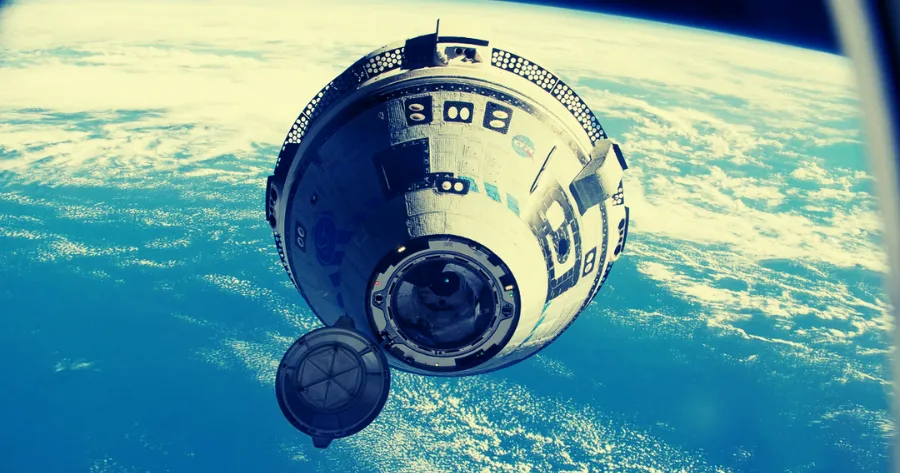
NASA’s leadership is facing intense scrutiny after a high-profile investigation into the troubled Starliner astronaut mission revealed serious engineering flaws, organizational failures, and leadership breakdowns inside both the space agency and its commercial partner Boeing. The findings raise new questions about the future of NASA’s commercial crew program and how the United States will transport astronauts into orbit in the years ahead.
At the center of the controversy is the first crewed test flight of Boeing’s CST-100 Starliner spacecraft, a mission originally intended to demonstrate the vehicle’s readiness to carry astronauts to and from the International Space Station. Instead, the mission exposed deep technical and managerial weaknesses that forced NASA into a months-long contingency plan and ultimately required astronauts to return home aboard a competitor’s spacecraft.
A Mission That Started Strong but Quickly Unraveled
The mission launched in June 2024 from Cape Canaveral Space Force Station in Florida, carrying NASA astronauts Butch Wilmore and Suni Williams. Early phases of the flight appeared successful, but problems emerged as Starliner approached the International Space Station.
Multiple thruster failures reduced the spacecraft’s maneuverability and created uncertainty about its ability to safely dock. These issues triggered immediate concern among engineers and mission planners and set off a chain of technical evaluations that would stretch for months.
Ultimately, NASA and Boeing made the difficult decision to return the Starliner capsule to Earth without the astronauts onboard. Wilmore and Williams remained on the International Space Station for an extended stay and returned to Earth roughly nine months later aboard SpaceX’s Crew Dragon spacecraft.
While the astronauts remained safe throughout the ordeal, the mission was officially classified as a Type A Mishap, the highest level of mission failure designation within NASA. Historically, this classification has been associated with catastrophic incidents such as the Challenger and Columbia disasters and the Apollo 1 fire. In this case, however, the report noted that the mission was “ultimately successful in preserving crew safety.”
Engineering Deficiencies and Unresolved Technical Problems
The investigation identified Starliner’s propulsion system, particularly its thrusters, as a primary contributor to the mission failure. Engineers continue to search for the precise root cause, but the report concluded that design and engineering shortcomings played a significant role.
NASA Administrator Jared Isaacman acknowledged the seriousness of the findings, stating, “Starliner has design and engineering deficiencies that must be corrected.” The report detailed multiple areas requiring technical improvement before Starliner can safely carry astronauts again.
The spacecraft’s propulsion anomalies were not the only concern. Investigators also pointed to insufficient testing, limited fault tolerance in critical systems, and communication gaps between engineering teams as contributing factors.
NASA issued 61 formal recommendations to address these technical risks before any future crewed Starliner mission is approved.
Leadership and Decision-Making Under Fire
Perhaps more concerning than the hardware issues were the cultural and leadership failures uncovered by the investigation. According to Isaacman, the most troubling discovery involved organizational weaknesses rather than mechanical faults.
“But the most troubling failure revealed by this investigation is not hardware. It’s decision making and leadership that, if left unchecked, could create a culture incompatible with human spaceflight,” Isaacman said.
The report described an erosion of trust between NASA and Boeing, noting that leadership within both organizations became “overly risk-tolerant” during the mission. This cultural shift may have contributed to delayed responses, misjudged risk assessments, and ineffective communication during critical decision points.
The investigation also revealed that more than 30 launch attempts created mounting schedule pressure, which led to decision fatigue among mission leaders. Isaacman noted that disagreements over how to return the astronauts safely escalated into unprofessional conduct while the crew remained in orbit.
Despite referencing “leadership accountability,” NASA has not yet announced specific disciplinary actions.
Experts Say Organizational Failures Often Matter More Than Technology
Industry experts say the findings highlight a recurring theme in aerospace failures. Don Platt, a professor and aerospace engineering leader at the Florida Institute of Technology, emphasized that human and organizational factors frequently play a larger role than hardware issues.
“These are very complex programs, and complex programs like this fail in complex ways,” Platt said. “Those organizational issues are oftentimes, maybe even more important than the technical problems that they’re facing.”
Platt added that the unusually public criticism from NASA leadership may signal a broader shift toward increased transparency and tighter oversight of contractors moving forward.
What This Means for NASA’s Commercial Crew Strategy
Despite the failure, NASA has reaffirmed its commitment to continuing Starliner development. Maintaining two independent crew transportation systems remains a key strategic priority for the agency.
Currently, SpaceX’s Crew Dragon is NASA’s primary operational spacecraft for transporting astronauts to the International Space Station. Starliner was intended to serve as a second option, ensuring redundancy and reducing dependence on any single provider.
NASA still plans to retire the International Space Station by the end of the decade, but until then, maintaining dual crew access to orbit remains critical for mission flexibility and national security interests.
Boeing has pledged continued cooperation with NASA, stating it is working closely with the agency to prepare Starliner for future missions and remains committed to NASA’s commercial crew vision.
Broader Implications for the U.S. Space Industry
The Starliner investigation arrives at a time of growing competition in the commercial space sector. SpaceX has rapidly established itself as the dominant provider of human spaceflight services, while Boeing faces mounting pressure to prove Starliner’s viability.
The outcome of NASA’s reforms could reshape how future government-private partnerships operate, potentially increasing oversight, tightening safety standards, and redefining contractor accountability across the aerospace industry.
The investigation’s recommendations also underscore the importance of organizational discipline, clear leadership structures, and realistic scheduling in complex engineering programs. These lessons extend beyond NASA and may influence large-scale space and defense initiatives worldwide.
For now, the future of Starliner depends on whether Boeing and NASA can resolve the spacecraft’s engineering deficiencies and restore confidence in their partnership before the next planned crewed mission.
Sources
https://www.nasa.gov/humans-in-space/commercial-space/commercial-crew-program
https://www.nasa.gov/centers-and-facilities/safety-center
https://www.nasa.gov/history/commercial-crew-program-overview
https://www.nasa.gov/feature/nasa-boeing-continue-work-toward-starliner-certification
https://www.boeing.com/space/starliner
https://www.nasa.gov/investigation/nasa-safety-reporting-and-mishap-investigations
https://www.nasa.gov/press-release/nasa-provides-update-on-boeing-starliner-crew-flight-test
About Author