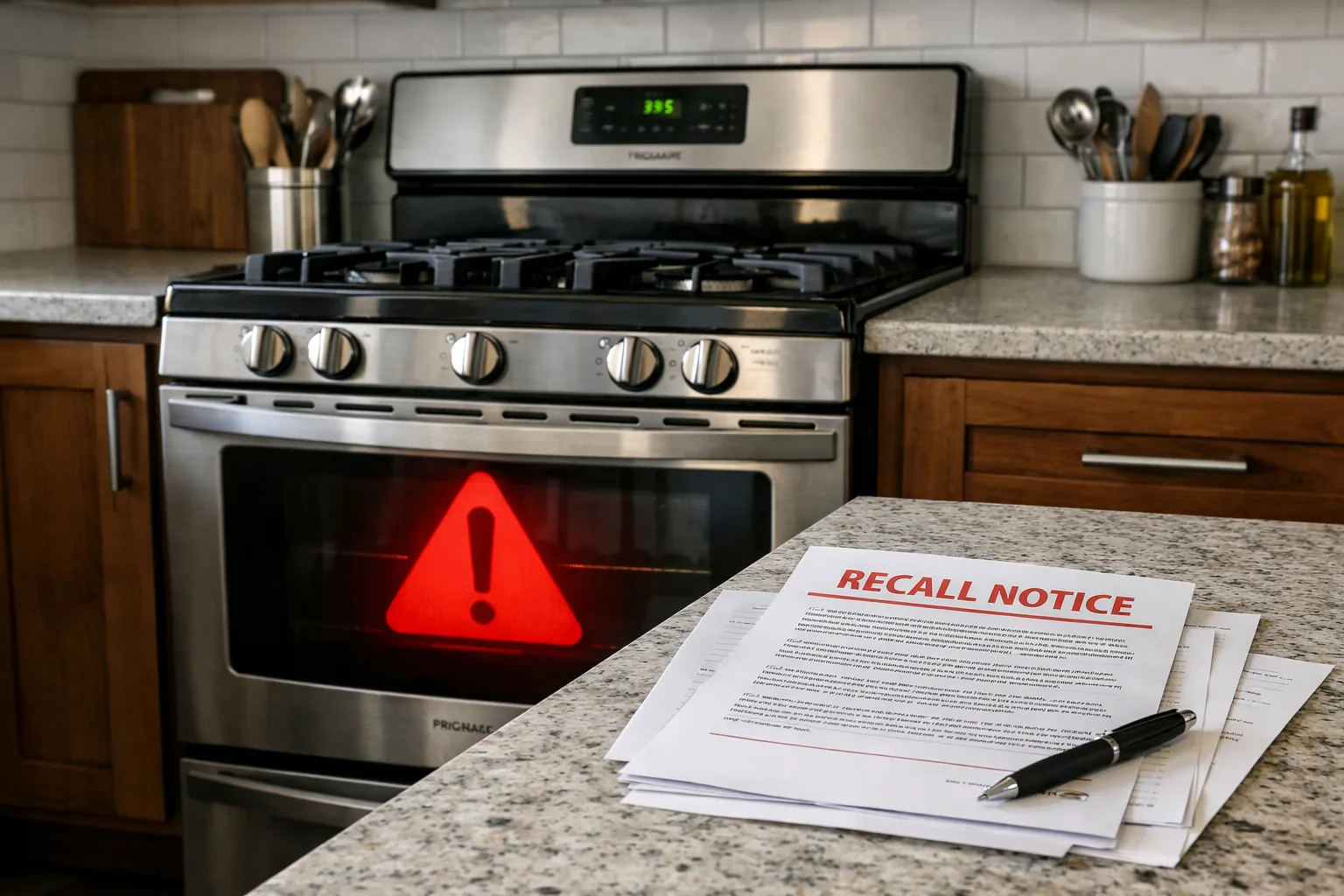
According to the U.S. Consumer Product Safety Commission, the recall covers about 169,500 units sold in the United States and another 5,300 sold in Canada. The problem centers on the oven portion of the gas range. Regulators say the bake burner can experience delayed ignition, creating a situation where gas builds up before igniting, which can cause flames to flare out unexpectedly and injure users.
That is not a theoretical risk. The CPSC said Electrolux and regulators are aware of 62 reports involving delayed ignition of the oven bake burner, including 30 burn injuries. Consumers are being told to stop using the oven function immediately and contact Electrolux for a free in-home repair. The cooktop burners can still be used.
What Exactly is Being Recalled
The recall applies to certain Frigidaire, Frigidaire Gallery, and Frigidaire Professional gas ranges sold from June 2025 through January 2026 at Lowe’s, Home Depot, other retailers nationwide, and through Frigidaire’s website. The affected units were sold for prices ranging from about $630 to $2,700.
The affected model numbers are:
FCFG3083AS
FCRG3083AD
FCRG3083AS
GCFG3060BD
GCFG3060BF
GCFG3070BF
GCRG3060BD
GCRG3060BF
PCFG3080AF
FCFG3062AB
FCFG3062AS
FCFG3062AW
FCRG3051BB
FCRG3051BS
FCRG3051BW
FCRG3052BB
FCRG3052BS
FCRG3052BW
FCRG3062AB
FCRG3062AS
FCRG3062AW
FCRG306LAF
GCFG3059BF
The recall covers units with serial numbers ranging from VF52200000 through VF54399999. Consumers can find both the model number and serial number on the nameplate located in the drawer beneath the oven.
Why Delayed Ignition is Dangerous
The core issue is delayed ignition of the oven bake burner. In plain English, that means gas may begin flowing before the burner lights properly. When ignition finally happens, it can create a sudden burst or flare that can burn someone opening the oven or standing nearby.
That is why regulators are not telling consumers to merely “monitor” the issue. They are specifically instructing people to stop using the oven right away. The fact that 30 burn injuries have already been reported makes this a serious safety event, not just a preventive recall.
This type of issue is especially concerning in households with children, older adults, or anyone who may not realize that a delayed ignition problem can escalate quickly. People often assume a gas appliance that eventually lights is still functioning normally. In this case, that assumption could be dangerous.
What Consumers Should Do Now
If you own one of these Frigidaire gas ranges, the first move is simple. Check the model number and serial number immediately. If your unit falls within the affected range, stop using the oven portion of the appliance and contact Electrolux for the free repair.
The company is offering in-home installation of a new bake burner at no cost. That matters because this is not a DIY fix most consumers should attempt on their own. Anything involving gas ignition components should be handled professionally.
Consumers can continue using the cooktop burners, according to the recall notice, but the oven should remain off until the repair is completed.
Why this Recall Stands Out
Appliance recalls happen all the time, but not all recalls are equal. Some involve low-probability defects, labeling errors, or isolated manufacturing issues. This one stands out for three reasons.
First, the scale is large. More than 174,000 units across the U.S. and Canada is not small. Second, the products were sold recently, between June 2025 and January 2026, which means many affected buyers may still be in the early stages of ownership and may not suspect a problem. Third, the injury count is meaningful. Thirty reported burn injuries is enough to get attention from both consumers and investors.
That also raises a broader point about the home appliance market. Consumers have been spending heavily on kitchen upgrades over the last several years, particularly through major chains like Lowe’s and Home Depot. A high-profile recall involving a mainstream household appliance can shake consumer confidence, at least temporarily, especially if it spreads widely across local TV stations and social media.
What it Could Mean for Electrolux and Retailers
Electrolux’s U.S. over-the-counter ticker, ELUXY, was up in the market snapshot included with some coverage of the recall, but the bigger issue for the company is not necessarily a one-day stock reaction. It is brand trust, warranty costs, service logistics, and potential legal exposure if more injuries surface.
For retailers like Lowe’s and Home Depot, this is unlikely to become a major earnings event by itself, but it is still the kind of story they do not want tied to their appliance aisles. Big-box retailers depend heavily on consumer trust in major purchases like ranges, refrigerators, washers, and dryers. When a product sold nationwide ends up in a burn-hazard recall, it creates friction in a category where buyers already tend to be cautious and comparison-shop heavily.
There is also the timing issue. With inflation still affecting household budgets and big-ticket purchases under pressure, appliance brands and retailers do not need additional reasons for shoppers to delay purchases or question product reliability. That does not mean this recall becomes financially material to Lowe’s or Home Depot on its own, but it does add reputational noise in an already competitive environment.
Bottom Line
Electrolux’s Frigidaire gas range recall is a real consumer safety story, not background noise. More than 174,000 units are affected, dozens of delayed ignition incidents have been reported, and 30 burn injuries are already tied to the problem. The oven function on affected units should not be used until a repair is completed.
For readers, the practical takeaway is obvious. Check the model and serial number now, especially if you bought a Frigidaire gas range in the second half of 2025 or early 2026. For investors, the story is a reminder that even routine consumer appliance businesses carry execution risk, quality-control risk, and brand-risk exposure that can show up with little warning.
In other words, this is not just a kitchen recall. It is an example of how product quality failures can quickly turn into safety headlines, service costs, and reputational pressure.
About Author