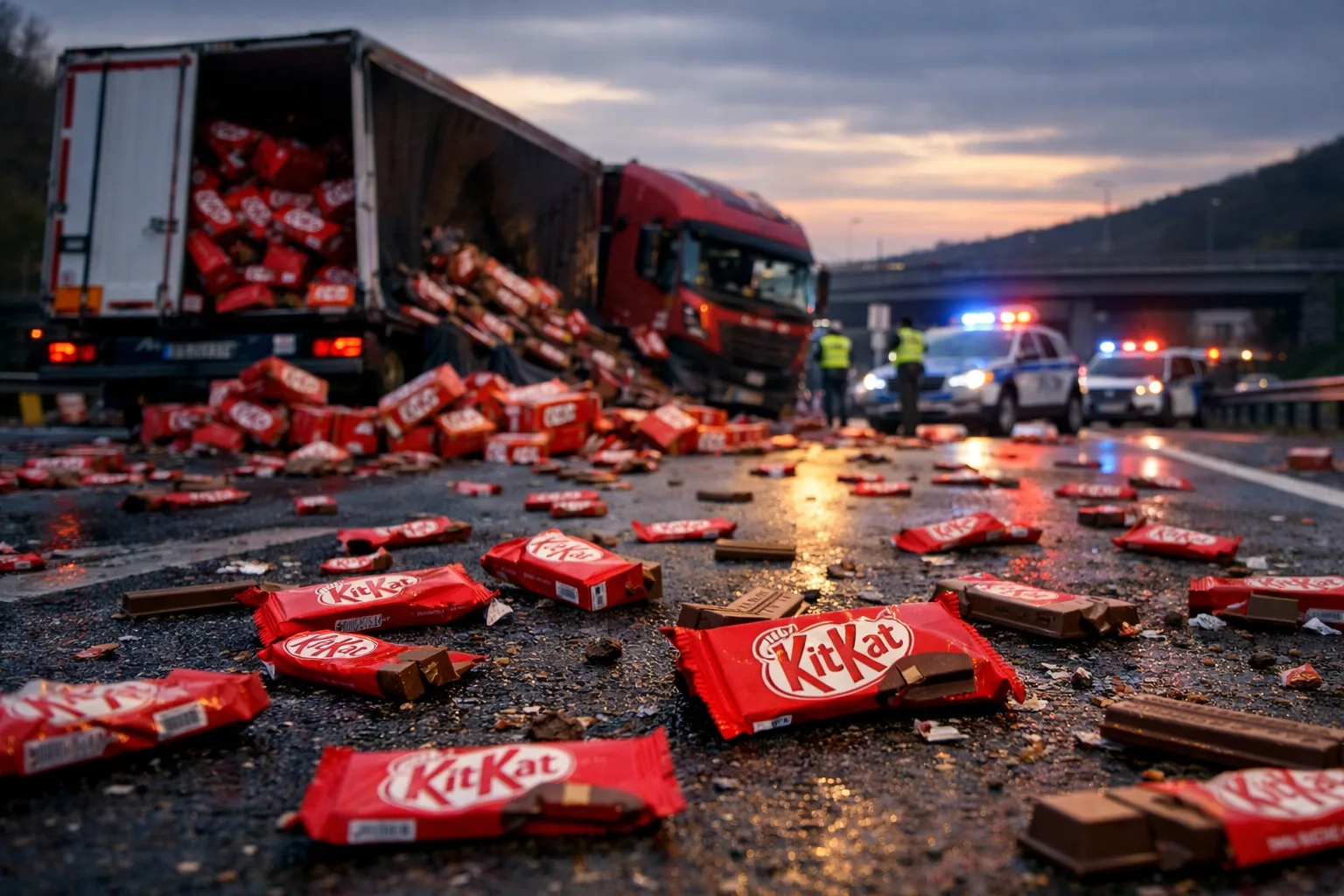
A massive chocolate heist in Europe is turning heads not just for its scale, but for what it signals about a growing problem that investors should not ignore.
Swiss food giant Nestlé confirmed that a truck carrying more than 12 tons of KitKat bars vanished during transit across Europe, raising concerns about supply disruptions, organized cargo theft, and broader vulnerabilities in global logistics networks.
A High-Stakes Chocolate Theft
According to company statements, the shipment included roughly 413,000 KitKat bars from a newly launched product line. The truck departed from central Italy and was scheduled to arrive in Poland, but it never reached its destination.
As of now, both the vehicle and its contents remain missing.
The company has not disclosed the precise location or circumstances of the theft, but confirmed that investigations are underway in coordination with law enforcement and logistics partners.
In a statement, KitKat acknowledged the unusual nature of the crime while highlighting a more serious issue:
“Whilst we appreciate the criminals’ exceptional taste, the fact remains that cargo theft is an escalating issue for businesses of all sizes.”
Why This Matters More Than It Seems
At first glance, this might sound like a bizarre headline. But underneath it is a trend that is costing global companies billions.
Cargo theft has been rising sharply across Europe and the United States in recent years. Organized crime groups are increasingly targeting high-value, easy-to-resell goods like food, electronics, and pharmaceuticals.
Food shipments, especially branded consumer goods, are particularly attractive because they can be quickly distributed through unofficial channels with little traceability.
In this case, the stolen KitKat bars could potentially show up in secondary markets, discount retailers, or even online marketplaces.
Timing Could Not Be Worse
The theft comes at a critical moment for confectionery companies.
Demand for chocolate products typically spikes ahead of Easter, one of the biggest seasonal sales periods of the year. Losing a shipment of this size could tighten supply just as retailers are ramping up inventory.
Nestlé warned that the missing products may lead to temporary shortages in certain markets.
For consumers, that could mean fewer products on shelves. For retailers, it could mean lost sales. And for investors, it highlights how even seemingly small disruptions can ripple through earnings during peak demand periods.
Trackable Chocolate and Damage Control
One unusual detail in this case is that the stolen products are traceable.
Nestlé confirmed that each KitKat bar in the shipment carries a unique batch code. If scanned, these codes can alert the company and provide instructions for reporting the product.
This suggests the company is preparing for the possibility that the stolen goods will reappear in circulation.
It also reflects a broader trend in supply chain security, where companies are increasingly using digital tracking tools to combat theft and counterfeiting.
The Bigger Picture: Supply Chain Vulnerability
This incident is part of a larger pattern that investors should be paying attention to.
Over the past few years, global supply chains have been hit by multiple shocks:
- Pandemic-related disruptions
- Geopolitical tensions and trade route instability
- Rising transportation costs
- Increased cargo theft
Each of these factors adds complexity and risk to moving goods across borders.
Even a single stolen shipment can have outsized effects when margins are tight and demand is high.
For a company like Nestlé, which operates one of the largest food distribution networks in the world, maintaining supply chain integrity is critical to protecting both revenue and brand reputation.
Investor Takeaways
While a chocolate theft may seem like a one-off event, it reinforces several important themes for investors:
1. Supply Chain Risk Is Not Going Away
Companies across industries are dealing with more complex and fragile logistics networks. This creates both risk and opportunity.
Firms that invest in stronger tracking, security, and redundancy may gain a competitive edge.
2. Consumer Goods Companies Face Unique Exposure
Brands like KitKat rely on high-volume distribution. That makes them more vulnerable to theft, spoilage, and disruption compared to digital or service-based businesses.
3. Seasonal Demand Amplifies Impact
Losing inventory ahead of a major sales period like Easter can have a disproportionate effect on quarterly results.
4. Secondary Markets Are a Growing Concern
The ability for stolen goods to quickly enter unofficial sales channels is becoming a bigger issue globally. This can impact pricing, brand perception, and regulatory scrutiny.
What Happens Next
Authorities are continuing to investigate the disappearance of the shipment, but recoveries in cases like this are not guaranteed.
In the meantime, Nestlé is working to mitigate any supply disruptions and monitor for unauthorized distribution of the stolen products.
Whether the chocolate is recovered or not, the incident serves as a reminder that even the most established global brands are not immune to operational risks.
And for investors, it is another example of why supply chain resilience is becoming one of the most important factors in evaluating long-term business strength.
About Author