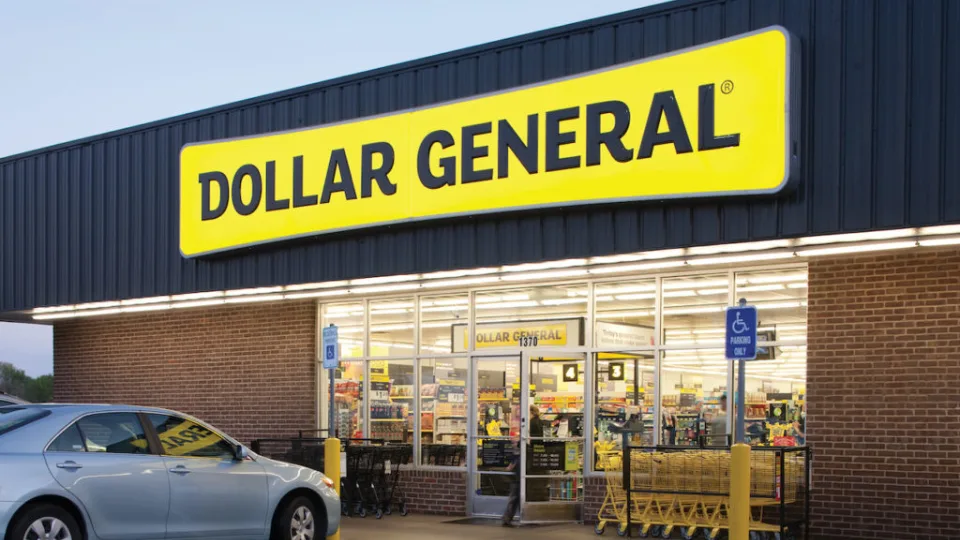
Dollar General shocked investors this week when its stock fell sharply following a leadership announcement. But beneath the surface, the reaction may be overblown. With improving fundamentals, steady execution, and a consumer environment that increasingly favors discount retailers, this could be one of the more overlooked opportunities in retail right now.
Market Reaction: Investors Sell First, Ask Questions Later
Shares of Dollar General dropped roughly 5.8% after the company announced that Jerry Fleeman will take over as CEO starting January 1, 2027.
That immediate selloff reflects a familiar pattern in markets. Investors tend to react negatively to leadership changes, especially when the outgoing CEO is associated with a successful turnaround.
But in this case, the decline appears less about Fleeman and more about uncertainty.
And uncertainty is often where opportunity is created.
A Stock Already Under Pressure
The CEO announcement came at a time when Dollar General stock was already under pressure. Shares are down significantly from pre–Middle East conflict levels, as geopolitical tensions have added volatility across markets.
More importantly, dollar stores have long faced a persistent concern: inflation.
The argument is simple. When costs rise, dollar stores cannot always pass those increases on to customers without risking their core value proposition. That creates pressure on margins.
But that view is increasingly outdated.
The Turnaround Is Already Happening
Under outgoing CEO Todd Vasos, Dollar General has quietly executed one of the more effective retail turnarounds in recent years.
Here is what the numbers show:
- Same-store sales growth has rebounded to nearly 3% in 2025
- Earnings per share grew approximately 12%
- Gross margins have returned to more normal historical levels
- The stock rallied roughly 50% from late 2023 through early 2026 before recent volatility
This is not a struggling retailer trying to find its footing.
This is a company that has already fixed many of its core issues.
Why Jerry Fleeman Could Be the Right Fit
The incoming CEO, Jerry Fleeman, brings deep experience in U.S. retail.
He previously led operations at Ahold Delhaize’s U.S. division, which includes major chains like Stop & Shop.
That matters.
Retail is not just about pricing. It is about execution, logistics, merchandising, and increasingly, digital integration.
Fleeman’s background checks all of those boxes.
Analysts have taken notice.
As Joe Feldman of Telsey Advisory Group put it:
“We are optimistic about the appointment of Mr. Fleeman,” citing his “deep understanding of the U.S. consumer and competition.”
That is exactly what Dollar General needs as it evolves beyond a traditional discount chain into a more modern retail platform.
A Quiet Strategic Shift Is Underway
One of the most important developments at Dollar General is not getting enough attention.
The company is modernizing.
Recent initiatives include:
- Store remodels designed to improve customer experience
- Expanded product assortments, including larger household items
- Digital partnerships to enable online ordering
- Better inventory management to reduce stockouts
These changes are already driving results.
Management has guided for approximately 2.45% same-store sales growth this year, slightly below expectations. But there is a key detail investors should not ignore.
Over the past six quarters, Dollar General has consistently beaten its own guidance.
That track record matters more than conservative forecasts.
Why Dollar Stores Could Win in This Economy
The macro backdrop is also shifting in Dollar General’s favor.
With inflation still elevated and interest rates remaining relatively high, consumers are becoming more price-sensitive.
That is exactly the environment where dollar stores thrive.
Dollar General has maintained its “value” positioning even while raising prices modestly. That balance is critical.
It allows the company to:
- Protect margins
- Retain price-conscious customers
- Capture market share from higher-priced competitors
In fact, management has already noted gains in categories like household essentials and durable goods.
This is not just defensive retail.
This is strategic positioning for a weaker consumer environment.
Valuation: Where the Opportunity Becomes Clear
Here is where things get interesting for investors.
Dollar General is currently trading at roughly 16 times forward earnings.
Historically, when confidence in the business is strong, the stock has traded closer to 21 times forward earnings.
For context, that multiple is roughly in line with the S&P 500.
So the question becomes simple.
If Dollar General continues to execute and investor confidence returns, what happens to the valuation?
Even modest multiple expansion could drive meaningful upside.
Growth Outlook: Better Than It Looks
Analysts are currently forecasting around 8.8% annual earnings growth over the next three years.
That may prove conservative.
If:
- Same-store sales continue to outperform guidance
- Margins remain stable or expand
- Consumer trade-down accelerates
Then earnings growth could exceed expectations.
And in markets, beating expectations is what moves stocks.
The Risks Investors Should Watch
This is not a risk-free opportunity.
The biggest concern is margin pressure.
If inflation spikes again or consumers become even more price-sensitive, Dollar General may struggle to raise prices enough to offset higher costs.
There is also execution risk.
Leadership transitions always carry uncertainty, even with experienced executives.
And finally, competition remains intense, particularly from big-box retailers and other discount chains.
Investor Takeaway: A Classic Overreaction Setup
The market’s reaction to the CEO announcement looks more emotional than fundamental.
Dollar General is not a broken business.
It is a company that:
- Has already completed a turnaround
- Is growing sales and earnings
- Is gaining market share
- Is positioned for a value-focused consumer environment
And yet, the stock is trading at a discount to its historical valuation.
That combination does not show up often.
For long-term investors, this looks less like a warning sign and more like an entry point.
About Author