One of the biggest companies powering the cryptocurrency market just crossed a major regulatory milestone.
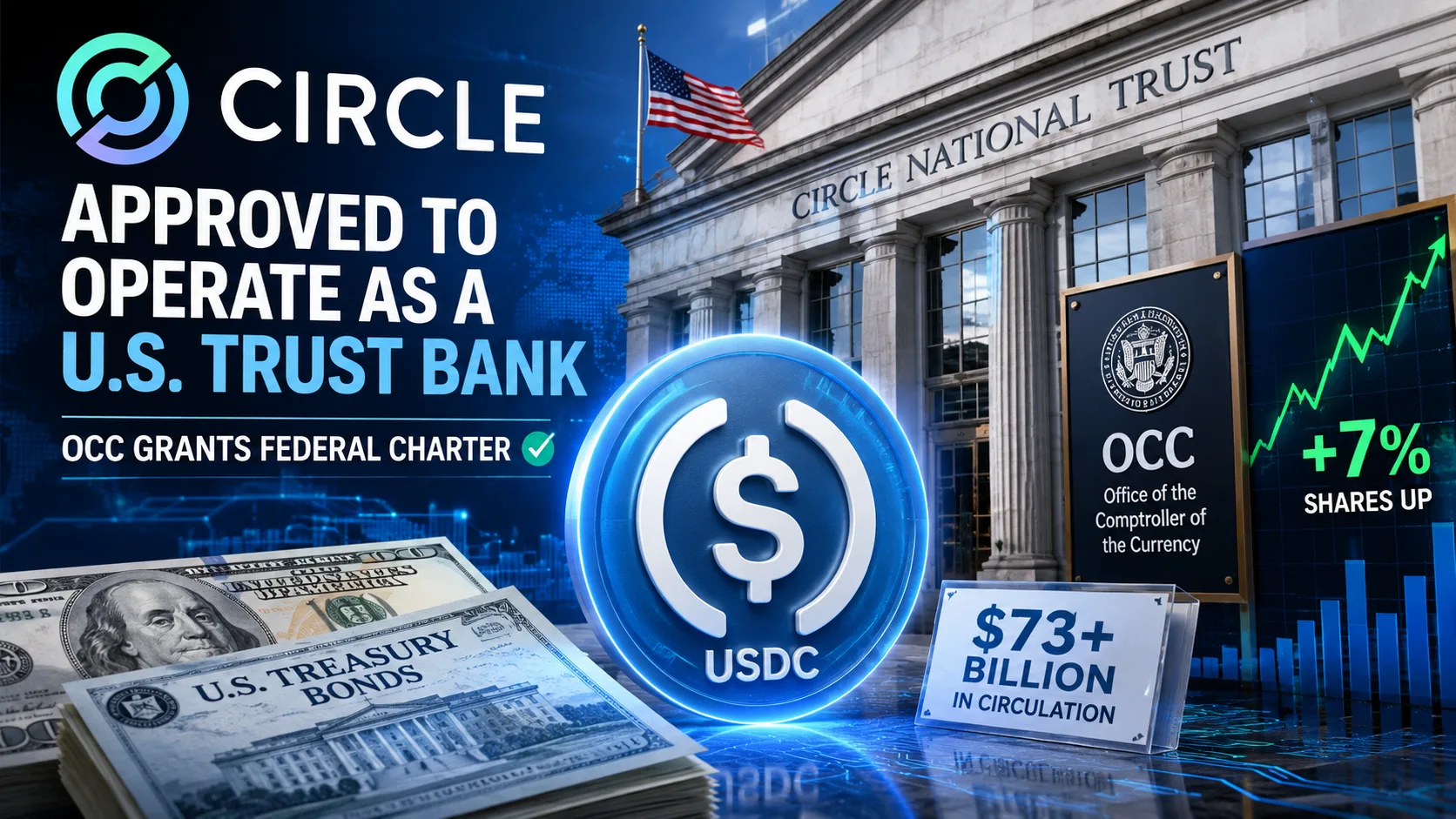
Circle, the issuer of the USDC stablecoin, the world’s second-largest dollar-backed digital currency with more than $73 billion in circulation, received approval Friday from the U.S. Office of the Comptroller of the Currency (OCC) to operate as a national trust bank.
Investors welcomed the news, sending Circle shares up more than 7%, as the approval gives the company greater control over the reserves backing USDC while bringing it more deeply into the U.S. banking system.
The newly approved entity, Circle National Trust, will allow the company to directly manage the reserves backing its flagship USDC stablecoin, reducing its dependence on outside banks and custodians while placing the company under a single federal regulator.
For investors, the approval signals that Circle is becoming more deeply integrated into the U.S. financial system at a time when competition in the stablecoin market is rapidly intensifying.
Circle Gains Direct Control Over $73 Billion in USDC Reserves
USDC is currently the world’s second-largest stablecoin, with more than $73 billion in circulation.
Until now, Circle relied on third-party financial institutions to hold the cash and U.S. Treasury securities backing every USDC token.
With its new OCC charter, Circle can oversee those reserves directly through Circle National Trust.
The approval streamlines operations, improves oversight, and could reduce operational costs while giving customers greater confidence in how reserve assets are managed.
Importantly, the charter does not authorize Circle to operate as a traditional commercial bank. The company will not accept customer deposits or make loans.
Instead, the trust bank structure focuses on custody, reserve management, and other fiduciary services.
Why Federal Oversight Is Such a Big Deal
Perhaps the biggest long-term benefit isn’t operational—it is regulatory.
Previously, Circle operated under a patchwork of state regulations, forcing the company to navigate dozens of different licensing requirements across the country.
Now, the OCC becomes Circle’s primary banking regulator.
For fast-growing financial technology companies, replacing numerous state regulators with a single federal framework can significantly simplify compliance, accelerate expansion, and lower administrative costs.
It also gives institutional customers greater confidence that the company is operating under one of the nation’s most respected banking regulators.
Crypto Companies Are Racing to Become Financial Infrastructure
Circle is far from alone.
Across the digital asset industry, major players are trying to secure deeper regulatory footing and control larger portions of the financial system.
Companies including Coinbase, BitGo, Fidelity Digital Assets, Ripple, and Paxos have all pursued or received various forms of federal regulatory approval as competition intensifies.
The industry’s focus has shifted beyond simply offering cryptocurrency trading.
Increasingly, firms want to own the underlying payment rails, custody services, settlement infrastructure, and digital dollar networks that could power future financial markets.
Stablecoin Competition Is Heating Up
Circle’s regulatory victory comes as competition in stablecoins reaches a new level.
The passage of the GENIUS Act last year established a federal framework for payment stablecoins, giving traditional financial institutions greater confidence to enter the market.
Banks and payment companies increasingly see stablecoins as an opportunity to modernize payments while strengthening customer relationships.
Rather than relying on third-party issuers like Circle, many financial firms now want to issue their own digital dollars.
That trend could eventually pressure USDC’s market share despite Circle’s latest regulatory win.
Wall Street Is Entering the Stablecoin Race
The competitive landscape became even more crowded Friday.
Global financial messaging giant Swift announced a blockchain consortium involving 17 major banks, including Citi and HSBC, aimed at supporting around-the-clock payments.
Meanwhile, a separate initiative known as Open USD (OUSD) has attracted more than 140 participating companies, including BlackRock, Coinbase, Mastercard, Stripe, and Visa.
Unlike traditional stablecoin models, OUSD distributes reserve income across participating partners rather than concentrating profits with a single issuer.
The growing number of institutional entrants highlights just how important programmable digital dollars have become in the future of global finance.
What Investors Should Watch Next
Circle’s bank charter strengthens its regulatory position at a critical time.
The company now has greater control over reserve management, a simpler regulatory structure, and increased credibility with institutional clients.
However, the stablecoin market is becoming more competitive as banks, payment networks, and large financial institutions launch rival products backed by their own customer ecosystems.
For investors, the next phase won’t simply be about regulatory approvals—it will be about which companies can successfully build the payment infrastructure that powers digital finance for years to come.
About Author