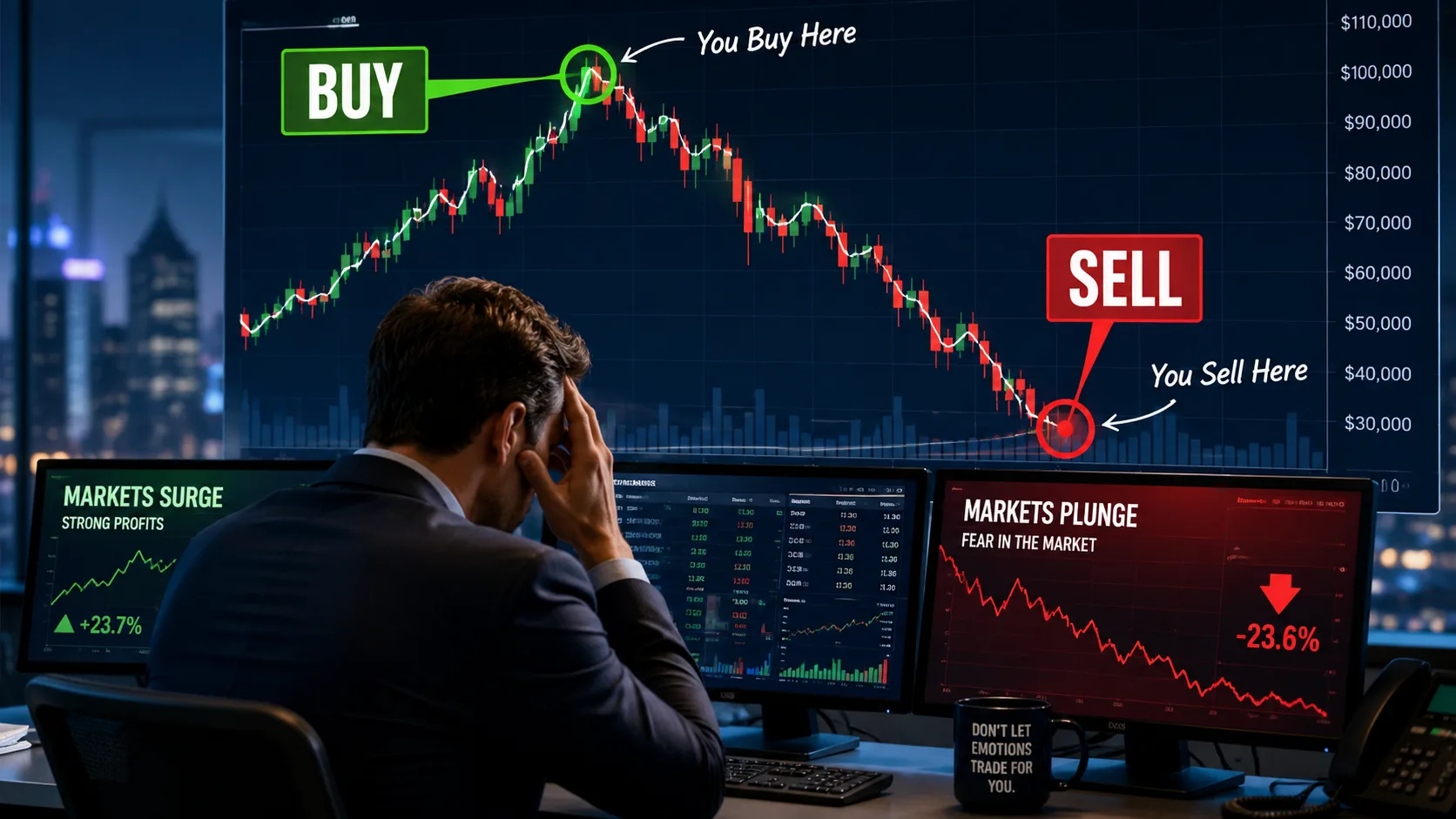
Most investors know the golden rule of investing: buy low and sell high. Yet time after time, they end up doing the exact opposite.
New research surrounding Bitcoin exchange-traded funds (ETFs) has exposed one of investing’s oldest and most expensive mistakes. While the funds themselves generated strong long-term returns after launching in early 2024, many of the investors who owned them actually lost money because they repeatedly bought after prices surged and sold after markets declined.
The lesson extends far beyond cryptocurrency. Whether it’s AI stocks, meme stocks, technology funds, or whatever investment is dominating headlines, investors have a long history of chasing yesterday’s winners only to discover they’ve arrived too late.
Bitcoin ETFs Performed Well. Many Investors Didn’t.
When nearly a dozen spot Bitcoin ETFs launched in January 2024, Bitcoin traded around $46,000. By the end of June 2026, it had climbed to roughly $58,700 despite experiencing several dramatic rallies and corrections along the way.
On paper, anyone who simply bought one of those ETFs at launch and held it would have earned respectable returns. But according to Morningstar analyst Jeffrey Ptak, the average investor in the original group of Bitcoin ETFs actually lost about 5.8% per year because of poor timing. The funds made money. Their investors largely didn’t.
The difference comes down to behavior rather than performance. Investment returns assume someone buys once, holds through the measurement period, and ignores the market’s day-to-day swings. Real investors rarely behave that way.
Investors Kept Chasing the Rally
The cash flows into Bitcoin ETFs tell the story.
As Bitcoin climbed above $100,000 during late 2024 and early 2025, investors poured more than $20 billion into the funds. When prices reversed during February and March 2025, they quickly withdrew billions of dollars, locking in losses after the decline had already occurred.
The pattern repeated itself several months later. As Bitcoin recovered and once again traded above $100,000, investors rushed back into the funds with another wave of purchases. Then, when Bitcoin fell more than 30% between late 2025 and mid-2026, roughly $6 billion flowed back out as many investors abandoned their positions at depressed prices.
Rather than buying weakness and trimming positions after large gains, many investors consistently did the opposite.
Why Our Brains Work Against Us
This phenomenon is known as the behavior gap—the difference between the return an investment generates and the return investors actually receive.
Human psychology plays a powerful role. Rising prices create confidence and validation. When everyone else appears to be making money, buying feels safe, even if prices have already climbed substantially. Falling markets produce the opposite reaction. Selling feels like reducing risk, even if it means locking in losses and missing an eventual recovery.
Bitwise Chief Investment Officer Matt Hougan believes that happened again during the latest Bitcoin correction. He said investors appeared to “give up at the bottom,” when long-term believers would have been better served by rebalancing and gradually adding to positions instead of abandoning them.
Even Professional Investors Fall Into the Trap
This isn’t simply a problem for inexperienced investors.
Financial advisers, institutional investors, and even professional money managers frequently underperform the investments they own because they struggle with the same emotional tendencies. Chasing recent winners and avoiding recent losers feels logical in the moment, even when history shows those instincts often produce disappointing long-term results.
Alex Edmans, a finance professor at London Business School, says investors also tend to give themselves too much credit when trades work out and blame bad luck when they don’t.
“We overinterpret what may be chance events,” Edmans explains. Investors often remember their successful trades while ignoring the opportunities they missed or the mistakes they repeated.
Great Stories Can Lead to Bad Timing
One reason investors keep making this mistake is that compelling investment stories are difficult to resist.
When Bitcoin ETFs debuted, the narrative seemed obvious. Many believed the new funds would attract billions of dollars from institutional investors, increasing demand and pushing Bitcoin prices even higher. That thesis ultimately proved correct.
The mistake wasn’t believing in Bitcoin’s long-term potential. The mistake was waiting until enthusiasm was already widespread before investing. By the time many investors acted, much of the anticipated upside had already been reflected in prices.
The same cycle has repeated throughout market history, from internet stocks during the dot-com boom to meme stocks, electric vehicles, artificial intelligence, and countless other investment themes.
How Investors Can Break the Cycle
Avoiding the behavior gap doesn’t require predicting where markets will go next. Instead, it requires following a disciplined investment plan.
Many financial professionals recommend setting target allocations for different investments rather than making decisions based on recent headlines. If Bitcoin is intended to represent 2% of a portfolio, investors simply maintain that allocation over time. If strong gains push it to 4%, they trim the position. If a correction reduces it to 1%, they buy enough to restore the target.
This disciplined approach forces investors to buy relatively low and sell relatively high without relying on emotions or short-term market predictions.
Discipline Usually Beats Emotion
One of the hardest parts of investing is that the right decision often feels uncomfortable.
Buying after markets have fallen rarely generates excitement, and selling part of a winning investment can feel like giving up future gains. Yet history repeatedly shows that disciplined investors who stick to their plan generally outperform those who chase whatever has recently been making headlines.
Markets will always produce exciting new investment opportunities. Some will become enormous winners, while others will fade away. What consistently separates successful long-term investors isn’t finding every hot investment—it’s resisting the temptation to chase performance after everyone else already has.
Above all, remember this simple lesson: when you buy because an investment feels unstoppable and sell because it feels hopeless, you’re often doing exactly the opposite of what successful investing requires.
About Author