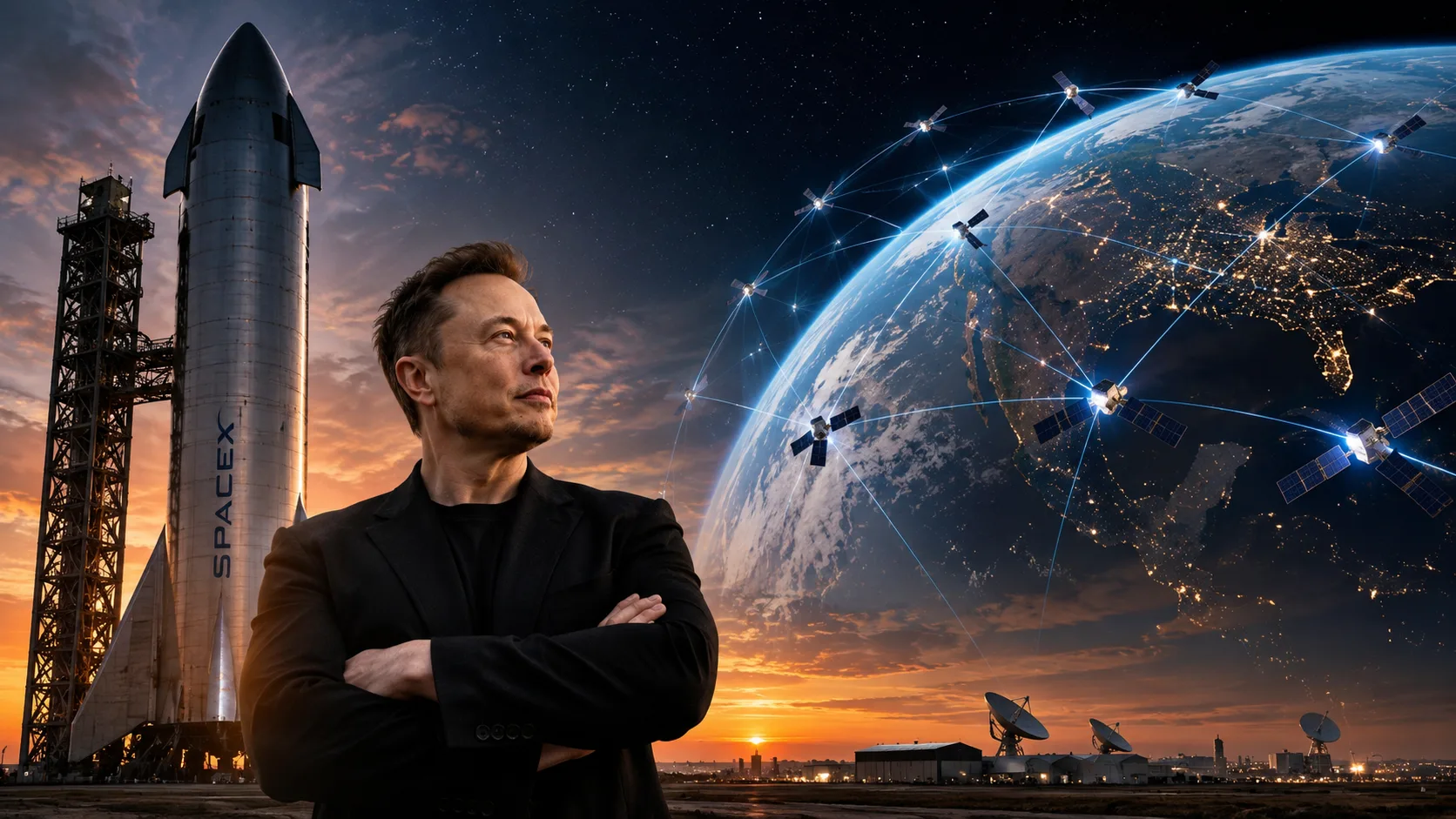
Elon Musk has never been known for making modest predictions, but his latest may be the boldest of his career.
As Wall Street analysts rushed to publish their first research reports following SpaceX’s blockbuster public debut, Musk dismissed even the most optimistic forecasts. Responding to a discussion about the enormous costs of artificial intelligence infrastructure, the billionaire CEO posted on X that SpaceX could ultimately become worth more than the rest of Earth combined if the company achieves its long-term goals.
The statement immediately reignited debate over just how large SpaceX can become as investors weigh its dominance in rockets, satellite communications, and what Musk sees as the next frontier: orbital AI infrastructure.
While the claim sounds extraordinary, analysts already believe SpaceX could become one of the largest companies in history if it successfully executes its ambitious roadmap.
Wall Street Already Sees Trillions in Value
Even before Musk’s latest comments, analysts had been assigning eye-popping valuations to the aerospace giant.
Following the company’s June IPO, Wall Street firms released a wide range of price targets reflecting both enormous opportunity and equally significant execution risk.
The most optimistic forecasts include:
- Raymond James: $800 per share
- Citi bull case: $900 per share, implying roughly a $12 trillion valuation
- Morgan Stanley: $600 bull case
- Consensus analyst target: Approximately $240 per share
Even the average estimates place SpaceX among the world’s most valuable companies over the coming years.
The wide range reflects uncertainty surrounding one key factor: whether Starship becomes the fully reusable launch system Musk has promised.
Starship Is the Key to Everything
For years, Musk has argued that reducing the cost of reaching orbit is the single biggest unlock for SpaceX’s future.
Starship, the company’s fully reusable heavy-lift rocket, is designed to dramatically lower launch costs while enabling entirely new industries in space.
If successful, Starship could expand SpaceX far beyond launching satellites.
Potential opportunities include:
- Massive Starlink satellite expansion
- Orbital AI computing infrastructure
- Space manufacturing
- Lunar and Mars transportation
- Global communications networks
Many analysts believe these businesses—not rocket launches themselves—will ultimately generate the company’s largest profits.
Morgan Stanley’s analysis highlights just how important Starship is to the investment case.
Its bullish valuation assumes the rocket becomes operational on schedule, while its bearish scenario delays commercial operations until 2029, dramatically reducing the company’s long-term value.
The Revenue Growth Analysts Expect Is Extraordinary
Wall Street projections illustrate why investors remain so enthusiastic despite the risks.
Analysts estimate SpaceX could generate approximately:
- $39 billion in revenue during 2026
- More than $630 billion in annual revenue by 2031
Operating income is projected to increase even more dramatically.
Forecasts suggest operating profits could climb from roughly $1 billion in 2026 to more than $340 billion annually by 2031.
Very few companies in history have ever experienced that kind of expected expansion.
However, building that future won’t come cheaply.
Building an Orbital AI Network Could Require $150 Billion
The enormous growth forecasts come with equally enormous capital requirements.
Analysts estimate SpaceX will need approximately $150 billion in additional financing between 2026 and 2031 to develop its orbital AI infrastructure and expand its satellite network.
That spending would fund an entirely new layer of computing infrastructure positioned in space, combining artificial intelligence, communications, and satellite technology.
The concept remains highly ambitious, but it reflects Musk’s increasingly expansive vision for SpaceX.
Rather than simply launching rockets, the company aims to become the infrastructure backbone for communications, computing, and eventually human activity beyond Earth.
Musk’s Vision Extends Beyond This Planet
Musk’s comments weren’t simply about market capitalization.
They reflect a philosophy he has discussed for years centered on the Kardashev Scale, a framework developed in the 1960s by Soviet astronomer Nikolai Kardashev.
The scale measures civilizations by how much energy they can harness.
- Type I civilizations utilize the energy available on their home planet.
- Type II civilizations harness the power of their star.
- Type III civilizations utilize the energy of an entire galaxy.
Musk has frequently referenced humanity’s eventual transition toward a Type II civilization, where large-scale space infrastructure becomes essential.
Viewed through that lens, his latest valuation comment reflects more than financial optimism. It reflects his belief that SpaceX could become the company enabling humanity’s expansion throughout the solar system.
Investors Still Face Significant Risks
Despite the enormous opportunity, analysts caution that SpaceX’s future is far from guaranteed.
Several challenges remain:
- Successful commercialization of Starship
- Continued regulatory approvals
- Massive capital requirements
- Execution of orbital AI infrastructure
- Competition across satellite communications and space technology
Even the most optimistic price targets assume years of flawless execution.
Delays, technical setbacks, or slower adoption of new businesses could materially reduce future valuations.
Why Investors Are Paying Attention
Musk’s prediction may sound unbelievable today, but so did many of his earlier ambitions.
SpaceX has already transformed the economics of rocket launches, built the world’s largest satellite internet constellation, and become one of the most closely watched technology companies on the market.
Whether it ultimately reaches the multi-trillion-dollar valuations projected by Wall Street—or even approaches Musk’s vision of surpassing the value of “the rest of Earth”—will depend on one thing above all else: whether it can successfully turn science-fiction-scale ambitions into profitable businesses.
For investors, that makes SpaceX one of the highest-risk, highest-reward companies ever to reach the public markets.
About Author