
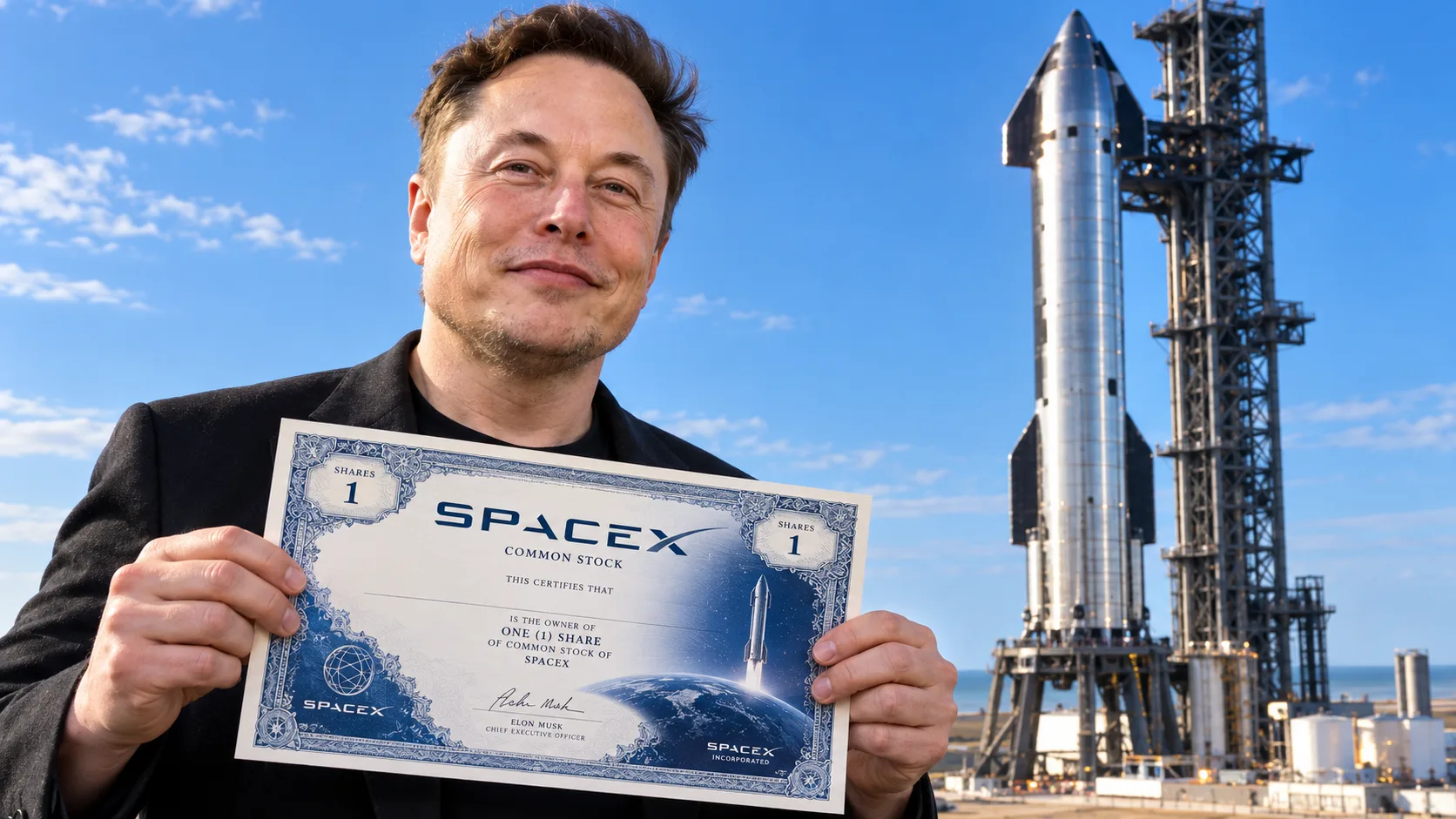
Elon Musk says he plans to give every child in America a share of SpaceX stock in 2027, a remarkable pledge that could distribute more than $10 billion in stock to approximately 72 million children.
The announcement raises a major question for American families: Could millions of children soon become shareholders in one of the world’s most valuable space and technology companies?
While the potential financial gift is attracting attention, important questions remain about how the shares would be distributed, who would qualify, and what those investments could eventually be worth.
Musk Announces a $10.5 Billion Stock Giveaway
On Monday, October 19, Musk announced on his social media platform X that he intends to give one SpaceX share to every child in the United States next year.
“This will be the first of many,” Musk wrote, offering no additional details about how the program would work.
Using the reported SpaceX closing stock price of $146.03 on Friday, October 16, the proposed giveaway would be worth approximately $10.5 billion. That estimate assumes roughly 72 million American children under the age of 18 would be eligible to receive a share.
The shares would come from Musk’s personal holdings. According to an August regulatory filing cited in reporting on the announcement, Musk held approximately 4.8 billion SpaceX shares, excluding additional stock options and unvested awards. Distributing 72 million shares would represent approximately 1.5% of those directly held shares, allowing Musk to retain the overwhelming majority of his existing holdings.
The announcement comes just months after SpaceX went public in June 2026, giving investors direct access to a company best known for its reusable rockets, Starlink satellite internet business, and ambitious plans for space exploration.
However, Musk has yet to explain exactly how the proposed giveaway would work. No distribution date, eligibility requirements, or application process have been announced.
What Would One SpaceX Share Actually Be Worth?
For parents wondering what their children might receive, the immediate answer is approximately $146 based on SpaceX’s most recently reported closing price. But the long-term value could be considerably different, depending on the company’s financial performance and future stock price.
SpaceX has businesses spanning rocket launches, government contracts, commercial satellite operations, and Starlink’s expanding global internet network. Its exposure to several major growth markets gives investors reasons to watch the company well beyond its traditional space exploration business.
A child receiving one share in 2027 could theoretically hold that investment for decades. If SpaceX continues expanding its revenue and profitability, the investment could appreciate substantially over time, although there is no guarantee that the stock will rise.
For illustration, consider what a single share valued at $146.03 could become over 20 years under different annualized return assumptions.
| Annualized Return | Value After 20 Years |
|---|---|
| 5% | $387 |
| 8% | $680 |
| 10% | $982 |
| 15% | $2,390 |
| 20% | $5,600 |
These are hypothetical compound-growth calculations, assuming no dividends or additional purchases. They are not forecasts of SpaceX’s future performance, and the actual investment could lose value.
The numbers illustrate how a relatively modest initial investment can grow over a long period. They also highlight the risks of relying on a single company’s stock, particularly one operating in capital-intensive industries with significant competition and technological uncertainty.
SpaceX’s future valuation will depend on its ability to increase revenue, maintain profitability, execute its expansion plans, and compete in increasingly crowded technology markets.
For families, the potential gift would provide a starting point for building investment wealth. However, one share alone would be unlikely to transform a child’s financial future unless the investment experienced extraordinary long-term growth.
A Bigger Shift Toward Giving Americans Stock
Musk’s announcement follows another major development involving one of America’s most prominent artificial intelligence companies.
On Sunday, October 18, Anthropic, the developer of the Claude AI platform, announced plans to commit 5% of its shares to a new public benefit fund. The proposed fund would support initiatives intended to benefit society, including efforts to address the economic disruption caused by artificial intelligence.
Anthropic also proposed potentially adding another 2% of its shares for every 50% increase in the company’s value above a specified baseline, subject to the board’s discretion. The initial commitment requires shareholder approval.
Musk responded to Anthropic’s announcement by recommending that companies distribute shares directly to the public. His subsequent SpaceX pledge puts that idea into a more concrete form, potentially allowing millions of Americans to benefit directly from the future growth of a major technology business.
The difference between the two approaches is significant. Anthropic’s plan would place company equity into a fund that could finance public-benefit programs, while Musk’s proposal would give individuals direct ownership in a publicly traded business.
That distinction could become increasingly important as artificial intelligence, robotics, and automation reshape the economy. As technology companies develop systems capable of performing more work traditionally handled by people, the question of who benefits financially from that growth is becoming more important.
Direct stock ownership offers one possible way to share the financial gains from technological advances with a broader population. Whether that approach becomes a meaningful trend will depend on how companies structure these programs and whether other major technology leaders follow Musk’s example.
Could This Be Connected to Trump Accounts?
One unanswered question is whether Musk’s proposed share distribution could be connected to the federal government’s new Trump Accounts initiative.
Trump Accounts are tax-advantaged investment accounts created to help American children begin accumulating long-term savings. Eligible children born between January 1, 2025, and December 31, 2028, can qualify for a one-time $1,000 federal contribution, subject to program requirements.
The initiative has also attracted support from wealthy individuals and corporate leaders, including Michael Dell and SpaceX President Gwynne Shotwell. Because Trump Accounts are designed specifically to support children’s investment ownership, they represent one potential avenue for distributing financial contributions.
However, Musk has not confirmed that his SpaceX shares would be distributed through Trump Accounts. Any such arrangement would need to comply with the program’s investment and contribution rules, which could limit how individual company shares are distributed.
That raises several practical questions. Would children receive actual SpaceX shares in individual brokerage or custodial accounts? Would parents be required to register for the program, and would shares be subject to holding restrictions until recipients reach adulthood?
There could also be tax and administrative considerations depending on how the shares are transferred. For now, parents should view the announcement as a pledge rather than a benefit that is already available to claim.
What the Giveaway Could Mean for SpaceX Investors
For existing SpaceX shareholders, the proposed giveaway raises a different set of questions about ownership, trading activity, and the company’s long-term investor base.
Would Giving Away 72 Million Shares Hurt the Stock?
Because Musk says he intends to transfer shares he already owns, the giveaway would not necessarily increase SpaceX’s total outstanding share count. That distinction matters because issuing new shares can dilute existing shareholders by spreading ownership across a larger number of shares. Transferring shares already in circulation generally changes who owns the stock without directly diluting everyone else.
However, the giveaway could eventually affect trading activity. If tens of millions of new shareholders receive SpaceX stock and some decide to sell, those transactions could create additional selling pressure. The impact would depend on trading restrictions, the timing of transfers, and how many recipients choose to hold their investments.
If the shares remain in custodial accounts until recipients reach a certain age, the immediate market impact could be limited. Investors will need additional details before determining whether the distribution could meaningfully influence the stock’s trading dynamics.
Could It Strengthen SpaceX’s Brand?
There is also a potential business advantage to distributing shares to millions of children.
A successful giveaway could introduce American families to SpaceX as investors, creating a new generation of shareholders with a personal financial interest in the company’s success. For a business operating in competitive commercial and government markets, widespread public familiarity and support could have long-term strategic value.
The program could also generate substantial publicity and strengthen SpaceX’s identity as a company associated with America’s technological future. However, investors should separate potential goodwill from financial performance, since the company’s future stock price will ultimately depend on earnings, cash flow, capital spending, and expectations for growth.
What About Tesla?
Musk’s decision to give away SpaceX shares also carries implications for investors following his broader business interests, including Tesla.
The two companies have become increasingly connected through technology development. Their recent collaboration on Tesla’s next-generation Roadster has also fueled speculation about a possible corporate combination, although neither company has announced a merger agreement.
The stock giveaway provides no direct evidence that a merger is planned. Still, developments involving Musk’s ownership of SpaceX, the company’s shareholder base, and its relationship with Tesla are worth monitoring.
Any future merger proposal would introduce complicated questions about valuation, governance, and the treatment of existing shareholders. For Tesla investors, those considerations could ultimately matter far more than the immediate financial impact of Musk’s proposed giveaway.
The Real Opportunity May Be Bigger Than One Share
The most interesting part of Musk’s announcement may be the broader precedent it could establish.
Over the past several decades, ownership of major technology companies has generated enormous wealth for founders, executives, employees, and investors. Musk’s proposal raises the possibility of expanding that ownership to people who otherwise might never purchase shares.
If other technology executives adopt similar programs, more Americans could begin participating in the stock market earlier in life. The potential benefits would extend beyond the dollar value of any initial gift, particularly if early exposure to investing encourages financial education and long-term saving.
There is also a broader economic argument behind the idea. As artificial intelligence and automation become more important drivers of corporate profits, direct ownership in technology businesses could allow more households to participate financially in that growth.
However, a meaningful wealth-building program would need to address several challenges, including access, diversification, and the risk of concentrating savings in individual companies. A $146 gift could introduce a child to stock ownership, but a diversified investment strategy and consistent contributions over many years would generally be more important to building substantial long-term wealth.
What Parents and Investors Should Watch in 2027
Several developments will determine whether Musk’s announcement becomes a major financial initiative.
- An official distribution plan: SpaceX or Musk will need to explain how children will receive the shares and whether parental registration is required.
- Eligibility rules: Families will need clarity on age limits, residency requirements, and whether children born during 2027 qualify.
- Account and tax treatment: Details on custodial accounts, restrictions, and tax consequences will determine how families can manage the shares.
- SpaceX’s stock performance: The ultimate value of the giveaway will change with the company’s market price before the shares are distributed.
- Additional corporate announcements: Musk’s statement that the giveaway will be the first of many raises the possibility of further commitments, although none have been specified.
For current investors, SpaceX’s upcoming financial results will also be important. The company’s ability to generate sustainable growth from Starlink, launch operations, and its expanding technology businesses will have a more lasting influence on shareholder returns than the giveaway itself.
Parents should also be cautious about unsolicited messages or websites claiming to distribute the shares. Until Musk or SpaceX provides official instructions, there is no confirmed process for claiming the proposed gift.
The Takeaway
Elon Musk’s promise to give a SpaceX share to every American child could become one of the largest direct stock giveaways in U.S. history. At the reported share price, the pledge represents approximately $10.5 billion in potential value distributed across millions of families.
But the announcement remains an early-stage commitment, with major details still unresolved. For parents, the most important developments will be the eligibility requirements and the mechanics of receiving and holding the shares.
For investors, the bigger story is the growing discussion about how ownership in powerful technology companies might be shared more widely as artificial intelligence and automation transform the economy.
If Musk delivers on his pledge, millions of American children could begin their investing lives as SpaceX shareholders. And if his promise that this will be the first of many becomes reality, the implications could extend well beyond SpaceX.
About Author