
Silver has lost more than half its value since reaching a record high in January, and some precious-metals experts believe the collapse could be signaling trouble ahead for the U.S. economy. With inflation accelerating, energy prices soaring, and consumers facing growing financial pressure, silver’s dramatic decline is raising an important question: Is the metal warning investors about an economic slowdown before it appears in the broader economic data?
Silver’s Historic Selloff Raises Economic Concerns
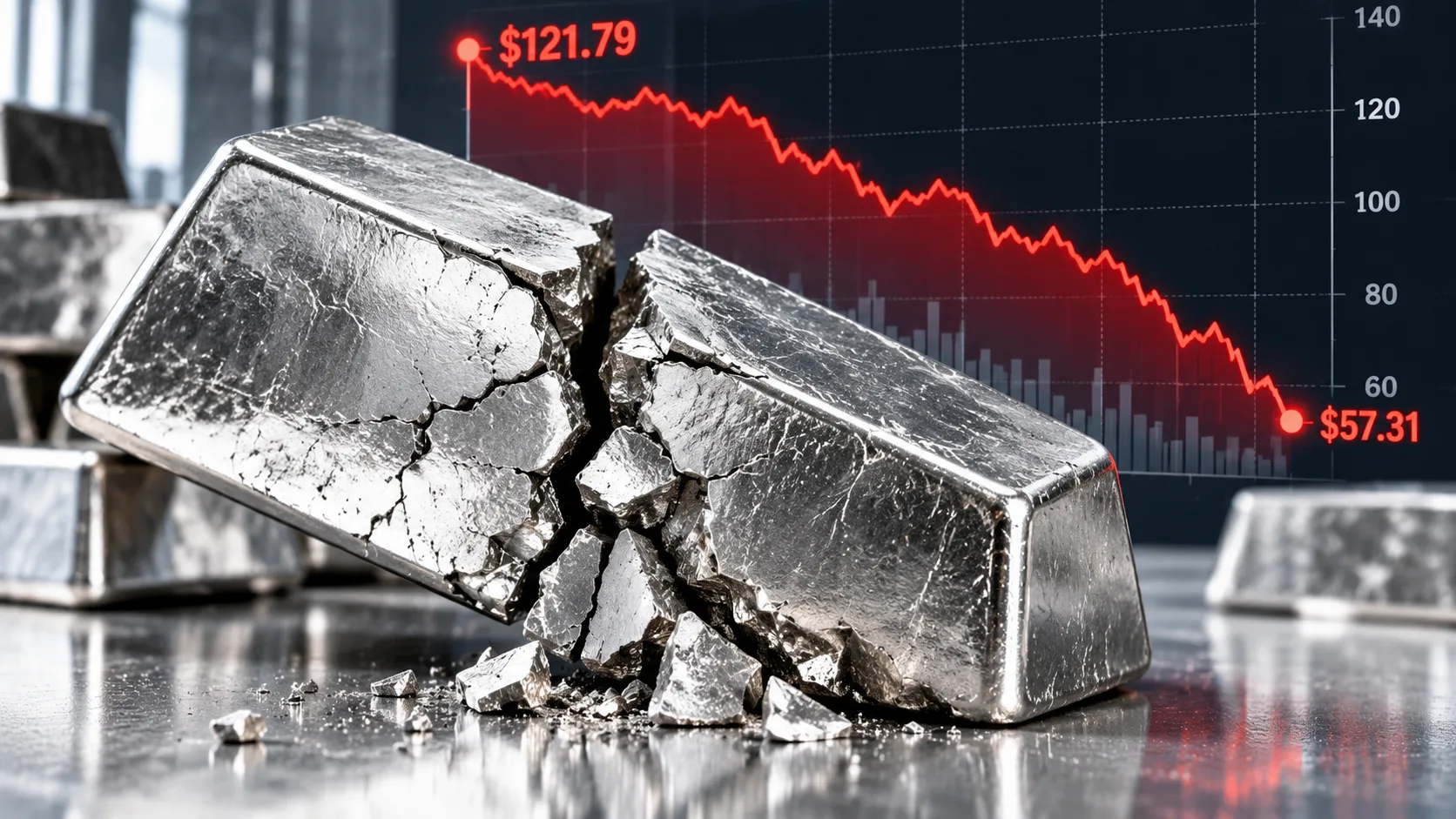
Silver has experienced one of its most dramatic reversals in recent history. After reaching an intraday record of $121.79 an ounce in late January, the precious metal finished Friday, October 16, at $57.31, a decline of approximately 53%.
Gold has also retreated from its January record, but its losses have been considerably smaller. The yellow metal has fallen more than 25% from its peak of $5,626.80 an ounce, underscoring the unusually severe selling pressure facing silver.
The difference matters because silver plays two important roles in the global economy. Like gold, it attracts investors seeking protection against inflation, currency weakness, and financial uncertainty. However, silver is also an essential industrial material used in electronics, solar panels, electrical infrastructure, automobiles, and increasingly, technologies supporting artificial intelligence.
That combination makes silver especially sensitive to changes in economic expectations. When investors anticipate weaker industrial activity, silver can come under pressure even as concerns about inflation and financial instability support demand for traditional safe-haven assets.
Stefan Gleason, president and CEO of Money Metals Exchange, recently told MarketWatch that silver’s weakness could be an early indication of problems developing beneath the surface of the economy.
The concern is gaining attention because several other economic warning signs are beginning to emerge at the same time.
Inflation and Soaring Energy Prices Are Adding to the Pressure
The latest inflation figures suggest American households and businesses are facing another round of rising costs.
According to the Bureau of Labor Statistics, the Consumer Price Index increased 0.6% in September, pushing annual inflation to 3.7%. That compares with 3.4% in August and represents an unwelcome acceleration at a time when investors had been hoping inflation would continue easing.
Energy costs have been a major driver of the increase. Gasoline prices jumped 9.1% in September alone, accounting for more than half of the monthly rise in consumer prices. Core inflation, which excludes food and energy, also accelerated to 2.6% annually.
The broader energy picture is even more concerning. U.S. and international crude oil benchmarks have risen more than 70% this year amid disruptions caused by the ongoing Middle East conflict. Diesel prices have climbed nearly 78% since the end of 2025, reaching approximately $6.30 per gallon on Friday, according to GasBuddy figures cited by MarketWatch.
Those increases extend well beyond what consumers pay at the gas station. Diesel powers the trucks, trains, ships, and agricultural machinery responsible for moving goods throughout the economy.
When transportation and production costs rise, businesses generally face three choices: increase prices, accept smaller profit margins, or reduce spending elsewhere. Each option can create additional economic pressure.
For consumers, higher fuel, utility, and grocery bills leave less money available for discretionary purchases. For businesses, rising operating expenses can delay hiring, expansion plans, and new investments.
That combination creates a difficult environment in which inflation remains elevated even as economic growth becomes more vulnerable.
Why Silver May Be Sending a Warning That Gold Isn’t
Silver’s decline becomes particularly interesting when compared with gold’s performance.
Gold primarily serves as a financial asset, with demand driven by investors, central banks, and buyers seeking protection against monetary uncertainty. Silver has a much larger industrial component, meaning its price reflects both financial-market sentiment and expectations for economic activity.
Robert Minter, director of ETF investment strategy at Aberdeen Investments, points to another important distinction: central banks have been significant strategic buyers of gold, providing a source of demand that silver generally lacks.
That institutional support can help cushion gold during periods of market stress. Silver, meanwhile, is more exposed to changes in investor positioning, speculative trading, and anticipated industrial consumption.
Ryan McIntyre, president of Sprott, attributes silver’s unusually sharp decline partly to its greater volatility and the reversal of speculative enthusiasm that helped push prices to record highs earlier this year.
This creates an important complication when interpreting silver as an economic indicator.
A portion of the decline may reflect investors unwinding aggressive positions established during the January rally. The previous surge to more than $120 an ounce was extraordinary, and markets experiencing rapid gains often suffer equally dramatic corrections when momentum reverses.
Still, silver’s industrial exposure means its weakness deserves attention when other indicators are pointing toward slower growth.
The key question is whether the selloff represents a temporary correction in an overheated commodity market or the beginning of a broader reassessment of economic conditions.
What Silver’s Collapse Could Mean for Stocks, Retirement Accounts, and the Fed
For investors, silver’s decline has implications that extend beyond precious metals.
1. Stocks Could Face Pressure From Slower Growth
Persistently high energy costs and weakening consumer purchasing power could create problems for companies across several industries.
Retailers, manufacturers, transportation businesses, and consumer discretionary companies are particularly exposed to rising operating expenses and softer demand. If businesses struggle to pass those costs along to customers, their profit margins could come under pressure.
Investors should pay particular attention to corporate earnings guidance in the coming weeks. Companies reporting weaker order volumes, declining consumer demand, or rising transportation expenses could provide additional evidence that economic conditions are deteriorating.
A sustained decline in industrial commodities alongside weakening corporate earnings would strengthen the argument that silver is reflecting a broader slowdown.
2. The Federal Reserve Faces a Difficult Decision
The Federal Reserve is confronting a challenging combination of rising inflation and potential economic weakness.
Ordinarily, slowing growth might encourage policymakers to lower interest rates to stimulate borrowing and investment. However, inflation running at 3.7% limits the Fed’s flexibility, especially with energy costs continuing to push prices higher.
If inflation remains elevated, policymakers could be forced to maintain restrictive interest rates or consider additional tightening even as growth slows.
That scenario would create additional pressure on rate-sensitive investments, including growth stocks, real estate, and businesses carrying substantial debt.
For retirees and income-focused investors, the situation also complicates decisions involving bonds and cash. Higher yields may create attractive income opportunities, but rising interest rates can reduce the market value of existing fixed-rate bonds, particularly those with longer maturities.
3. Precious-Metals Investors Face a More Complicated Outlook
Investors holding silver coins, bullion, exchange-traded funds, or mining stocks have already experienced significant volatility.
A 53% decline requires a subsequent gain of approximately 113% just to return to the previous peak. That illustrates how severe drawdowns can affect long-term investment results, even when an asset eventually recovers.
Silver-mining stocks can experience even larger price swings because their profitability depends on the difference between silver prices and production costs. A declining metal price combined with rising energy expenses can squeeze miners from both directions.
Investors should also distinguish between physical silver, silver-backed ETFs, and mining companies. Each offers different exposure to the metal and carries its own risks involving liquidity, operating costs, and price volatility.
The Surprising Reason Silver Could Still Have a Strong Long-Term Future
Despite the recent collapse, there is a compelling argument against assuming silver’s long-term outlook has permanently deteriorated.
The world continues to consume substantial quantities of silver for industrial applications, and several important growth industries depend on its electrical and thermal conductivity.
Artificial intelligence infrastructure, data centers, electric vehicles, advanced electronics, and electrical-grid upgrades all contribute to silver demand. Those industries could continue expanding even during periods of broader economic weakness.
The Silver Institute’s 2026 outlook also points to an important supply issue. The organization expects the global silver market to record its sixth consecutive annual supply deficit this year.
That means total consumption is expected to exceed newly available supply, requiring the market to draw upon existing inventories.
However, the supply picture comes with an important qualification. The Silver Institute has also projected declining industrial silver fabrication during 2026, partly because solar manufacturers are finding ways to use less silver or substitute alternative materials.
In other words, expanding demand from AI infrastructure and data centers does not guarantee that total industrial consumption will increase every year.
Nevertheless, the underlying supply constraints could eventually help support silver prices if investment demand stabilizes and industrial activity improves.
Trevor Yates, senior investment analyst at Global X ETFs, sees AI-related infrastructure as an important source of demand over the next several years. He also believes precious metals could present interesting opportunities heading into 2027, even if short-term volatility remains elevated.
For investors, that creates an unusual situation: silver could be signaling economic weakness today while simultaneously benefiting from favorable long-term supply-and-demand fundamentals.
Three Warning Signs Investors Should Watch
Silver’s collapse alone cannot predict a recession. However, investors can gain a clearer picture by monitoring three developments that could confirm or contradict the economic warning.
First, watch the relationship between silver and gold. If silver continues falling substantially faster than gold, it could suggest investors are becoming increasingly concerned about industrial demand and economic growth. A stabilization in silver relative to gold would be a more encouraging development.
Second, monitor energy prices and inflation. Persistently elevated oil and diesel prices could intensify the pressure on consumer spending and corporate profitability. A sustained decline in energy costs would reduce some of those economic headwinds and could improve the outlook for industrial commodities.
Third, follow manufacturing activity and corporate earnings. Weakening factory orders, declining manufacturing surveys, and cautious earnings guidance would provide stronger evidence that silver’s selloff reflects an economic slowdown. If industrial activity remains resilient, the decline may have more to do with speculative trading and changing interest-rate expectations.
Taken together, these indicators can help investors determine whether silver’s weakness is primarily a commodity-market event or part of a larger economic trend.
Why a 50% Decline Doesn’t Automatically Mean a Recession
There is another explanation investors should consider before treating silver’s collapse as a recession warning.
Silver experienced an extraordinary speculative rally earlier this year, with prices climbing above $120 an ounce as investors rushed into precious metals. Some of that enthusiasm was driven by concerns about inflation, geopolitical instability, and the strength of the U.S. dollar.
When those crowded trades begin to unwind, selling can accelerate regardless of whether the underlying economy has materially changed.
Silver is also a smaller and generally more volatile market than gold. Large investment flows can have an outsized impact on its price, particularly during periods when investors need to raise cash or reduce risk.
This helps explain why silver can suffer sharp losses during financial-market turbulence even when its longer-term fundamentals remain supportive.
An economic slowdown could make matters worse, but investors need additional confirmation before concluding that silver is forecasting a recession.
There is also a potentially encouraging interpretation of the recent decline. If industrial demand proves resilient and supply deficits persist, significantly lower silver prices could eventually attract renewed investment interest.
That possibility does not establish that silver has reached a bottom. It does, however, suggest the market could experience a meaningful recovery without requiring a dramatic improvement in the broader economy.
The Economic Reports That Could Determine Silver’s Next Move
Several developments over the coming weeks could help determine whether silver’s recent weakness continues.
The next round of inflation data will be especially important. The October Consumer Price Index report, scheduled for November 10, will provide another indication of whether rising energy costs are spreading further throughout the economy.
Federal Reserve policy decisions and comments will also influence precious-metals markets. Expectations for higher interest rates can support the dollar and increase the opportunity cost of holding assets such as silver and gold, which pay no interest.
Corporate earnings reports will offer another valuable source of information. Investors should closely monitor industrial manufacturers, transportation companies, retailers, and technology infrastructure businesses for signs of declining demand or escalating operating costs.
Finally, developments in the Middle East could have a significant impact on the outlook. Any sustained easing of energy supply disruptions could help reduce inflationary pressure, while additional disruptions could further weaken growth expectations.
Silver investors should also watch for signs that demand from solar manufacturing, AI infrastructure, and electronics is improving. Stronger industrial consumption, combined with ongoing supply constraints, could eventually provide a foundation for a more sustained recovery.
The Bigger Picture for Investors
Silver’s 53% collapse from its January record deserves attention, especially as inflation accelerates and surging energy prices threaten to slow economic activity.
The metal’s unusual combination of industrial and investment demand makes it particularly sensitive to shifting economic expectations. Its dramatic underperformance relative to gold suggests investors are reassessing both the outlook for growth and the speculative enthusiasm that drove precious metals to record highs.
For now, silver’s decline is best viewed as a warning signal rather than definitive evidence that a recession is approaching.
Investors should be watching whether weakness spreads to corporate earnings, manufacturing activity, and consumer spending. If those indicators begin deteriorating alongside silver, the economic implications could become considerably more serious.
At the same time, persistent physical supply deficits and growing demand from advanced technologies could eventually provide meaningful support for silver.
The most important takeaway is that silver may be revealing growing economic stress before it becomes obvious elsewhere. Whether that warning proves accurate could have implications far beyond the precious-metals market.
About Author