
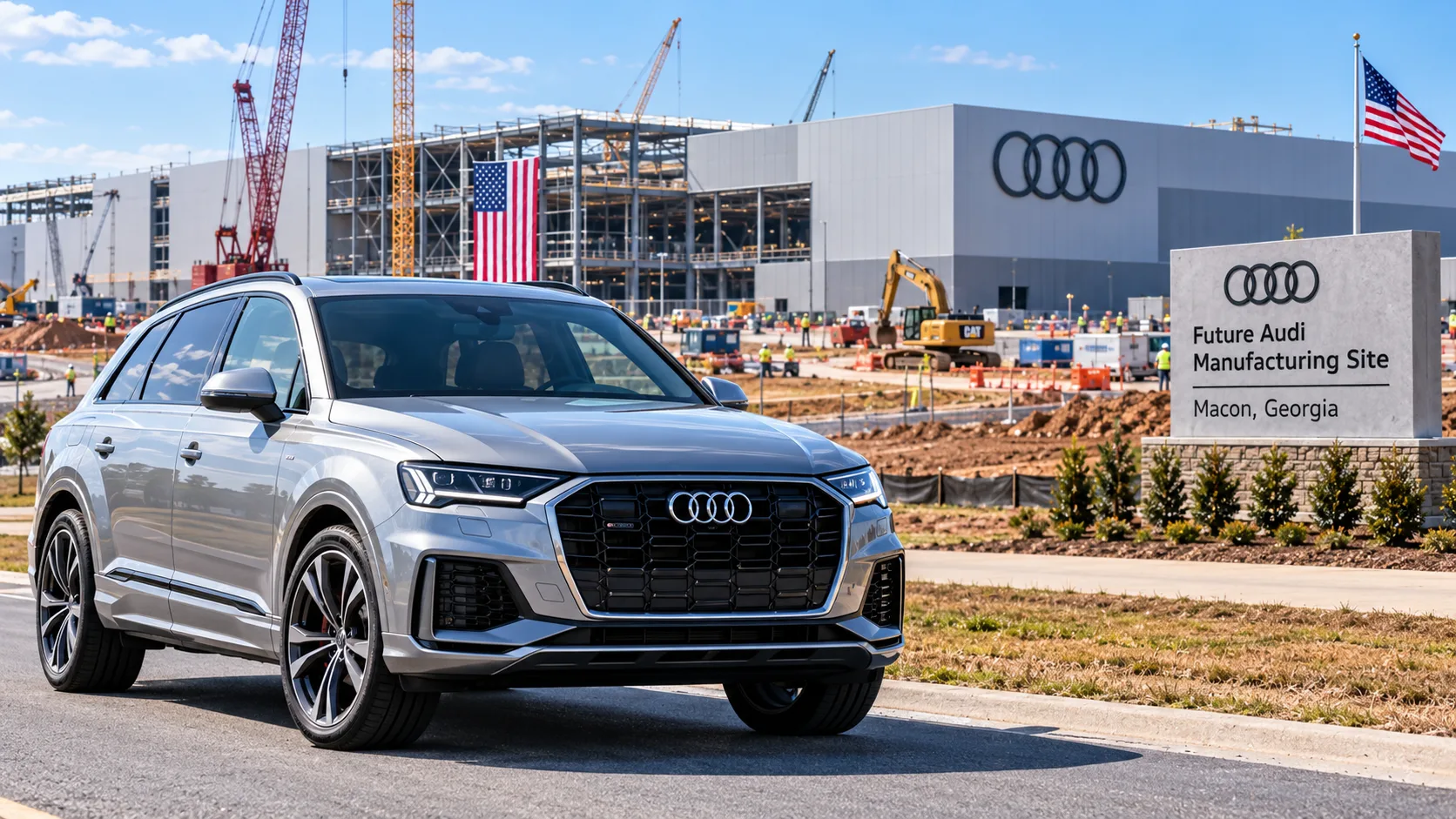
President Donald Trump announced Saturday that German luxury automaker Audi will invest approximately $4.2 billion to build its first U.S. manufacturing plant in Georgia, a major expansion expected to create 4,500 jobs.
The facility, located near Macon, will have the capacity to produce up to 200,000 vehicles annually, primarily premium SUVs designed for American consumers.
Audi CEO Gernot Döllner joined Trump at a campaign rally in Perry, Georgia, to announce the investment, describing the United States as a key market for the company’s long-term growth.
Tariffs Push Audi Toward U.S. Manufacturing
Audi, owned by Volkswagen Group, is the last major German luxury automaker without a U.S. manufacturing facility. Competitors BMW and Mercedes-Benz already operate large factories in the southeastern United States.
That absence has left Audi particularly exposed to Trump’s tariffs on imported vehicles.
The company reported approximately $1.4 billion in tariff-related costs in 2025 and expects continued pressure this year. Producing vehicles domestically could help Audi reduce its exposure to import duties, improve pricing competitiveness, and strengthen its position in the American luxury vehicle market.
Audi has also struggled with weakening demand overseas, particularly in China, where domestic automakers are gaining market share.
Meanwhile, Audi’s U.S. sales fell approximately 16% last year to 165,000 vehicles, adding pressure to improve its competitiveness in one of the world’s largest luxury automotive markets.
Georgia Factory Expected to Begin Production in 2031
The new facility will be located at the Middle Georgia Megasite in Peach County, near Macon.
According to Georgia officials, site preparation is expected to begin in 2027, with plant construction following in 2028. Full production is targeted for 2031.
The investment is expected to create thousands of direct manufacturing jobs while generating additional opportunities for automotive suppliers, transportation companies, and other regional businesses.
What It Means for Investors
For Volkswagen Group, Audi’s expansion represents a significant long-term investment in the American market.
Domestic production could eventually improve Audi’s profit margins by reducing tariff expenses and shipping costs. However, the company faces substantial upfront construction costs, and the financial benefits will take several years to materialize.
The decision also highlights a broader shift in the global automotive industry. Foreign automakers are increasingly evaluating U.S. manufacturing as a way to protect their businesses from trade restrictions and serve American consumers more efficiently.
For investors, the key questions will be whether Audi can reverse its declining U.S. sales and whether domestic production ultimately delivers stronger profitability.
A Political Win for Trump Ahead of Midterms
The announcement comes just days before the November 3 midterm elections, giving Trump a major manufacturing investment to highlight in the politically competitive state of Georgia.
Trump credited his tariff policies with encouraging the investment, arguing that trade restrictions are bringing manufacturing jobs back to the United States.
Audi’s decision also reflects longer-term business considerations, including weakening Chinese demand and the company’s need for a stronger American manufacturing presence.
The Bottom Line
Audi’s $4.2 billion Georgia investment is a significant win for American manufacturing and an important strategic move for Volkswagen Group.
The factory could help Audi reduce tariff exposure, strengthen its U.S. business, and create thousands of jobs. However, with production still several years away, the company’s immediate challenges remain declining sales, higher costs, and growing global competition.
About Author