
The stunning reversal has sent Nvidia shares soaring and sparked a broader rally in artificial intelligence stocks. But an unfinished investigation and lingering national security questions could determine what happens next.
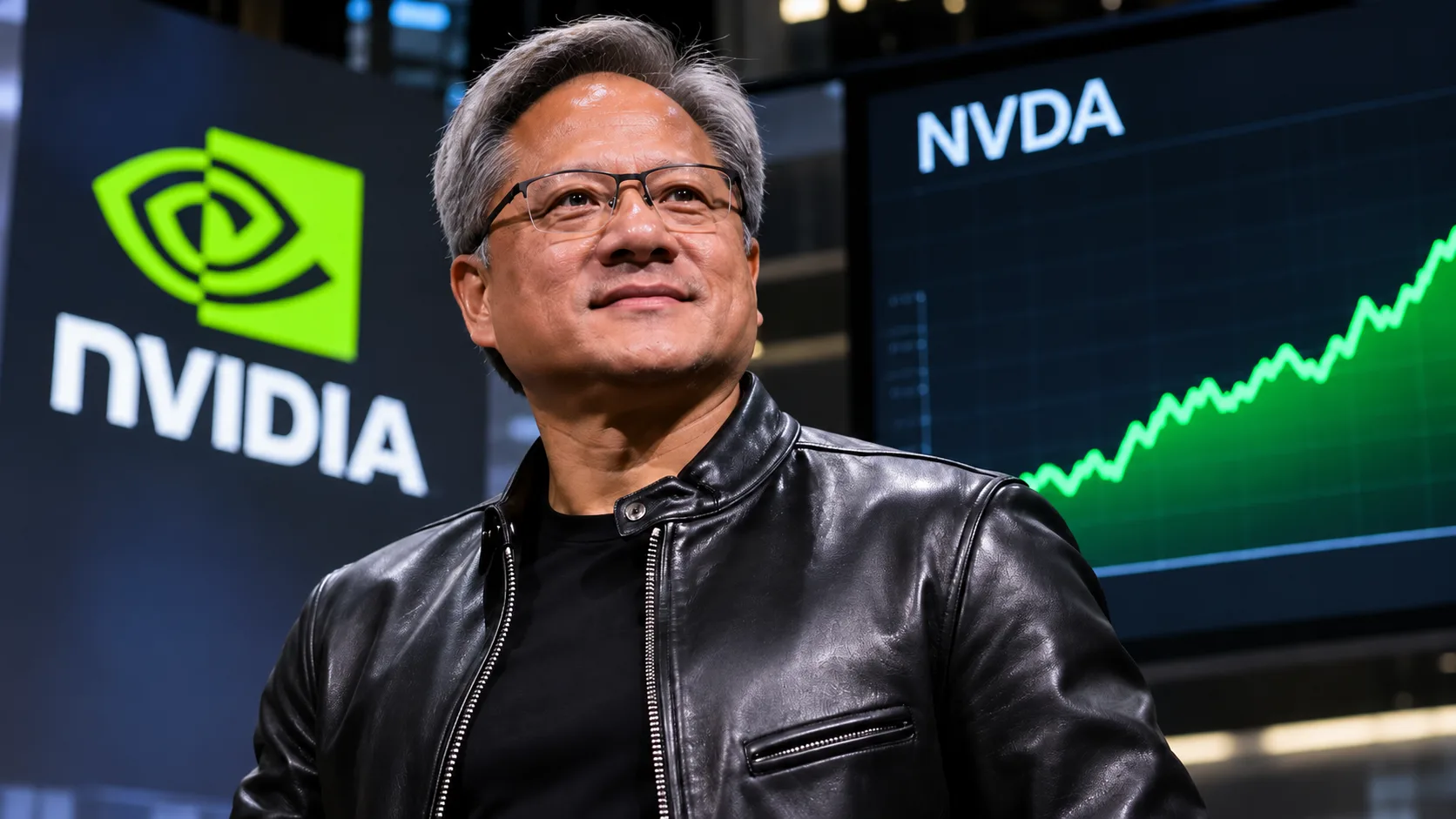
Nvidia shares surged roughly 30% Monday morning after the company’s board unexpectedly reinstated Jensen Huang as CEO, reversing his departure following a scandal involving alleged ties to Chinese intelligence. The dramatic comeback has erased much of the stock’s recent losses and reignited confidence in one of Wall Street’s most influential technology companies.
The announcement marks an extraordinary turnaround for Huang, whose resignation earlier this month rattled investors and raised questions about the future leadership of the world’s dominant artificial intelligence chipmaker. Perhaps the biggest surprise came from Washington, where senior U.S. government officials reportedly provided input before Nvidia’s board decided that Huang’s return would pose no national security risk.
That assurance appears to have removed one of the largest uncertainties hanging over the company. Yet the independent investigation into the underlying allegations remains unfinished, raising questions about whether Monday’s enormous stock rally can continue.
A Stunning Comeback Just 10 Days After His Departure
Nvidia announced Monday that its board of directors had unanimously voted to restore Huang as chief executive officer, effective immediately. The decision followed a series of meetings between Huang and directors, who determined that bringing back the company’s longtime leader was in the best interests of shareholders, employees and customers.
Huang resigned on November 13 after reports surfaced concerning multiple extramarital relationships, including one with a woman allegedly connected to Chinese intelligence. The New York Times reported Sunday that the woman had been in contact with an officer at China’s Ministry of State Security during at least part of her relationship with Huang.
The allegations raised concerns extending far beyond Huang’s personal conduct. Nvidia designs some of the world’s most advanced artificial intelligence processors, making the company central to America’s technological competition with China and an important supplier to businesses developing next-generation AI systems.
Following Huang’s departure, Nvidia appointed longtime chief financial officer Colette Kress as interim CEO. Company leadership initially maintained that Huang’s reinstatement was not under consideration, leaving investors facing the possibility of a prolonged leadership transition.
That position changed dramatically Monday.
“The Board believes Jensen is the right person to lead NVIDIA, and that his reinstatement is in the best interests of our stockholders, employees, partners and customers,” Nvidia Board Chair Harvey Jones said in a statement.
Huang welcomed the decision, saying he was honored to return and lead Nvidia during what he described as the beginning of a new industrial revolution. He also thanked the board for its confidence and pledged a renewed commitment to the company’s future.
The White House’s Involvement Changes the Story
One of the most significant details in Nvidia’s announcement was the board’s acknowledgment that it received input from senior levels of the U.S. government before making its decision.
That involvement underscores the unusual position Nvidia occupies in the American economy. The company’s technology powers advanced AI systems used by major technology companies, research institutions and government agencies, while its chips have become a central issue in U.S. export restrictions aimed at limiting China’s access to advanced computing capabilities.
Consequently, allegations involving possible foreign intelligence connections carried implications for Nvidia’s business relationships, regulatory exposure and reputation.
According to Nvidia, directors concluded after receiving government input that Huang’s reinstatement presented no national security risk. However, the company did not publicly identify the officials consulted or disclose the specific information that informed the assessment.
President Donald Trump also celebrated the decision Monday, calling Huang’s reinstatement the correct choice and emphasizing the importance of his leadership to both Nvidia and the American economy.
Trump said the U.S. government had no reason to believe Huang’s return represented a national security threat and did not possess evidence that he had engaged in unlawful conduct.
The president’s public support added another layer of reassurance for investors concerned about potential government intervention or restrictions affecting Nvidia’s operations.
However, the government’s assessment does not necessarily resolve every outstanding question surrounding the allegations. Nvidia’s independent investigation will continue, meaning shareholders could still face additional disclosures as the review progresses.
Why Nvidia Stock Is Exploding Higher
Nvidia shares had suffered a steep selloff following the initial revelations and Huang’s resignation. The stock had declined nearly 33% from the time Huang first acknowledged an extramarital affair on November 8, wiping out an enormous amount of shareholder value in a matter of days.
Monday’s announcement triggered an equally dramatic reaction. Nvidia shares surged approximately 29% to 30% in early trading, recovering a substantial portion of the losses associated with the leadership crisis.
The rebound reveals just how much investors value Huang’s leadership and how quickly market sentiment can change when a significant source of uncertainty disappears.
1. Huang Has Become Part of Nvidia’s Valuation
Huang co-founded Nvidia in 1993 and helped transform it from a graphics-chip manufacturer into the company at the center of the artificial intelligence infrastructure boom.
Under his leadership, Nvidia established deep relationships with major cloud-computing providers, developed its CUDA software ecosystem and became a critical supplier to companies building increasingly sophisticated AI systems.
For investors, Huang represents continuity in Nvidia’s technological strategy, corporate culture and relationships with major customers. His sudden departure introduced uncertainty at a particularly sensitive moment for the AI industry, when enormous investments in new computing infrastructure are reshaping corporate spending.
Restoring Huang immediately removes that leadership question and helps explain the magnitude of Monday’s stock-market reaction. Investors can once again evaluate Nvidia’s long-term strategy with the executive who helped build the company back in charge.
2. The Rally Could Extend Beyond Nvidia
Nvidia’s influence reaches far beyond its own shareholders. The company occupies a central position in an interconnected network of semiconductor suppliers, data-center operators, cloud-computing providers and electrical infrastructure companies.
When investors become more optimistic about Nvidia, that confidence can spread across the broader AI investment ecosystem. Companies supplying memory chips, networking equipment, server infrastructure and power systems can benefit from expectations that AI spending will remain strong.
The reverse was evident during Nvidia’s recent selloff, when uncertainty surrounding the company’s leadership raised concerns about the stability of one of the technology sector’s most important businesses.
Huang’s return reduces the possibility of a disruptive leadership transition that could have complicated Nvidia’s product roadmap and relationships with major customers. That could help restore confidence across the broader artificial intelligence trade.
3. A Major Uncertainty Has Been Removed, but Risks Remain
Before Monday’s announcement, Nvidia shareholders faced the possibility that the company would need to navigate a leadership transition while simultaneously dealing with heightened national security scrutiny.
Restoring Huang resolves the immediate succession question and provides greater clarity about the company’s strategic direction. It also reduces uncertainty about the executive relationships and long-term technology decisions that have helped Nvidia maintain its competitive advantage.
However, investors still face a separate set of challenges, including export restrictions, competition in AI hardware, customer spending trends and questions about how quickly enormous AI infrastructure investments will generate profitable returns.
Huang’s return cannot resolve those issues by itself. Nvidia’s valuation will ultimately depend on whether the company continues delivering revenue growth and earnings strong enough to justify the expectations already reflected in its stock price.
The Investigation Isn’t Over
Despite Monday’s celebration on Wall Street, Nvidia’s independent investigation will continue.
The board previously formed a special committee and retained the law firm Wachtell, Lipton, Rosen & Katz to examine the allegations involving Huang, including whether company secrets or national security could have been compromised.
Nvidia said Huang is committed to cooperating with the review and that investigators will proceed until their work is complete. That leaves important questions unanswered about the alleged intelligence connections, whether sensitive information was exposed and what conclusions the independent committee will ultimately reach.
The alleged involvement of Chinese intelligence remains an allegation. The information disclosed publicly does not establish that Huang knowingly participated in espionage or disclosed confidential company information.
For shareholders, that distinction is crucial. The government’s assurances may reduce immediate concerns about Huang’s return, but the investigation’s final findings could still influence regulatory scrutiny, corporate governance reforms and market confidence.
A review that concludes no sensitive information was compromised could further strengthen investor confidence. Conversely, evidence of security failures or weaknesses in corporate oversight could create new challenges even with Huang back in charge.
Could Nvidia’s 30% Rally Be an Overreaction?
The scale of Monday’s move raises an important question: Does Huang’s return justify such a dramatic increase in Nvidia’s market value?
There is a compelling argument for removing some of the discount investors assigned to Nvidia during the leadership crisis. A founder-led technology company can suffer significant uncertainty when its longtime chief executive unexpectedly departs, especially when that leader has played a central role in product strategy, corporate culture and major customer relationships.
Restoring that leadership can materially improve investor confidence. However, Nvidia’s underlying earnings power did not automatically increase by 30% simply because Huang returned.
The company’s future profits will still depend on AI chip demand, manufacturing capacity, competitive positioning, customer capital expenditures and international trade policy. Those fundamentals will ultimately determine whether Monday’s valuation increase proves sustainable.
There is also a mathematical reason investors should examine the rebound carefully.
A stock that falls 33% must subsequently rise approximately 49% to return to its original price. A 30% rebound following such a decline would still leave shares roughly 13% below the starting level, assuming both moves are measured from the same reference points.
That means Monday’s rally, however dramatic, does not necessarily restore every dollar of market value lost during the scandal.
Another consideration is the possibility that part of Monday’s surge reflects investors rushing to unwind bearish positions established during the leadership crisis. Short covering and momentum-driven trading can amplify gains immediately following an unexpected announcement, potentially producing a larger move than the underlying change in business fundamentals would otherwise justify.
The more consequential question is whether Nvidia can translate renewed leadership stability into sustained financial performance.
Three Developments Nvidia Investors Should Watch
1. The Investigation’s Final Findings
The independent committee’s conclusions will be one of the most important developments to monitor. A finding that no sensitive information was compromised could remove additional uncertainty and reinforce confidence in Nvidia’s corporate governance.
However, evidence of security failures or weaknesses in internal oversight could invite additional regulatory attention and potentially create new financial or operational risks.
2. Nvidia’s Stock Performance After the Initial Rally
The next several trading sessions could reveal how much of Monday’s advance reflects lasting investor confidence.
If Nvidia maintains its gains after the immediate excitement fades, that could indicate stronger institutional support for Huang’s reinstatement. A sharp reversal, particularly on heavy trading volume, could suggest that speculative buying or short covering contributed significantly to the initial surge.
Investors should also watch whether other semiconductor and AI infrastructure stocks participate in the rebound. Broader strength could signal improving confidence across the sector, while a rally concentrated primarily in Nvidia would suggest a more company-specific reaction.
3. Nvidia’s AI Business Fundamentals
With the immediate leadership crisis resolved, attention should gradually return to Nvidia’s financial performance.
Data-center revenue growth, customer spending commitments, profit margins and developments in U.S. export policy remain among the most important factors shaping the company’s future.
Investors will also be watching whether major technology companies continue increasing their artificial intelligence infrastructure budgets. Sustained spending would support Nvidia’s growth outlook, while evidence of slowing investment could pressure valuations even with Huang back at the helm.
The Bigger Picture for Wall Street
The extraordinary events surrounding Huang have exposed a vulnerability in one of the world’s most influential technology businesses: investors place enormous importance on the leadership of its founder.
Over roughly two weeks, Nvidia experienced a leadership crisis, a major stock selloff, national security concerns and a dramatic reversal that sent its shares soaring.
The episode also demonstrates how closely the fortunes of the AI industry have become tied to a relatively small group of companies and executives. When leadership uncertainty affects a business as influential as Nvidia, the consequences can spread through the broader stock market.
For investors, Monday’s announcement removes one major source of uncertainty from the artificial intelligence sector. Yet Nvidia’s next chapter will depend on how its board manages the remaining investigation and whether the company’s financial performance can justify the market’s renewed enthusiasm.
Huang is back, Nvidia’s stock has roared higher, and confidence in the AI leader has returned. The question now is whether the company’s fundamentals can support the remarkable recovery.
About Author