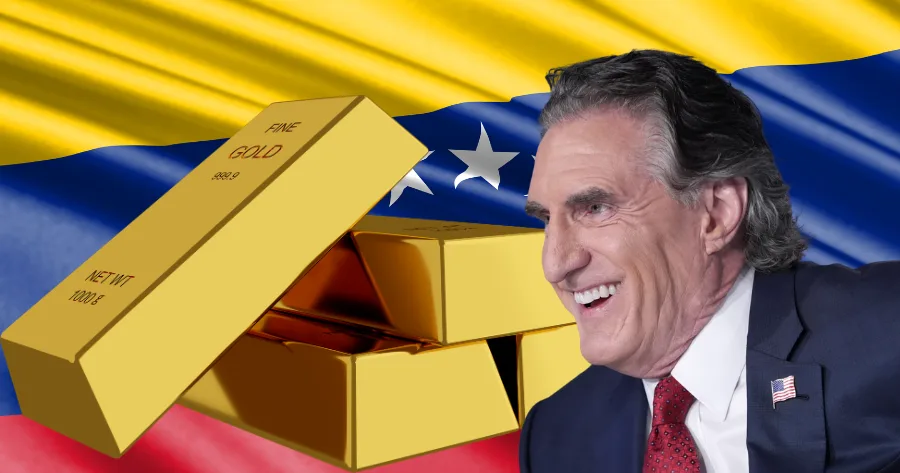
Interior Secretary Doug Burgum confirmed that the U.S. recently transported $100 million worth of physical gold from Venezuela back to the United States, marking the first such shipment between the two countries in more than two decades.
But this is not just a one-off transaction.
It is part of a much bigger strategy unfolding under President Donald Trump—one that could reshape global resource markets and open the door to massive investment flows into Venezuela.
A Historic Gold Shipment After 20 Years
Speaking at the S&P Global CERAWeek energy conference in Houston, Burgum revealed just how significant the move was.
“There hadn’t been a shipment of precious metals between Venezuela and America in over 20 years,” Burgum said.
“At the end of the two days, we were able to bring home $100 million of gold — physically, the gold,” he added.
The gold is expected to be processed by U.S. refiners and used across commercial and consumer markets.
This matters because it signals that sanctions-era restrictions are being selectively loosened, allowing controlled flows of Venezuelan resources into U.S. supply chains.
The Bigger Play: Venezuela’s Resource Comeback
This gold shipment is just the surface.
The real story is Venezuela itself.
The country sits on:
- The largest proven oil reserves in the world
- Massive deposits of gold, iron ore, bauxite, and rare earth minerals
- Untapped mining regions that have been largely inactive for years
After years of economic collapse and sanctions, Venezuela’s resource sector is now being repositioned as a major opportunity for U.S. companies.
Recent policy moves support that:
- The U.S. has authorized certain transactions involving Venezuelan gold under strict conditions
- American mining firms have already begun exploring opportunities in the country
- Venezuela is working on new mining laws to attract foreign capital
In plain English: this is the early stage of a reopening.
From Collapse to Opportunity
Burgum didn’t sugarcoat the current state of Venezuela’s mining industry.
“The mining opportunity — that’s an industry that’s been in complete collapse in Venezuela… It’s down to just artisanal miners controlled by gangs, [with] probably some of the worst environmental practices in the world,” he said.
That collapse is exactly why investors should pay attention.
Historically, the biggest returns come when:
- A sector is broken
- Capital returns
- Infrastructure gets rebuilt
Venezuela checks all three boxes.
A New Political Reality
This shift comes after a dramatic geopolitical change.
The U.S. removed former Venezuelan leader Nicolás Maduro earlier this year, and is now working with interim leadership under Delcy Rodríguez.
That has opened the door for:
- U.S.-backed resource development
- New investment frameworks
- Controlled monetization of oil and minerals
It also raises serious questions about who ultimately controls Venezuela’s resources and how profits will be distributed.
For investors, though, the key takeaway is simpler:
Access is expanding.
Oil Is Still the Main Event
While gold is grabbing headlines, oil remains the real prize.
Venezuela holds an estimated 300 billion barrels of proven oil reserves, making it one of the most strategically important energy assets in the world.
The Trump administration has already:
- Encouraged U.S. oil majors to invest
- Facilitated early oil transactions
- Positioned Venezuela as a future energy supplier
If production ramps up, it could:
- Increase global oil supply
- Pressure energy prices
- Benefit U.S. energy companies with early access
Why This Gold Deal Matters More Than It Looks
On the surface, $100 million is not a massive number in global markets.
But strategically, it’s a signal.
It tells investors:
- Resource flows are restarting
- Sanctions are evolving, not disappearing
- U.S. companies are being positioned first in line
It is essentially a test run for larger deals.
Risks Investors Cannot Ignore
This is not a clean opportunity.
There are real risks:
Political instability
Venezuela remains volatile, and the current leadership structure could change again.
Legal uncertainty
Past nationalizations still haunt foreign investors.
Infrastructure collapse
Mining and oil production require massive capital to rebuild.
Global backlash
Other nations, especially China and Russia, may push back against U.S. dominance in Venezuelan resources.
What Investors Should Watch Next
If you want to stay ahead of this story, focus on these signals:
- New U.S. licenses for mining and energy deals
- Announcements from companies like Chevron or major mining firms
- Changes to sanctions frameworks
- Gold and oil export volumes from Venezuela
The next phase will likely involve larger, more structured deals, not just one-off shipments.
Investor Takeaway
This is not about gold.
It is about control of resources.
The $100 million shipment is the first visible step in what looks like a broader strategy to:
- Reintegrate Venezuela into global markets
- Secure U.S. access to critical resources
- Create new investment opportunities in a previously closed economy
Early-stage geopolitical shifts like this are where outsized returns often begin.
But they are also where risk is highest.
About Author