For investors searching for an edge, seasonal trends can provide valuable clues about where money tends to flow throughout the year. While no historical pattern guarantees future returns, professional investors often incorporate seasonality into portfolio decisions alongside economic data, earnings trends, and technical analysis.
Now, analysts at Bank of America believe several well-established seasonal patterns are lining up once again as markets move deeper into the third quarter.
Their research highlights opportunities across technology stocks, currencies, bonds, commodities, and even international markets, while also warning investors to prepare for a more challenging environment later in the quarter.
Why Wall Street Pays Attention to Seasonal Trends
Seasonality examines how markets have historically performed during specific months, quarters, or points within the presidential election cycle.
According to Bank of America technical strategist Paul Ciana, the current setup shares similarities with the third quarter of 2018. During that period, U.S. stocks and the U.S. dollar outperformed while Treasury prices weakened and commodity markets struggled.
If history repeats itself, investors could once again benefit from favoring U.S. equities and the dollar while remaining cautious on fixed income and certain commodities.
Importantly, Bank of America stresses that seasonality should complement—not replace—fundamental research and risk management.
The Nasdaq 100 Continues to Show Remarkable Strength
Perhaps the most eye-catching finding in the report involves the Nasdaq 100.
Despite concerns that the second year of a presidential cycle has historically produced weaker equity performance overall, the Nasdaq 100 has bucked that trend in recent years.
According to Bank of America:
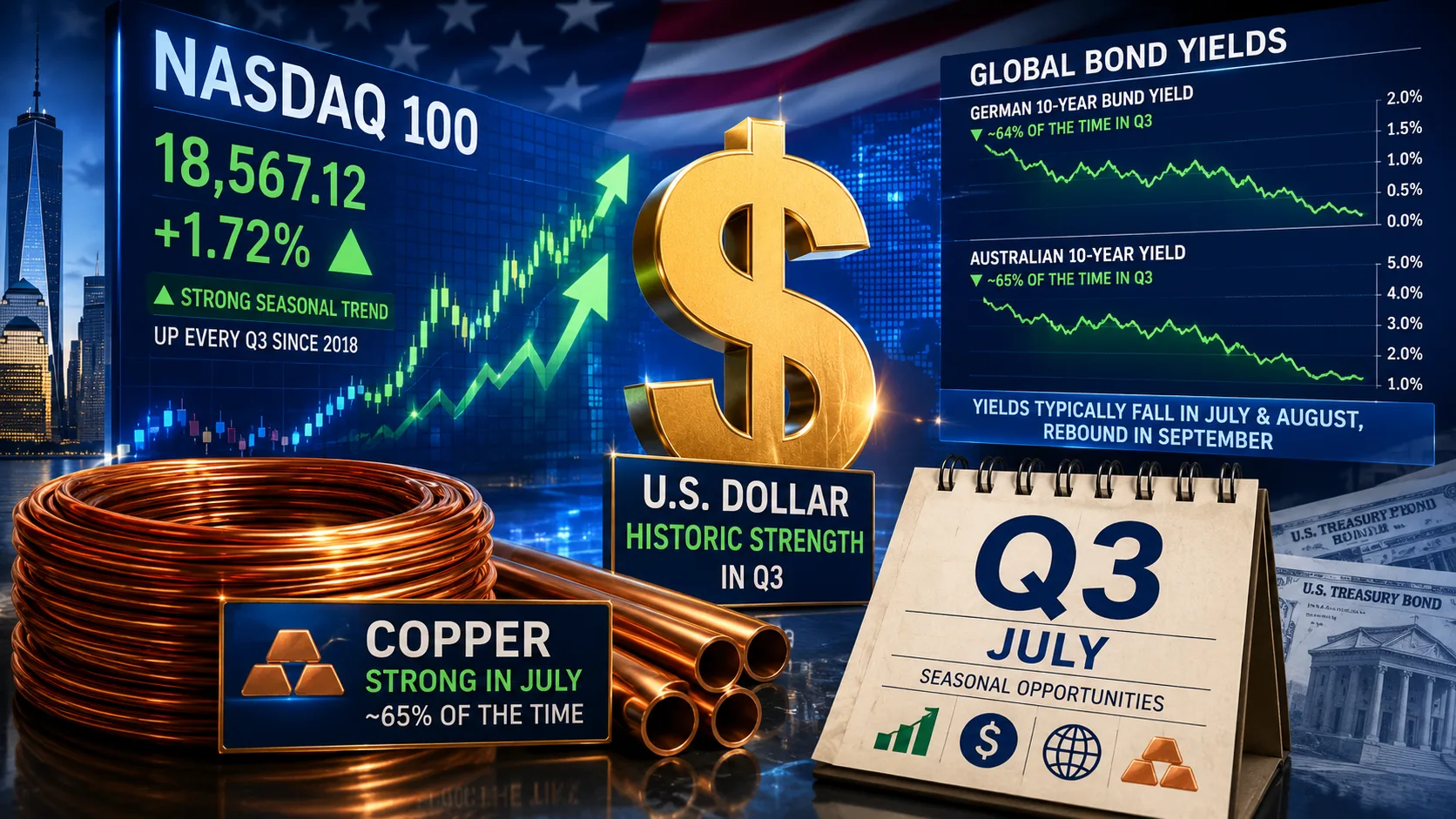
- The Nasdaq 100 has gained during every third quarter since 2018
- July has historically been one of the strongest months
- The index has risen roughly 68% of the time during July
- Average July gains have been approximately 1.72%
While those statistics are encouraging for technology investors, the bank cautions that the market’s seasonal strength has often faded as September approaches.
That means investors may enjoy favorable conditions early in the quarter while remaining alert for increased volatility later.
The U.S. Dollar Could Continue to Lead
Another major theme from the report is continued strength in the U.S. dollar.
Bank of America expects seasonal trends to favor the dollar against several global currencies, particularly emerging market currencies.
Among the strongest historical relationships:
- USD versus the Brazilian real has risen roughly two-thirds of the time during Q3
- USD versus the South African rand has also strengthened about two-thirds of the time
- Average historical gains were approximately 4.7% against the Brazilian real and 2.7% against the South African rand
A stronger dollar can affect everything from multinational corporate earnings to commodity prices and international investment returns.
Bonds May Benefit Outside the United States
Although Treasury markets may face pressure if investors rotate toward stocks, Bank of America sees a different seasonal pattern overseas.
Historically, government bond yields across many developed markets have tended to decline during much of the third quarter.
The report highlights:
- German Bund yields have fallen roughly 64% of the time during Q3
- Australian 10-year government bond yields have declined approximately 65% of the time
Lower yields typically translate into higher bond prices, potentially creating opportunities for investors with international fixed-income exposure.
However, the bank notes that yields have often rebounded once September arrives.
One Commodity Also Stands Out
While Bank of America is generally cautious on commodities overall, one market continues to display favorable seasonal characteristics.
Copper has historically performed well during July.
According to the bank:
- NYMEX copper has risen approximately 65% of the time during July
- Average gains have been around 1.84%
Copper remains closely tied to global manufacturing, infrastructure spending, electrification projects, and artificial intelligence data center construction, making it an important commodity for investors to monitor.
Why the Presidential Cycle Matters
One reason Bank of America believes investors should remain cautious later in the quarter involves the four-year U.S. presidential cycle.
Historically, the second year of a presidential term has often produced weaker equity market performance than other years in the cycle.
Political uncertainty, changing fiscal priorities, and shifting monetary expectations have all contributed to that historical pattern.
Still, today’s market differs from previous cycles in several important ways.
Artificial intelligence investment remains a major driver of technology earnings, corporate profits have generally remained resilient, and investors continue watching closely for additional Federal Reserve policy changes.
Those factors could either reinforce or override traditional seasonal tendencies.
What Investors Should Watch Over the Next Few Months
Seasonal trends should never be viewed as guarantees, but they can help investors understand where historical probabilities have favored certain asset classes.
Bank of America’s current playbook suggests investors should monitor:
- Continued leadership from the Nasdaq 100
- Ongoing strength in the U.S. dollar
- Declining overseas government bond yields
- Seasonal momentum in copper during July
- Increased market volatility as September approaches
If those historical patterns begin to emerge once again, they could shape portfolio performance throughout the remainder of the quarter.
For investors balancing long-term strategies with tactical positioning, the coming months may offer opportunities to benefit from some of Wall Street’s most closely watched seasonal trends.
About Author