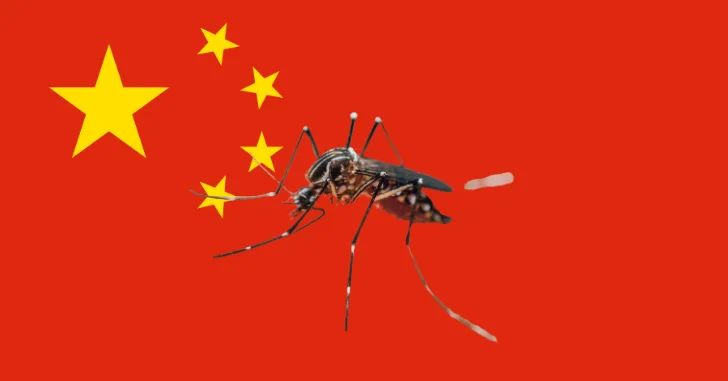
Southern China’s Guangdong province is facing a fast-growing outbreak of the chikungunya virus—a mosquito-borne illness known for causing intense joint pain, fevers, and, in rare cases, serious complications such as heart damage.
Health authorities have confirmed over 7,000 cases in the province, concentrated in the city of Foshan, and the outbreak is sparking concerns not only for public health but also for its potential ripple effects in travel, biotechnology, and pest-control markets.
The U.S. Centers for Disease Control and Prevention (CDC) has already issued a Level 2 travel notice for Guangdong, urging travelers to take enhanced precautions. While chikungunya is not a new disease—it was first identified in Africa in 1952—the current outbreak is significant due to favorable mosquito breeding conditions and the region’s role as a global travel hub.
Understanding Chikungunya and Its Spread
What is chikungunya?
Chikungunya is caused by the chikungunya virus and spread primarily by two mosquito species: Aedes aegypti and Aedes albopictus.
After a bite from an infected mosquito, symptoms typically appear within 3–7 days. The most common include:
- Severe joint pain (often described as debilitating)
- High fever
- Fatigue
- Rash
- Nausea
For most people, symptoms last one to two weeks. However, according to Jean Lim, a microbiologist at the Icahn School of Medicine at Mount Sinai, “sometimes they can continue for months and years, and the virus can also cause serious heart damage.” Vulnerable groups include the elderly, babies, and immunocompromised individuals.
The global burden is notable: through July 2025, there have been approximately 240,000 cases and 90 deaths reported across 16 countries and territories, including the Americas, Africa, Asia, and Europe (ECDC).
Why is China experiencing an outbreak now?
Experts believe the outbreak in Guangdong was triggered by several weeks of rain and high humidity, creating ideal breeding conditions for Aedes mosquitoes.
Robert Jones, an insect biologist at the London School of Hygiene & Tropical Medicine, notes that “several weeks of rain and high humidity… have created good conditions for A. aegypti and A. albopictus to breed and bite more people.”
The Chinese government has:
- Distributed mosquito nets
- Sprayed insecticides in residential areas and worksites
- Used drones to locate standing water
- In some cases, required infected individuals to isolate in hospitals—a reminder of China’s strict public health enforcement during COVID-19.
Could This Reach the U.S.?
The short answer: Yes—but it’s unlikely to spread widely.
The most plausible scenario, according to Lim, is:
- A mosquito in China bites an infected person.
- That person travels to the U.S. while infectious.
- A local Aedes mosquito bites them and becomes infected.
- That mosquito transmits the virus to other people.
This isn’t hypothetical—it has happened before. In 2014, Florida reported its first locally transmitted chikungunya cases (CDC). Texas followed in 2015. The last recorded local U.S. transmission was in 2019, but imported cases continue annually.
Why the U.S. is vulnerable
- Vector presence: Aedes aegypti and Aedes albopictus are established across the Gulf Coast and parts of the West Coast (CDC Aedes Maps).
- Climate change: Warmer temperatures and heavier rainfall are extending mosquito seasons and expanding their range.
- Travel connections: Guangdong’s airports are major international hubs, increasing the chance of imported cases.
What This Means for Travelers
If you or someone you know is traveling to Guangdong or another outbreak area:
- Use insect repellent containing DEET, picaridin, or oil of lemon eucalyptus.
- Wear long sleeves and pants, especially during daylight hours when Aedes mosquitoes bite most.
- Stay in screened or air-conditioned accommodations.
- Consider vaccination if you are in a high-risk category or expect prolonged exposure. Two FDA-approved vaccines are available:
- IXCHIQ by Valneva (FDA)
- VIMKUNYA by Bavarian Nordic
Investor Relevance: Market Sectors to Watch
While chikungunya outbreaks are primarily a health story, they can create short-term opportunities and long-term trends in specific sectors.
1. Pest Control Services
- Why: Municipal contracts for mosquito abatement surge during outbreaks.
- Stocks to watch: Rollins (NYSE: ROL), Rentokil Initial (NYSE: RTO).
- Trend: Long-term demand may grow as climate change increases mosquito prevalence.
2. Vector Control Chemicals
- Why: Insecticides like malathion are key tools in outbreak response.
- Stocks to watch: FMC Corporation (NYSE: FMC), which manufactures malathion-based products.
3. Vaccines
- Why: Travelers to outbreak regions may seek vaccination.
- Stocks to watch: Valneva (Euronext: VLA), Bavarian Nordic (OTC: BVNRY).
- Note: These are niche markets, but small-cap biotech stocks can move quickly on outbreak headlines.
4. Diagnostics
- Why: Increased testing demand during outbreaks.
- Stocks to watch: Quest Diagnostics (NYSE: DGX), Labcorp (NYSE: LH).
5. Travel & Leisure
- Why: Extended outbreaks or higher-level CDC warnings could reduce demand for certain Asia travel routes.
- Stocks to watch: Airlines with significant Asia exposure, hotel chains with Chinese market presence.
Investor Playbook
- Short-Term: Monitor headlines for case spikes, CDC warning changes, and U.S. imported case reports—these can spark quick moves in pest control, vaccine, and diagnostic stocks.
- Medium-Term: Climate-driven vector expansion could support multi-year demand growth for mosquito control services and related products.
- Risk: Travel sector softness if the outbreak worsens or spreads internationally.
Key Watchpoints (Next 4–8 Weeks)
- Case counts in Guangdong – Will public health measures curb the outbreak?
- Weather forecasts – More rain increases mosquito breeding risk.
- CDC travel notices – Escalations can influence investor sentiment.
- First U.S. imported cases – Possible in Florida, Texas, Arizona, or California.
The Bottom Line
The chikungunya outbreak in southern China is unlikely to cause widespread disruption in the U.S., but it is a reminder of how quickly local health crises can travel globally.
For travelers, the advice is simple: practice bite prevention and consider vaccination if you’re at risk.
For investors, this is a niche but tradable theme—pest control, vector control chemicals, biotech vaccine makers, and diagnostic companies stand to see short-term gains. The bigger picture? As climate change extends mosquito seasons and expands their territory, these sectors could see structural tailwinds for years to come.
About Author