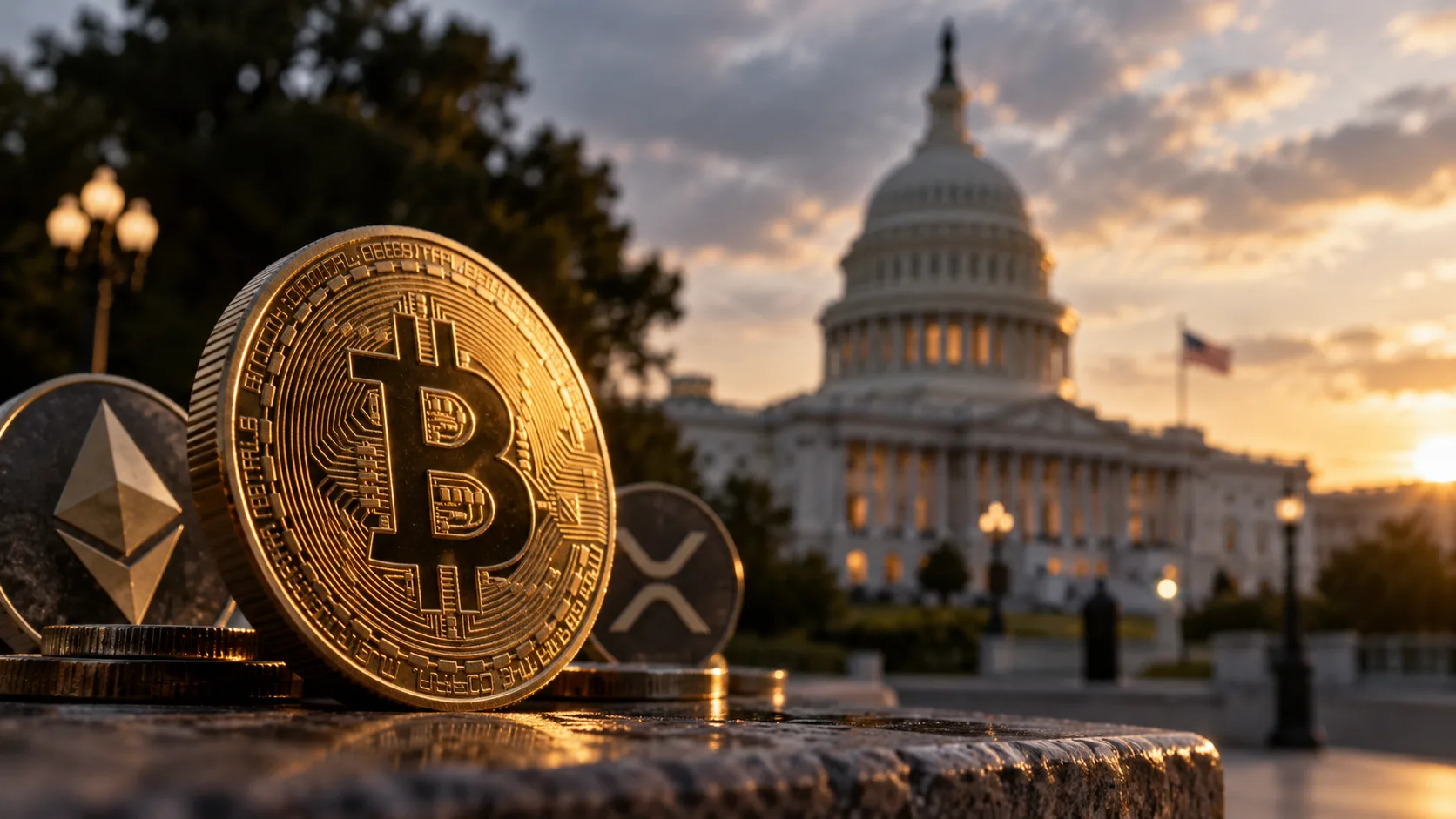
Twelve months ago, crypto executives were under investigation. Today, they’re celebrated guests in the White House.
In late July, dozens of top executives from Coinbase, Kraken, Ripple, and other digital asset firms gathered inside the Indian Treaty Room at the White House complex. It marked a symbolic and seismic shift. Under the Trump administration, crypto has transformed from pariah to policy cornerstone.
President Trump’s leadership team unveiled a sweeping 160-page road map designed to embed digital assets deep into American financial life—from mortgages to grocery payments. As one attendee put it:
“We’re winning,” a crypto executive told Barron’s. “Twelve months ago, the same individuals were in literal fear of these agencies.”
It’s not just a mood shift—it’s a regulatory overhaul.
From Handcuffs to Handshakes
The Securities and Exchange Commission (SEC) has already reversed course on major cases, including efforts to walk back penalties previously won in court against Ripple. Regulators have stopped pursuing allegations against Coinbase, Kraken, and Robinhood.
That’s just the beginning.
The Trump administration has greenlit a wave of pro-crypto policies, including:
- Repealing Biden-era banking restrictions on crypto services
- Legalizing stablecoins backed by safe assets like Treasuries
- Lifting Labor Department guidance discouraging crypto in 401(k) plans
- Asking Fannie Mae and Freddie Mac to study accepting crypto as mortgage assets
This open-door approach is turning crypto from fringe to foundational—and pulling the broader financial system along with it.
Why This Time Will Be Different
Back in 2022, when FTX collapsed, the damage was largely self-contained. Not anymore.
Now that banks, brokerages, and household brands are integrating crypto into their systems, the stakes have grown. A future crypto crash wouldn’t just rattle niche investors—it could destabilize core pillars of the U.S. economy.
“All the guardrails are being removed at once,” said Lee Reiners of the Duke Financial Economics Center. “There will be another downturn… and the pain will be acute.”
Investors need to think about second-order effects:
- Stablecoin volatility could disrupt consumer payments
- Mortgage eligibility could be affected by crypto valuations
- Tokenized stocks could fracture traditional equity markets
- ETF-backed loans could become crypto’s subprime moment
Big Banks Are No Longer Holding Back
Major institutions that once distanced themselves from digital assets are now leaning in.
- Bank of America and Citigroup announced they’re exploring launching stablecoins
- JPMorgan Chase, whose CEO once called Bitcoin a Ponzi scheme, now wants in
- Some banks have already started issuing loans backed by Bitcoin ETFs
These moves blur the line between traditional finance and decentralized assets, increasing systemic risk while also creating opportunities for early investors who understand the new terrain.
Trump’s Personal Stake in the Ecosystem
President Trump’s pro-crypto pivot isn’t just political—it’s personal.
- He earned millions from Trump Digital Trading Cards (NFTs)
- His family is backing World Liberty Financial, a crypto lending platform
- Trump Media and Technology Group (DJT) disclosed in August that it owns $2 billion in Bitcoin and Bitcoin-tied assets, making it a de facto crypto stock
This alignment of political power and financial interest has accelerated the regulatory fast-track, giving the crypto sector unprecedented influence in Washington.
Stablecoins Are the Next Frontier—and Risk Point
Trump’s newly signed stablecoin law requires tokens like USDC to be fully backed by safe assets and undergo regular audits. It’s a milestone—but it comes with baggage.
In 2023, Circle’s USDC dropped to 88 cents after Silicon Valley Bank’s collapse froze part of its reserves. If stablecoins like USDC were widely used for everyday payments, that price dip could’ve meant real-world pain for merchants and consumers.
“If you run a local convenience store, are you supposed to keep a currency conversion chart on the wall?” asked Amanda Fischer of Better Markets. “There would be tremendous pressure on the government to bail it out.”
In other words: mass adoption raises bailout risk, and that means new exposure for investors who previously thought crypto was immune from government entanglement.
Retirement Accounts, Mortgages, and Tokenized Stocks
The Trump administration has opened the door for crypto in places most investors never expected:
- 401(k) plans: The Labor Department no longer discourages crypto exposure
- Home loans: The FHFA is studying whether crypto holdings can count toward mortgage applications
- Tokenized securities: The SEC is weighing 24/7 blockchain-based stock trading, and Kraken has already launched tokenized shares of Apple, Tesla, and Nvidia outside the U.S.
If approved for U.S. investors, this could be a revolution—or a regulatory nightmare.
Industry giants like Coinbase argue this could lower transaction costs, boost transparency, and modernize financial infrastructure. But critics warn it could bypass investor protections, fragment markets, and lead to flash-crash-style failures.
The Debate Over Risk
Crypto leaders say the fear is overblown.
“In each [crypto crash], no government intervention was required,” said Coinbase Chief Legal Officer Paul Grewal. “There was not a single bailout… Crypto has nothing to do with leverage or opacity.”
Meanwhile, Trump officials argue that regulation is better than ambiguity. A White House spokesperson told Barron’s:
“A lot of the tech in this space is going to undergird what the new financial system looks like. What’s the alternative? We just don’t put in protections for consumers?”
But policy experts like Tonantzin Carmona of Brookings warn that this deregulation mirrors mistakes made before the 2008 crisis:
“Crypto is sold as the future, but the policies backing it are taking us back to the past.”
What’s Next? “On-Chain America”
The White House report also urges:
- The CFTC to explore using digital assets as collateral in derivatives
- The SEC and CFTC to launch “regulatory sandboxes” for crypto innovation
- A sweeping effort to move America’s financial infrastructure on-chain
“If you’re tired of winning, hang in there, because we’re not done winning yet,” said Treasury Secretary Scott Bessent.
📊 Why This Matters for Investors
| Signal | What It Means |
|---|---|
| Regulatory U-turn | Lawsuits dropped, guidance reversed, crypto promoted |
| Mainstream integration | Banks, brokerages, and mortgages are all entering the crypto economy |
| Volatility meets the real economy | A future crash could impact payments, housing, and retirement savings |
| Tokenization trend | Could reshape stock markets—if regulators allow it |
| Trump’s full-throated endorsement | Crypto-friendly policies likely to continue—and accelerate |
Final Take
For investors, this isn’t just a “bull run” story—it’s a paradigm shift.
Crypto is no longer operating in the shadows. It’s in your bank. It’s in your mortgage. It’s in your 401(k). Whether the outcome is boom or bust, the next chapter of the financial system is being written in code.
And if you’re not paying attention, you’re already behind.
Sources:
- Barron’s: Everyone Is Along for the Crypto Ride Now, Even if It Ends Badly
- Reuters: Trump’s Crypto Policy Push
- Coinbase Legal Blog
About Author