Shares of major U.S. energy companies jumped sharply Monday after President Donald Trump confirmed a dramatic U.S. military operation in Venezuela, a move that investors believe could eventually reopen one of the world’s most oil-rich nations to American companies.
The rally was led by Chevron, Exxon Mobil, ConocoPhillips, and oilfield services giant SLB, as traders reassessed the long-term implications of renewed U.S. involvement in Venezuela’s energy sector.
Exxon Mobil shares rose roughly 3 percent in premarket trading, putting xom stock firmly in focus for investors weighing geopolitical risk against future production potential. Chevron surged more than 6 percent, ConocoPhillips gained over 5 percent, and SLB climbed nearly 9 percent as optimism spread across the energy complex.
The moves came after U.S. forces carried out a surprise operation over the weekend that resulted in the capture of Venezuelan President Nicolás Maduro and his wife, Cilia Flores, marking one of the most aggressive foreign interventions of Trump’s presidency.
Trump Signals U.S. Control and Energy Investment Push
Following the operation, President Trump said the United States would temporarily oversee Venezuela’s transition, framing the move as both a geopolitical reset and an economic opportunity.
Trump made clear that revitalizing Venezuela’s oil industry would be central to the administration’s plans.
“We’re going to have our very large United States oil companies, the biggest anywhere in the world, go in, spend billions of dollars, fix the badly broken infrastructure, the oil infrastructure,” Trump said during a press conference at his Mar-a-Lago residence in Palm Beach, Florida.
“Let’s start making money for the country,” Trump added.
For investors, those comments immediately raised questions about which U.S. energy companies stand to benefit most, how quickly production could realistically recover, and what the opportunity means for xom stock specifically.
Why Venezuela Matters to Exxon Mobil and the Oil Market
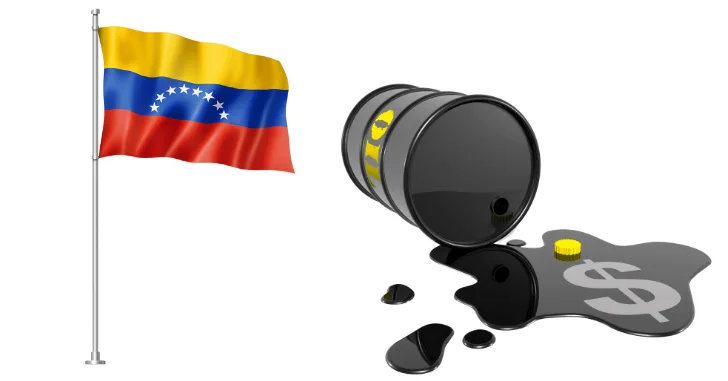
Venezuela is a founding member of OPEC and holds the largest proven crude oil reserves in the world, estimated at 303 billion barrels by the U.S. Energy Information Administration. That figure represents roughly 17 percent of total global oil reserves, surpassing Saudi Arabia.
Despite this massive resource base, years of mismanagement, corruption, underinvestment, and U.S. sanctions have devastated the country’s oil sector. Production has collapsed from more than 3 million barrels per day in the late 1990s to a fraction of that level today.
For Exxon Mobil, Venezuela is not new territory. The company has longstanding experience operating in complex, politically sensitive regions and has previously explored opportunities tied to Venezuelan reserves. Investors tracking xom stock understand that Exxon’s scale, balance sheet strength, and technical expertise uniquely position it to participate in large, capital-intensive restoration projects if political conditions allow.
However, any return would likely be gradual rather than immediate.
Chevron Seen as Early Beneficiary, Exxon and Others in the Wings
According to Allen Good, director of equity research at Morningstar, Chevron appears best positioned in the near term due to its existing footprint in Venezuela.
Good noted that Chevron’s current operations could allow it to add incremental production faster than competitors, assuming U.S. approval and regulatory clarity.
The intervention could also pave the way for Exxon Mobil and ConocoPhillips to re-enter the country after years of legal disputes and sanctions, though the hurdles remain substantial.
Venezuela’s oil infrastructure, including refineries, pipelines, and export terminals, has deteriorated significantly. Bringing production back to meaningful levels would require enormous capital outlays.
Venezuela’s oil industry “will require tens of billions in investment” to meaningfully lift production, Good warned.
“Oil companies will need to be cautious about deploying capital until there is greater regulatory and contractual certainty,” he said.
“While Chevron may be able to add incremental production in the near term with US approval, meaningful volume increases are likely years away. With this in mind, the possibility of US companies developing Venezuela’s oil reserves remains far from certain.”
For Exxon investors, that assessment reinforces a familiar theme surrounding xom stock. Exxon typically prioritizes capital discipline and long-cycle investments that offer attractive returns over decades, not quarters.
The Reality on the Ground in Venezuela
Neil Atkinson, an independent energy analyst and former London-based employee of Venezuela’s state-owned oil company PDVSA, emphasized that restoring the country’s oil sector goes far beyond drilling wells.
“Look at it cynically, you want to get Venezuela’s oil industry back up and running. If you want to do that, you can only do it if you have stability, and that means you have to ensure that there is law and order, which there isn’t now,” Atkinson said on CNBC’s “Squawk Box Europe.”
“You have to ensure that there is stable electricity supplies, which there isn’t now. You have to ensure that food and fuel supplies are reliable, where they are not now. So, a lot has to happen and it cannot happen without the consent of the Venezuelan people,” he added.
Atkinson also addressed the question investors are quietly asking. Why commit capital to Venezuela when oil prices remain relatively subdued?
“Well, I would think for long-term strategic reasons, yes. But, as you say, the price is low currently,” he said.
“There are special issues in terms of increasing oil production in Venezuela, the type of oil that it is, the cost and complexity of processing it. But for them, it would be a long-term play. That, to me, is the main reason why investors might feel more positive toward those companies.”
That long-term framing is especially relevant for Exxon Mobil, whose investor base tends to value stability, dividends, and multi-decade resource development. For holders of xom stock, Venezuela represents optional upside rather than a near-term earnings catalyst.
What This Means for XOM Stock Specifically
Exxon Mobil stock has historically been viewed as a defensive energy holding, benefiting from scale, diversification, and disciplined capital allocation. The Venezuela situation does not immediately change Exxon’s fundamentals, but it introduces a potential long-range growth lever.
If Exxon were eventually allowed to re-establish operations, it could gain access to some of the largest undeveloped oil reserves on the planet. That would enhance Exxon’s reserve life and long-term production outlook, two factors closely watched by institutional investors.
Still, investors should temper expectations. Exxon is unlikely to commit major capital until legal protections, fiscal terms, and political stability are firmly in place. The company has learned costly lessons in the past from resource nationalism and contract disputes.
In the near term, xom stock is more likely to respond to broader oil price movements, refining margins, and shareholder return policies such as dividends and buybacks.
Oil Prices React Cautiously
Oil prices edged slightly higher following the news but did not spike, suggesting markets are taking a wait-and-see approach.
International benchmark Brent crude futures for March delivery were up about 0.5 percent at $61.03 per barrel. U.S. West Texas Intermediate futures for February delivery rose roughly 0.6 percent to $57.64 per barrel.
The muted reaction reflects uncertainty over how quickly Venezuelan barrels could realistically return to global markets. Even under optimistic scenarios, restoring production would likely take years.
Investor Takeaways
For investors evaluating the situation, several key points stand out:
First, the rally in oil stocks reflects optionality, not guaranteed outcomes. Markets are pricing in the possibility of future access to Venezuelan oil, not immediate production gains.
Second, xom stock remains a long-term story. Exxon Mobil’s potential involvement in Venezuela would likely unfold over a decade, aligning with the company’s traditional investment horizon.
Third, geopolitical risk remains high. Changes in U.S. leadership, international opposition, or internal instability in Venezuela could derail plans quickly.
Finally, capital discipline matters. Exxon and its peers are unlikely to sacrifice shareholder returns for politically risky projects without compelling economics.
About Author