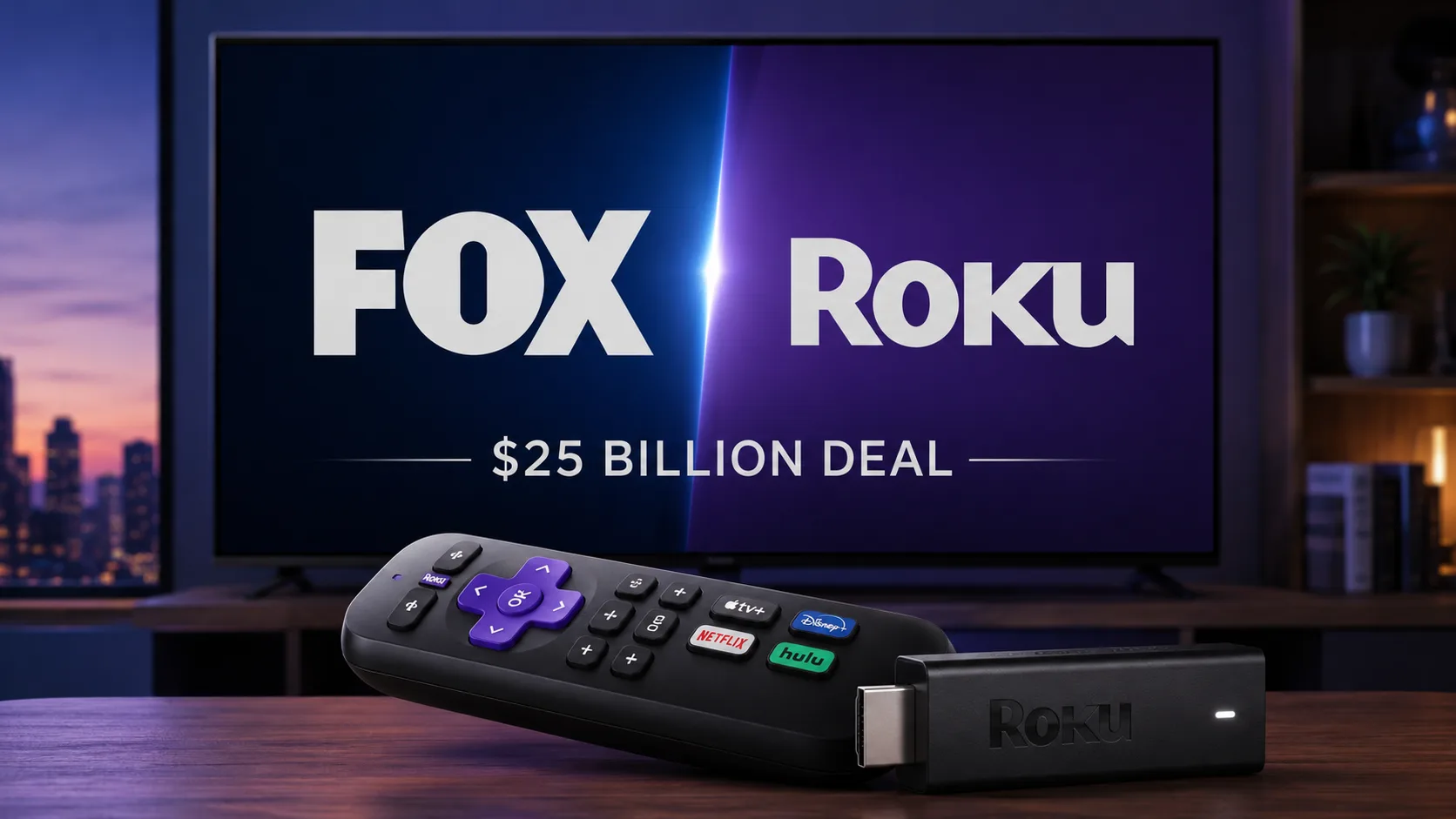
Fox Corp. announced Monday that it will acquire streaming platform Roku in a deal valued at approximately $25 billion, marking the largest acquisition in the company’s history and signaling a major push into the rapidly growing ad-supported streaming market.
The transaction combines one of America’s most powerful media companies with the leading streaming operating system for connected televisions, creating a new heavyweight competitor in the battle for viewers, advertising revenue, and streaming distribution.
Investors initially focused on the strategic implications of the deal, which gives Fox direct access to more than 100 million streaming households worldwide while significantly expanding its digital advertising footprint.
Fox Makes Its Biggest Bet Yet on Streaming
The acquisition represents a dramatic evolution in Fox’s streaming strategy.
Unlike rivals that spent billions chasing subscribers during the early streaming boom, Fox largely stayed on the sidelines while focusing on its profitable news and sports franchises. Instead of building a massive subscription streaming platform from scratch, the company concentrated on acquiring valuable content assets and live sports rights.
That strategy began to shift in 2020 when Fox acquired free streaming service Tubi for $400 million. Since then, Tubi has become one of the fastest-growing free ad-supported television platforms in the United States.
The Roku acquisition accelerates that transformation.
By combining Roku’s dominant connected TV platform with Fox’s growing streaming portfolio, the company gains unprecedented scale in one of the fastest-growing segments of the media industry.
“Bringing these two companies together will really help define the future of television in the United States and in many other markets around the world,” Fox CEO Lachlan Murdoch told investors.
What Fox Is Paying for Roku
Under the terms of the agreement, Fox will pay approximately $160 per Roku share.
The consideration includes:
- $96 per share in cash
- 0.9693 shares of Fox Class A stock
- Enterprise value of approximately $22 billion
- Total deal value of roughly $25 billion
Fox plans to fund the cash portion through approximately $12 billion in new debt along with existing cash reserves.
Following completion of the transaction:
- Fox shareholders will own roughly 73% of the combined company
- Roku shareholders will own approximately 27%
- Roku founder and CEO Anthony Wood will join Fox’s board of directors
The companies expect the transaction to close during the first half of 2027.
Why Roku Is So Valuable
For Fox, Roku offers something increasingly difficult to build organically: scale.
Roku has become the dominant operating system for connected televisions, controlling roughly 25% of the market according to Parks Associates. That places it ahead of Samsung’s Tizen platform, which holds approximately 23%.
More importantly, Roku sits at the center of the streaming ecosystem.
The company not only operates its own Roku Channel streaming service but also serves as the gateway through which millions of consumers access Netflix, Disney+, Amazon Prime Video, Hulu, and dozens of other streaming applications.
That position provides valuable advertising data and a direct relationship with consumers.
More than 100 million households globally stream through Roku devices and televisions, giving Fox immediate access to one of the largest connected-TV audiences in the world.
The Real Prize: Advertising Revenue
The biggest strategic rationale behind the acquisition may be advertising.
Streaming has increasingly shifted toward ad-supported models as consumers push back against rising subscription costs.
Research firm Antenna reports that ad-supported plans now account for nearly half of all premium streaming signups in the United States, up sharply from just 39% two years ago.
That trend has created a massive opportunity for companies capable of delivering targeted advertising to streaming audiences.
Fox already owns Tubi, one of the leading free ad-supported streaming services. Roku operates the Roku Channel, another major player in the free streaming space.
Together, the combined company will control multiple large advertising-supported streaming properties while also owning the platform that distributes content to millions of viewers.
The result could create a powerful advertising ecosystem capable of competing more effectively against industry giants such as Netflix and Amazon.
Tubi and Roku Channel Will Remain Separate
One question investors immediately raised was whether Fox would merge Tubi and the Roku Channel.
Management indicated that is not the plan.
Murdoch said both services will continue operating independently because they serve complementary roles within the streaming ecosystem.
Maintaining separate brands allows Fox to preserve audience reach while maximizing advertising inventory across both platforms.
Tubi has become one of Fox’s fastest-growing assets. The company recently reported nearly 100 million monthly active users and revenue growth of 23% during its fiscal third quarter.
Keeping both platforms intact could help Fox continue expanding its presence in the growing free-streaming market.
Cost Savings and Synergies
Fox expects the merger to generate approximately $400 million in annual cost savings.
Those synergies are likely to come from:
- Technology consolidation
- Advertising sales integration
- Administrative efficiencies
- Content distribution improvements
- Marketing and operational streamlining
While cost reductions are important, investors will likely focus more on the potential revenue opportunities created by combining Fox’s content portfolio with Roku’s distribution network and advertising capabilities.
A Changing Streaming Landscape
The acquisition comes as traditional media companies continue searching for profitable streaming models.
After years of aggressive spending across the industry, many streaming platforms are shifting focus from subscriber growth to profitability.
Free ad-supported television services, often referred to as FAST channels, have emerged as one of the industry’s fastest-growing categories.
Consumers increasingly prefer lower-cost viewing options, particularly as subscription fatigue grows and monthly entertainment bills continue rising.
The Fox-Roku combination reflects a broader industry belief that the future of television may depend as much on advertising revenue as subscription fees.
What It Means for Investors
For investors, the transaction creates a company with significant exposure to several major media trends.
The combined business will have:
- Leading live sports content
- Dominant news programming
- Large-scale free streaming platforms
- Connected-TV operating system leadership
- Growing digital advertising capabilities
- Direct consumer relationships across multiple channels
The deal also highlights the increasing value of distribution platforms in the streaming era.
Rather than simply owning content, companies are seeking control over the pathways consumers use to access that content.
If Fox successfully integrates Roku while maintaining growth at Tubi and its broader streaming portfolio, the company could emerge as one of the most influential players in the next phase of television’s evolution.
For Roku shareholders, the deal delivers a substantial premium. For Fox investors, it represents a bold bet that ad-supported streaming will be one of the most profitable segments of the media industry over the next decade.
About Author