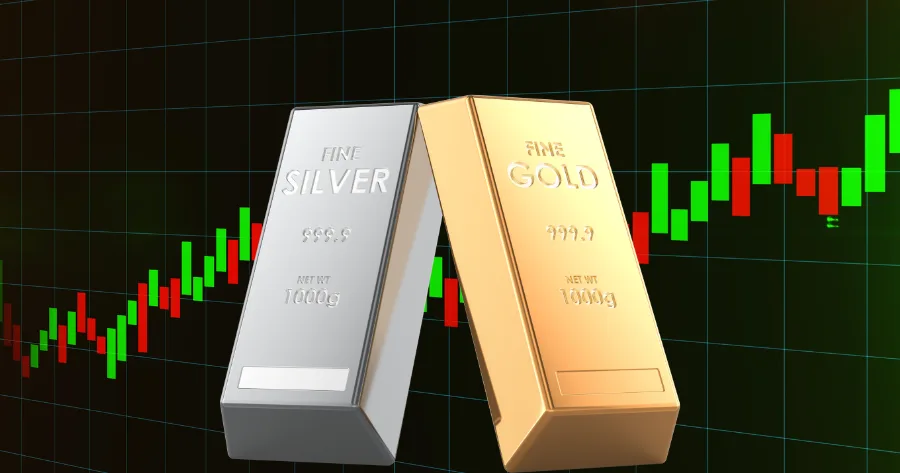
Gold has been making headlines lately, not just for climbing higher, but for smashing records. As of mid-September 2025, spot gold prices have repeatedly hit fresh highs around $3,670–$3,700/oz, driven by mounting bets that the U.S. Federal Reserve will begin cutting rates soon.
What’s Driving Gold Right Now
Below are the key forces pushing gold upward—and they matter because they signal what risks and opportunities investors may face.
| Driver | What’s happening | Why it pushes gold up |
|---|---|---|
| Fed rate cuts expected | Markets are pricing in a ~25bps cut in mid-September, with more cuts likely before year-end. Reuters | Lower interest rates reduce the opportunity cost of holding a non-yielding asset like gold. Gold becomes more attractive vs. treasuries/cash. |
| Softening labor market | Weak job reports, rising unemployment claims, and signs of cooling in the labor force. | Weak labor reduces odds of rate hikes and makes rate cuts more likely; supports lower real rates. |
| Weakened U.S. dollar | The U.S. dollar index has slipped recently. | As the dollar weakens, gold priced in dollars becomes cheaper for holders of other currencies. Demand from outside U.S. rises. |
| Inflation fears remain | Inflation is still “sticky” despite some cooling—consumer prices rose, etc. Reuters | Gold is an inflation hedge. If inflation remains elevated, gold may be viewed as a safer store of value. |
| Geopolitical, policy & Fed independence concerns | Political pressure on the Fed, debate about Fed governance, tensions around tariffs, global instability. Reuters | These elements add risk and uncertainty; gold is traditionally a refuge in volatile times. |
Gold’s Performance & What’s Priced In
Gold has climbed roughly 35-40% year-to-date in 2025.
Here are a few important expectations baked into the market already:
- A 25 basis point rate cut in the upcoming Fed meeting (September).
- Potentially more cuts later in 2025, depending on how the data flows.
- Persistent but possibly moderating inflation; labor market cooling more heavily weighted in expectations. Reuters
Implications for Investors
Here are practical consequences and what to consider doing (or avoiding) given this environment.
- Portfolio Hedging & Diversification Gold is behaving like what it is: a hedge. For those heavily exposed to interest-rate-sensitive sectors (like financials, real estate) or to USD strength, gold or gold-linked instruments can help soften the blow if rate cuts reduce yields or the USD weakens further.
- Real vs Nominal Rates Real interest rates (interest rate minus inflation) are a key metric. Even if nominal rates drop, if inflation doesn’t fall, real rates remain low or negative. That bolsters gold’s relative attractiveness. Investors should track not just Fed policy, but inflation trends. If inflation stays sticky, the case for gold strengthens.
- Risk of Overrun vs Pullback Gold has risen fast. That usually increases risk of short-term pullbacks, especially if inflation surprises to the upside, or if the Fed signals caution. Any hawkish shift from the Fed—even just tone—could cause a correction. So, don’t fall into “buy at any price” mentality. Scale in, consider risk limits.
- What Assets Could Lose/Lose Less
- U.S. Treasuries: Long yields may not fall as fast if inflation stays high; rate cuts expected, but not guaranteed.
- USD holders/foreign investors: A weakening dollar benefits gold, but hurts USD-denominated fixed income.
- Equities: Some sectors benefit from lower rates (utilities, consumer staples, dividend payers), others hurt by inflation or geopolitical instability.
- Where Gold May Go Next Analysts see potential levels between $3,900–$4,000/oz in the next year under the right conditions (more rate cuts, continued inflation concerns, weak USD). MarketWatch If inflation spikes or Fed surprises, it could overshoot, or conversely be capped by macro risk.
What to Watch Very Closely
To stay ahead, investors should monitor the following indicators/data points:
- Fed meetings (Sept 17) and the accompanying dot plot & Powell’s press conference. The sell-side will parse every word for tone and guidance.
- Labor market data: Non-farm payrolls, unemployment claims, wage growth. Weakness here pushes expectations toward more cuts.
- Inflation prints: CPI, PCE (core and headline), producer prices. If inflation reaccelerates, the Fed may hold off, hurting gold’s momentum.
- U.S. dollar indexes and FX movements: A rebound in the dollar could apply pressure.
- ETF flows, central bank buying: Demand is not only speculative, but from large institutions. Big inflows or outflows affect supply/demand balance.
- Geopolitical risk & policy risk: Tariffs, regulations, budget deficits. Also Fed independence concerns. These shape risk sentiment.
Potential Risks & Counterarguments
It’s not all upswing. Here are what I see as key risks that gold investors must keep in mind.
- Fed could surprise with more hawkish stance if inflation worsens or labor remains strong. A bounce in rates, even if temporary, could weigh heavily on gold.
- Inflation might mislead: Inflation data is noisy; supply-chain or energy price shocks could be temporary. If inflation falls faster than expected, gold loses a key part of its thesis.
- Opportunity cost rises if other assets begin to yield more (if fixed-income or dividends improve). Gold doesn’t yield, so in strong bull markets elsewhere it may underperform.
- Liquidity and carry costs: Physical gold, storage, insurance, premiums and fees on ETFs etc. Not negligible.
- Regulatory/policy risk: e.g. taxation on gold, import/export rules, central bank policies. These can affect net returns especially for non-institutional investors.
Actionable Moves: What I’d Do If I Were You
Here are tactical strategies or adjustments I would consider (and suggest in newsletter form) for investors given this backdrop.
- Allocate a portion (say 5-10%) of portfolio to gold (physical, ETFs or gold stocks) if not already. But don’t overcommit; treat it as insurance.
- Ladder exposure: start with modest position ahead of next Fed meeting; consider increasing if data (labor market, inflation) align for cuts.
- Use hedged exposure in related sectors: precious metals miners could outperform gold price, but they come with added risks (operational/geopolitical).
- Keep some liquidity—be ready to reallocate if inflation surprises or if Fed signals the cuts will be delayed.
- Diversify how you access gold: physical gold for safety, ETFs/ETNs for convenience, choice of currency exposure.
Why This Trend Could be More Than a Short-Term Rally
Putting together the data and the drivers, this rally in gold looks like more than a one-off. Several features suggest a more durable shift:
- Real rates are turning more negative in expectation. That’s a structural change vs prior tightening cycles.
- Continued geopolitical instability (trade wars, foreign policy, global supply chain concerns) keeps risk premium high. Gold thrives when uncertainty is priced in.
- Institutional demand and central bank buying are real. If central banks actively accumulate gold, that reduces available supply for speculative investors.
- Dollar’s decline has momentum; many macro models suggest weakening USD in a slower growth, lower rate world.
Don’t Ignore Gold
Gold’s current record run isn’t just hype. The pieces are aligning: expected Fed rate cuts, labor market softening, inflation still present, USD weakening, and geopolitical/policy risk rising. These are classic gold-friendly conditions.
About Author