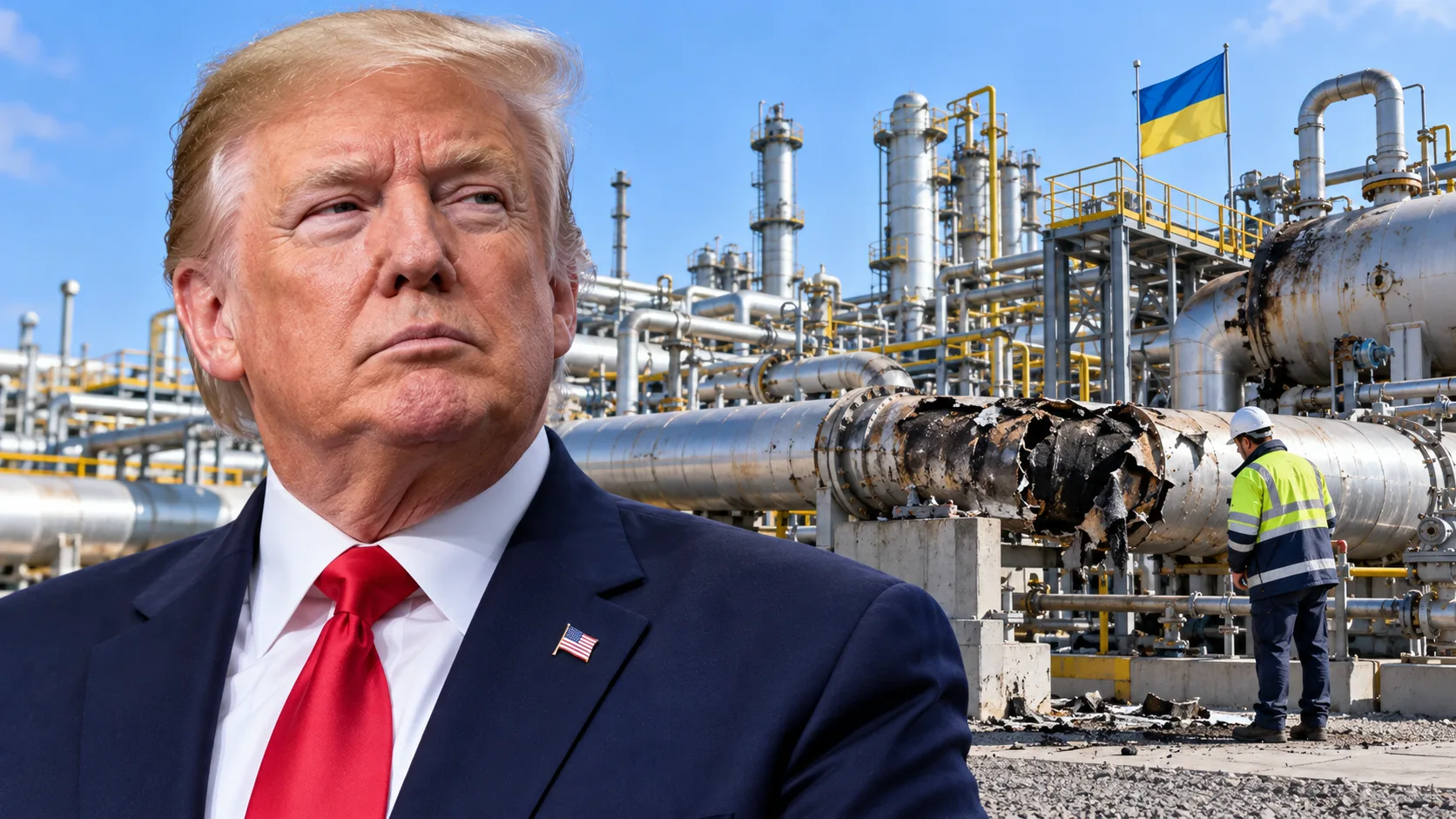
Oil just blinked.
After days of panic-driven spikes, crude reversed sharply as the U.S. unveiled a direct military plan to keep the world’s most critical energy artery open. The market isn’t calming down. It’s recalibrating what “worst case” actually means.
A Military Escort Just Replaced Market Panic
Defense Secretary Pete Hegseth rolled out “Project Freedom,” a U.S. naval strategy to escort commercial ships through the Strait of Hormuz.
This is not symbolic. It is a direct response to escalating attacks.
Iran has fired on commercial vessels and U.S. forces, deployed drones, and struck a major oil hub in the UAE. U.S. Central Command confirmed American forces destroyed six Iranian attack boats threatening shipping lanes. Tehran claims otherwise, but the escalation is real.
At the same time, President Donald Trump publicly acknowledged attacks on ships tied to “Project Freedom,” including a South Korean cargo vessel. He added that, so far, damage remains limited.
Meanwhile, global shipping has already begun adapting. A vessel operated by A.P. Moller-Maersk successfully crossed the strait under U.S. military escort, signaling that the corridor is not shut down, just militarized.
And then the market reaction came.
Brent crude dropped below $113. WTI fell toward $104. This came after a surge driven by fears that roughly 20% of global oil supply moving through Hormuz could be disrupted.
The market didn’t get safer. It got a clearer framework.
The Market Just Put a Ceiling on Fear
This is now a controlled-risk scenario instead of an unknown one.
Oil markets trade on disruption risk. When traders fear a full shutdown of Hormuz, prices spike aggressively. When the U.S. signals it will actively defend shipping lanes, the probability of total disruption drops. That is exactly what just happened.
But there’s a second layer most investors miss.
A U.S.-escorted shipping lane effectively puts a price ceiling on oil in the short term. It tells markets that supply will keep flowing unless the conflict escalates beyond limited engagements.
That shifts positioning across multiple sectors:
Energy stocks: Expect volatility, not a straight rally. Integrated majors and transport-linked firms benefit from elevated but stable prices, while pure-play exploration names lose some upside momentum.
Defense stocks: This is a tailwind. Sustained naval operations, drone countermeasures, and regional force projection all point to continued demand.
Shipping and logistics: Risk premiums rise, but so do rates. Companies willing to operate under military protection could capture pricing power.
Airlines and transportation: Relief. Lower oil prices reduce immediate cost pressure.
Interest rates: If oil stabilizes instead of spiking, inflation expectations cool slightly. That takes pressure off bond yields in the near term.
But none of this removes risk. It just reshapes it.
This Isn’t About Oil. It’s About Control of Trade Routes
This is not about oil. It is about control.
The U.S. is drawing a line that says global trade routes remain open under American protection. Iran is testing how far it can push without triggering full retaliation.
That tension creates a new market regime.
You now have a live military backstop supporting global energy flows. That sounds stabilizing, but it also introduces a constant drip of headline risk. Every drone launch, every intercepted boat, every near miss becomes a tradable event.
There is also a geopolitical layer building quietly in the background.
China’s Commerce Ministry has told domestic companies to ignore U.S. blacklists tied to Iranian oil purchases. This comes just ahead of a planned meeting between Trump and Xi Jinping.
That is not coincidence.
It signals that China is willing to challenge U.S. economic pressure while the U.S. is flexing military power in the same region. Energy flows, sanctions, and naval control are converging into one negotiation.
Markets have not fully priced that in yet.
The Next Moves That Will Move Markets
Watch these catalysts closely:
- U.S. military posture
Expansion of escort operations or additional strikes on Iranian assets will signal escalation - Iranian response
More aggressive targeting of commercial ships or energy infrastructure would reignite oil spikes immediately - Oil flow data
Shipping volumes through Hormuz will tell you whether “Project Freedom” is working in real time - Trump-Xi meeting
Any shift in China’s stance on Iranian oil could reshape global supply dynamics overnight - Insurance and shipping costs
War risk premiums will quietly move before headline prices do - Energy equities vs crude divergence
If oil stabilizes but energy stocks lag or lead, that divergence becomes a signal
The Trade Has Changed. Most Haven’t Adjusted Yet.
The market just moved from panic to managed tension.
Oil is no longer pricing a shutdown of the Strait of Hormuz. It is pricing a guarded corridor backed by U.S. military force.
That lowers immediate upside for crude, but it locks in volatility.
Investors should stop thinking in terms of direction and start thinking in terms of range. This is a tradeable conflict now, not a one-way bet.
About Author